Languages
Saturday, November 21, 2026



News and Views from the Global South
Featured

Opinion: American Exceptionalism on Child Rights
On 1 October 2015, Somalia ratified the UN Convention on the Rights of the Child (CRC), leaving the United States of America as the only remaining member state of the UN not to embrace this most universally accepted human rights treaty. UN Secretary-General Ban Ki-moon reflects the sentiments of all the world’s human rights activists in encouraging the US to join the global community by ratifying this noble treaty.
The Global South Will Make Its Contribution to Fighting Climate Change
Seen for years as passive actors in the fight against global warming, more than 100 countries of the Global South have submitted their national contributions to reducing greenhouse gas emissions and decarbonising their economies.
Q&A: ‘We Need to do Development Differently in the Post-2015 Era’
The Sustainable Development Goals (SDGs), adopted at a summit meeting of world leaders at the U.N. headquarters in New York on Sep. 25, reflect the five strategic domains the ACP Group is gearing to focus on, as it repositions itself as a more effective organisation in the global arena, says the 79-nation bloc’s head Dr Patrick Gomes.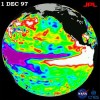
10 Million at Risk of Hunger Due to Climate Change and El Niño, Oxfam Warns
At least ten million of the poorest people face food insecurity in 2015 and 2016 due to extreme weather conditions and the onset of El Niño, Oxfam has reported.
Brazil’s Expanded Climate Targets Frustrate Environmentalists
Brazil’s greenhouse gas emissions reduction programme, hailed as bold, has nevertheless left environmentalists frustrated at its lack of ambition in key aspects.
U.N. Continues Condemnation of Civilian Casualties in Yemen
The Saudi coalition, which continues its air strikes against rebels in strife-torn Yemen, is fast gaining notoriety as “the gang that couldn’t shoot straight” – largely because of its misses than its hits.
Honduran Fishing Village Says Adios to Candles and Dirty Energy
A small fishing village on the Caribbean coast of Honduras has become an example to be followed in renewable energies, after replacing candles and dirty costly energy based on fossil fuels with hydropower from a mini-dam, while reforesting the river basin.
Palestine President Abbas Warns of ‘Grave Dangers’ in Jerusalem
“I come before you today…compelled to sound the alarm about the grave dangers of what is happening in Jerusalem,” said Palestine President Mahmoud Abbas in his remarks to the United Nations General Assembly on Sep. 30.
As the Mediterranean Refugee Crisis Endures, International Morality Ebbs
As the world suffers its biggest upheaval of human mobility, with 60 million people forced to desert their homes or countries due to persecution, armed conflicts, starvation and hunger that are a veritable danger to their lives, the response from the international community has been rather laggard.
Italy and Uganda Bag Right Livelihood Awards Fist Time Ever
The 2015 Right Livelihood Awards were announced today in Stockholm at the Swedish Foreign Office International Press Centre by Ole von Uexkull, Executive Director, and Dr Monika Griefahn, Chair of the Board of the Right Livelihood Award Foundation.
U.S. 100th Member State to Join Nuke Terrorism Treaty
A 1997 movie titled “The Peacemaker” –partly shot outside the United Nations – dramatised the story of a Yugoslav terrorist who acquires a backpack-sized nuclear weapon, gone missing after a train wreck in rural Russia, and brings it to New York to detonate it outside U.N. headquarters.
Men Start to Make Women’s Struggles Their Own in Argentina
The meeting was about gender equality, but for once there were more men than women. It marked a watershed in the struggle in Argentina to make the commitment to equality more than just “a women’s thing.”
Learning from Korea’s ‘Saemaul Undong’ to Achieve SDGs
More than 3.3 billion people live in rural areas around the world. Rural development is therefore of vital significance if the 2030 Agenda for Sustainable Development – “a plan of action for people, planet and prosperity” – is to become reality.
Opinion: Renewed Optimism or Higgledy-Piggledy Vision?
The 17 sustainable development goals (SDGs) and the whopping 169 targets were adopted in the largest ever United Nations Summit, attended by Prime Ministers, Presidents and the Pope, among other luminaries, in New York. These goals encompass world peace, the environment, gender equality, elimination of poverty and hunger and much, much more.
Anti-gay Sentiment Arises During the U.N. General Assembly
Secretary-General Ban Ki-moon emphasized the importance of lesbian, gay, bisexual, transgender and intersex (LGBTI) rights during a High-Level Core Group event on Sep. 29, noting his experiences in working with governments to eliminate LGBTI-discriminatory policies.
Opinion: The Party’s Over for U.N.’s Sustainable Development Goals
The Pope has left the U.N. and the traffic in Manhattan is back to normal. The hoard of government delegations, NGOs and civil society representatives are packing up and the press is moving on. The party’s over for the Sustainable Development Goals.
Africa Must Depend Less on Development Aid, Says New Study
As the U.N.’s Millennium Development Goals (MDGs) reach their targeted date by the end of December, one of the lingering questions has long remained unanswered – at least, until now.
Electoral Revolution in Brazil Aimed at Neutralising Corporate Influence
From now on, elections in Brazil will be more democratic, without corporate interference, which had become decisive and corruptive. A Sep. 17 Supreme Court ruling declared unconstitutional articles of the elections act that allow corporate donations to election campaigns.
Solar Power Slowly Making Inroads into Mideast and Africa
To the ordinary eye, it looks like an empty desert but from this spit of endless sand is rising the largest photovoltaic solar project in the Middle East.
Opinion: We Can Overcome Poverty and Hunger by 2030
Over three quarters of the extreme poor in the world live in the countryside. Reducing rural poverty will therefore require significantly higher rural incomes. Since most rural incomes are related to agriculture, raising agricultural productivity can help raise rural incomes all round.
Opinion: Multilateral Treaty Framework – An Abiding Achievement of the U.N.
As it celebrates its 70th birthday, a proud achievement of the United Nations over its lifetime, is the framework of multilateral treaties that it has been instrumental in putting in place.« Previous Page — Next Page »


The Week with IPS

NEXT STOP - SDGs
Tracking global progress towards a sustainable world
Tracking global progress towards a sustainable world
