Languages
Saturday, November 28, 2026



News and Views from the Global South
Food and Agriculture
AFRICA: Climate Change Threatens Food Security
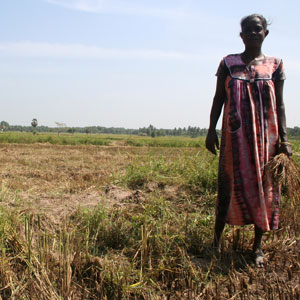
Climate change will have a significant impact on southern Africa’s already compromised food security, environmental experts warned at the fifth Alexander von Humboldt International Conference at the University of Cape Town (UCT) in South Africa.
DR CONGO: Ugandan Rebels Add to Woes in the Northeast
Reports from non-governmental organisations and the United Nations on the humanitarian situation in the north-eastern region of the Democratic Republic of Congo (DRC) state that over 400 civilians were killed at the end of last month by the Lord’s Resistance Army, a Ugandan rebel faction with bases in that part of the country.ECONOMY-CHINA: Growth or the Good Earth?
As China rushes to implement its four trillion yuan (585 billion US dollars) economic stimulus package, success is seen dependent on the ability of government officials to come up with free land for the hundreds of new infrastructure projects like airports and housing that Beijing hopes would lift growth and keep recession at bay.PARAGUAY: New Insurgent Group or Framing of Rural Activists?
Whether or not the so-called Paraguayan People’s Army (EPP) - which claimed responsibility for the recent theft of arms from a remote military post - actually exists is a subject of debate among activists, academics and political leaders in Paraguay.
HAITI: New Peasant Alliance Demands Action on Food Crisis
Haiti's peasant farmers are organising and taking action to try and bring an end to the country's dependence on food imports, and to avert the prospect of looming famine.POLITICS-THAILAND: In 'Thaksin Country' Ousted PM Has Loyalists
For most of her adult life, Yard Sunee had to endure a reality that was worlds away from the conveniences that people in a modern metropolis like Bangkok take for granted - like ready access to tap water.BOLIVIA: Mothers Teaching Mothers to Combat Malnutrition
One of every two children under the age of five in the southwestern Bolivian highlands municipality of Betanzos suffers the effects of chronic malnutrition.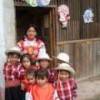
PERU: Coffee Growers Cultivate Education
"Without coffee there is no future," say coffee growers in the Selva Alta, in the central Peruvian region of Junín, where they are setting up schools near their farms so that their children don't abandon their studies.SOUTH AFRICA: Community Gardens Contribute to Food Security
A few years ago 66-year-old grandmother Regina Fhiceka and her family of five ate vegetables only once a week. They would survive on maize and bread the rest of the time - the cheapest food available in the poor township of Philippi, just 15 minutes from the affluent business district of Cape Town.
SOUTHERN AFRICA: Climate Change Threatens Livelihoods
Climate change will affect the Zambezi River basin more severely than any other river system in the world, according to Kenneth Msibi, Water Policy and Strategy Expert for the Southern African Development Community (SADC). Increased floods, drought and increased levels of disease threaten lives and livelihoods all along the river’s length.AGRICULTURE-SUDAN: Can Local Investors Beat Foreign Investment?
Sudan is hoping to use foreign cash to reinvigorate its under-performing agricultural sector, but there is growing disagreement over the extent to which outsiders, rather than local farmers, should be taking control of the industry.
BOLIVIA: Aymara Traders Mix Tradition and Modern-Day Savvy
Quietly and inconspicuously, Aymara indigenous traders are combining pre-Columbian traditions and modern-day survival skills to find unique ways of creating wealth and sustenance beyond the confines of textbook economic theory.PARAGUAY: Rural Associations Protest Land Occupations
Agribusiness and landowners’ associations in Paraguay began two days of demonstrations around the country Monday, demanding a stop to invasions of large estates by landless farmers.
DEVELOPMENT-INDIA: Reclaiming Land and Farmers for Rice Cultivation
After achieving human development indices that approach developed country standards, people living on this verdant strip facing the Arabian sea are attempting a ‘back-to-basics’ return to paddy cultivation.AGRICULTURE-ETHIOPIA: Can Foreign-Owned Farms Solve Food Crisis?
Tola Melka was planning to throw a traditional party at his shanty home in rural central Ethiopia, anticipating a bumper harvest. He was grief-stricken in late October when unexpected rains totally destroyed his almost ripened teff, a native staple crop used to make spongy bread.
DOMINICAN REPUBLIC: A Place for Eco-Coffee
Communities in 10 southern provinces of the Dominican Republic are feeling the benefits from the collective activities of small growers of organic coffee. Women participate in the production and sale of the coffee, and their sons and daughters are pursuing studies in order to improve the sector's productivity.NORTH KOREA: Defying Inspection of Nuclear Assets
China has failed to coax its old communist ally North Korea into signing an agreement to verify the state’s secretive nuclear activities.RIGHTS-COLOMBIA: A Special Case for the UN
Whether for its extreme violence, its potential for undermining order in a large part of society or its effects on the United Nations human rights system, Colombia is at the centre of attention of the international community.LATIN AMERICA: Poverty Rates Likely to Rise
Two million people in Latin America and the Caribbean were lifted out of poverty in 2008, but three million poor people fell into extreme poverty, according to a new report by the regional United Nations agency ECLAC.
DEVELOPMENT: 40 Million More Go Hungry
Rising prices have plunged an additional 40 million people below the hunger threshold this year, a new FAO report says.
Q&A: Urgent Seeds for Haiti
The participation of the most vulnerable people is essential for Haiti's development programmes, says Kanayo Nwanze, vice president of the International Fund for Agricultural Development (IFAD), which this year earmarked 10.2 million dollars for aid to help the poorest country of the Americas survive the current food crisis.« Previous Page — Next Page »


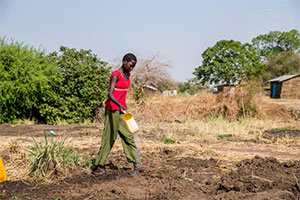 Farming on the Outskirts of Juba. Credit: UN Photo/JC McIlwaine
Promoting human and planetary health is a central focus of the United Nations, as laid out in the 2030 Sustainable Development Goals (SDGs). World hunger and unsustainable farming practices continue to be pressing concerns for the world. According to the 2025 State of Food Security and Nutrition in the World report by the Food and Agriculture Organization (FAO), 673 million people faced hunger in 2024. There are stark regional disparities, with the FAO projecting that 60% of the world population facing hunger will reside in Africa by 2030. Globally, the prevalence of food insecurity has remained consistently higher for women than men.
Sustainable and efficient national food systems are essential in preserving health, education, environmental well-being, peace, economy, and security. However, creating sustainable food systems can be a challenging endeavor, as food production takes a heavy toll on the environment. The agricultural sector accounts for a significant portion of greenhouse gases. Finding safe, sustainable, and ethical strategies to feed the world is crucial in ensuring planetary longevity. A recent initiative from 2023, the EU Regulation on Deforestation-free Products (EUDR), seeks to advocate for sustainable food systems. The main driver of deforestation is the expansion of agricultural land used to produce commodities like cattle, wood, cocoa, coffee, etc. The EUDR is part of the 2020 European Green New Deal and the EU Biodiversity Strategy for 2030 and aims to limit Europe’s consumption of products linked with deforestation by requiring that companies prove that their products are deforestation-free. Despite aiming to achieve major strides in sustainability, policies such as EUDR also raise socioeconomic concerns for targeted countries. Many emerging Latin American economies are impacted by the policy, and have raised the question of how developing countries can grapple with the tensions between economic development and advancing sustainability.
IPS has been at the forefront of providing compelling and insightful stories on communities facing hunger as well as the cost of food production. IPS uses statistics from FAO, the World Food Programme (WFP) and the International Fund for Agricultural Development (IFAD) to bring relevant and hard-hitting facts to readers. This gathering of information and data from such organizations helps bring the best stories from IPS journalists working in the different regions in consultation with experts on the ground.

The Week with IPS

NEXT STOP - SDGs
Tracking global progress towards a sustainable world