
Tuesday, October 27, 2026



News and Views from the Global South
Food Security and Nutrition

How to Put the ‘Sexy’ Back into Agriculture – Thoughts From CGIAR Science Week
This week presented a beacon of hope for young people so that the “girl from the South and the boy, of course” could stay in the developing world, Dr Ismahane Elouafi, Executive Managing Director of CGIAR, said during a press conference on the final day of the CGIAR Science Week.
CGIAR Gender Impact Platform Needs a ‘Bold Approach’ in Agriculture Research
Women farmers face structural issues that prevent them from realizing their full potential, from societal perceptions that dictate their limitations to poor land. However, CGIAR's Gender Impact Platform Director, Nicoline de Haan, argues that leaning into a "victim" narrative does not serve them, especially when women are demonstrably more involved in agriculture.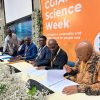
Partnerships Expected to Enhance Agricultural Development
Two crucial partnerships were signed at the CGIAR Science Week in Nairobi today (April 9, 2025), aimed at delivering research for development at scale across Africa.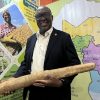
Farmers Need Science Solutions in Their Hands Sooner Than Later
Climate change is outpacing science and farmers are paying the price. Agricultural research innovations need to reach farmers before it is too late.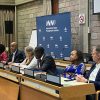
Science-Backed Solutions Buoying Water Security in East Africa
In East Africa, climate change has made water a lifeline and threat. In a region highly dependent on rainfall for growing crops, climate change is threatening water security but science-backed solutions are helping turn the tide.
Behind the Feeding of the 5,000 (or Should That Be 10,000) at CGIAR Science Week
Good Food for All is the motto of The Chef's Manifesto, a project that brings together more than 1,500 chefs from around the world to explore how to ensure the food they prepare is planet-friendly and sustainable.
Welcoming Science: CGIAR Week-Long Focus on Innovation for Food, Climate-Secure Future
The world’s leading scientists and decision-makers in agriculture, climate, and health are meeting in Nairobi this week to promote innovation and partnerships towards a food, nutrition, and climate-secure future. As current agrifood systems buckle under multiple challenges, nearly one in 11 people globally and one in five people in Africa go hungry every day.
CGIAR Science Week Seeks Solutions for a Food-Secure, Climate Resilient Future
CGIAR and the Kenyan Agricultural and Livestock Research Organization (KALRO) are bringing together the world’s leading scientists and decision-makers in agriculture, climate, and health for the first CGIAR Science Week. This gathering will be a key moment to advance research and innovation, inspire action, and establish critical partnerships that can secure investment in sustainable food systems for people and the planet.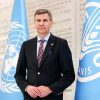
Water and Food Security in Europe and Central Asia: A Shared Challenge for a Sustainable and Just Future
Degrading soil, air pollution, vanishing biodiversity, emerging plant and animal health issues and more are coming together in the current situation of multiple crisis. Ensuring water security is just one, among the many challenges individuals, countries, and the world faces. Yet, we shouldn’t forget that water makes up the largest percentage of our bodies and the same applies to animals, plants and the planet’s surface. The threat of water insecurity is, as we all see, not a petty problem, but one of the greatest challenges of our century.
UNICEF Report Warns of Rising Rates of Child Mortality without Proper Funding
Despite levels of child mortality and stillbirths having significantly decreased since 2000, increasingly unequal and limited access to basic services around the world endangers millions of children around the world, a new report finds.
Strengthening Indigenous Peoples and Local Communities’ Knowledge and Access Opens up Opportunities for Climate, Biodiversity and Desertification Action
The central role Indigenous Peoples and local communities in addressing climate change, biodiversity loss and desertification has gained widespread recognition over the past decade. Indigenous Peoples’ close dependence on resources and ecosystems, exceptional tradition, and ancestral knowledge are invaluable assets for the sustainable management of our planet’s natural resources.
Seeds of Survival, Amid Conflict Sudan Is Saving Its Agricultural Future
Sudan’s diverse crops and agricultural heritage are at risk of being lost. The ongoing conflict in Sudan is claiming lives and threatening livelihoods and food security. In the chaos of conflict, scientists like Ali Babiker are fighting to protect Sudan’s future food security—not with weapons, but with seeds.
Agriculture for Economic Resilience During Political and Financial Crisis – The Case of Bangladesh
The recent student movement in Bangladesh demanding reform of the quota system for public jobs led a ‘march of the people’ towards the official Residence of the Prime Minister Sheikh Hasina on 5th of August 2024. The security forces of the country, including the army, refused to open fire on the marching crowd. Fearing an imminent attack on her residence without the protection of the army, Sheikh Hasina fled to neighbouring India after being in power continuously since 2008. With Sheikh Hasina fleeing to India on 5th of August 2024 her authoritarian and corrupt rule of 15 years just melted away.
America First Deepens World Stagnation
Donald Trump’s Make America Great Again (MAGA) appeal captured US mass discontent against globalisation. In recent decades, variations of America First have reflected growing ethnonationalism in the world’s presumptive hegemon.
CARICOM Leaders Take Steps to Tackle Crime, Climate, Trade and Food Crises
CARICOM leaders wrapped up a crucial meeting on February 21, reaffirming their commitment to tackling pressing regional challenges with unity and resolve. From crime and security to education, trade and climate change, the leaders highlighted the need for decisive action amid global uncertainties.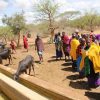
How Tanzania’s Farmers, Pastoralists Paid the Price for a World Bank Project
A hush had fallen over Mbarali District, but it was not the quiet of peace—it was the silence of uncertainty. Just months ago, the rolling plains were gripped by fear as government-backed rangers, dressed in olive green fatigues, roamed through villages, seizing cattle, torching homes, and forcing entire communities to the wobbly edge of survival. The REGROW project, a USD 150 million initiative funded by the World Bank to expand Ruaha National Park (RUNAPA), had promised tourism growth and environmental conservation. What it delivered was a brutal campaign of state-sanctioned land grabbing under the guise of protecting nature.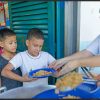
Only Political Will Can End World Hunger: Food Isn’t Scarce, but Many People Can’t Access It
History has shown us again and again that, so long as inequality goes unchecked, no amount of technology can ensure people are well fed.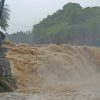
Human Insecurity from Climate Change on Vanuatu and Guam
The climate crisis is severely endangering human well-being. While the climate security nexus is omnipresent in national security strategies and on international institutions’ agendas, political responses remain insufficient and are often problematic. Among other issues, related policies often struggle with siloization or a focus on symptoms instead of root causes.
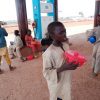
Malnutrition in Nigeria Rises Alarmingly, Urgent Action Needed
In June 2024, 26-year-old Zainab Abdul noticed her two-year-old daughter growing pale, losing weight, and battling diarrhea. She wasn’t surprised. Since jihadist-linked bandits had forced them out of their village in Kadadaba, Zamfara State, in northwestern Nigeria, her family had been living in a refugee camp with limited access to food.
Food Systems Worsen Diets, Health
Corporate-dominated food systems are responsible for widespread but still spreading malnutrition and ill health. Poor diets worsen non-communicable diseases (NCDs), now costing over eight trillion dollars yearly!
Laureates Call For Moonshot Innovation Effort to Avert Hunger Catastrophe
Neglected indigenous crops, rich in nutrition and resilient to climate change, are key to tackling global hunger only if governments invest in research and development (R&D) to tap the potential of such innovations. More than 150 Nobel and World Food Prize Laureates are calling for investment in moonshot technologies to realize the potential of innovative solutions such as these hardy crops, warning that without swift action, there is a "food insecure, unstable world.”« Previous Page — Next Page »





More than 820 million people in the world are still hungry today, underscoring the immense challenge of achieving the Zero Hunger target by 2030. Hunger is rising in almost all subregions of Africa and, to a lesser extent, in Latin America and Western Asia. There is great progress seen in Southern Asia in the last five years, but the prevalence of undernourishment in this subregion is still the highest in Asia. A disturbing fact is that about 2 billion people in the world experience moderate or severe food insecurity. The lack of regular access to nutritious and sufficient food that these people experience puts them at greater risk of malnutrition and poor health. Although primarily concentrated in low- and middle-income countries, moderate or severe food insecurity also affects 8 percent of the population in Northern America and Europe.
In every continent, the prevalence rate is slightly higher among women than men.
With regard to nutrition indicators, if current trends continue, the 2030 SDG Target to halve the number of stunted children will not be met nor the 2025 World Health Assembly target to reduce the prevalence of low birthweight by 30 percent. The trends of overweight and obesity are additional reason for concern, as they continue to rise in all regions, particularly among school-age children and adults. The most recent data show that obesity is contributing to 4 million deaths globally and is increasing the risk of morbidity for people in all age groups.
The State of Food Security and Nutrition in the World, a joint report by the United Nations agencies, FAO, IFAD, WFP, UNICEF and WHO reaffirms their commitment to working together to overcome emerging challenges and free the world from hunger, food insecurity and malnutrition. The report shows that the global level of the prevalence of undernourishment has stabilised; however, the absolute number of undernourished people continues to increase, albeit slowly.


The Week with IPS

Tracking global progress towards a sustainable world
