Languages
Wednesday, November 11, 2026



News and Views from the Global South
Gender

How Marginalised Women in India Bore an Extra Burden of COVID-19 ‘Shadow Pandemic’
Women living in rural India and those belonging to marginalised communities faced an enormous burden during the COVID-19 pandemic shutdowns, including domestic violence, loss of financial assistance and income, says Rehana Adeeb, a grassroots Muslim woman leader and activist.
International Women’s Day, 2021
Gender Equality is our Captain for Sailing to a Green & Just Recovery
The climate crisis doesn’t stop for anyone or anything, not even the pandemic that has forced billions of us to radically overhaul our lives. And like the pandemic, climate change has no nationality, agenda or political affiliation.

International Women’s Day, 2021
To Lead is to Serve — A Pacific Woman’s Perspective
An often quoted indigenous reference in the Samoan language is, O le ala i le pule o le tautua, literally translated, “the pathway to leadership is through service” because to be able to lead is to be willing to serve.

The Boon and Bane of LDC Graduation: The Bangladesh Experience
Bangladeshis at the present time share a modicum of justifiable pride in the fact that the world merits this country worth watching in terms of its economic potentials. To my mind , we have reached this stage for the following reasons: First, effective utilization of early foreign assistance; second a steady ,albeit sustained, move away from a near -socialistic to an open and liberal economy; third , a shift from agriculture to manufacturing as land-space shrank to accommodate urbanization; fourth , an unleashing of remarkable entrepreneurial spirit among private sector captains of industry, as evidenced in the Ready Made Garments industry: fifth, the prevalence of a vibrant civil society intellectually aiding the social transformation with its focus on health, education, and gender issues: and finally ,a long period of political stability notwithstanding the traditional predilections of Bengali socio-political activism.
“Why Was I Ever Born”– Righting the Wrong
The bombing continues unabated. The explosions are heard in the distance. A family with seven children is cowering in fear in a corner of their shack, not daring to step out, dreading instant death from shrapnel or a sniper’s bullet.
Peace in Yemen, But not Without Women’s Role in Peacebuilding
The armed conflict in Yemen which has lasted six years, has killed and injured over thousands of civilians, displaced more than one million people and given rise to cholera outbreaks, medicine shortages and threats of famine. By the end of 2019, it is estimated that over 233,000 Yemenies have been killed as a result of fighting and the humanitarian crisis. With nearly two-thirds of its population requiring food assistance, Yemen is also experiencing the world's worst food security crisis. The United Nations has called the humanitarian crisis in Yemen “the worst in the world”.
History of Female (Im)Mobility in Nepal
A proposal by Nepal’s Immigration Department requiring consent from a guardian and local government for women under the age of 40 travelling to the Gulf or Africa has sparked public fury, and is taken as yet another proof of a misogynist, bungling bureaucracy.
The Perils of Child Marriage & the Promise of Freedom
How much is a girl worth? If you are Maja, the answer is a chicken, a six-pack of beer and 100 euros. That is how much her family, living in a Roma settlement in Serbia, received in exchange for her hand “in marriage.” She was 11 years old at the time. “They benefited maybe a month from it, and I was left with a problem for my whole life,” Maja, now 18, said.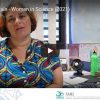
Valérie Allain – Women in Science (2021)
 "Working in Science, like any other career, is fit for women too… Just go for it, nobody can stop you", Valérie Allain, Senior Fisheries Scientist at the Pacific Community (SPC).

In Tanzania, a Radio Programme for Girls Yields Unexpected Results
Last fall, a 45-year-old father of four named Moses turned on the radio at his home in Arusha, Tanzania. Searching for his favorite station, he heard the introduction to a program about girls that he would later describe as ‘ear-catching.’ He wanted to know what would come next.
Argentina’s Abortion Legislation Sparks Hope in Caribbean Region
It was a joyful, tearful celebration in the early morning hours of Dec. 30, 2020 for countless Argentinians when they heard the news: the senate had legalized terminations up to 14 weeks of pregnancy. Prior to this, activists have said that more than 3,000 women died of botched, illegal abortions since 1983. And across the Latin American and Caribbean (LAC) region, this renewed sense of optimism was compounded after President Joe Biden rescinded what is known as the “global gag rule,” which essentially denied funding to international non-profit organizations that provided abortion counseling or referrals.
Is Turkey a Proof that Religion and Democracy Cannot Coexist?
Over the years, Turkey has survived three Coup d'état in which its military forces took power, in 1960, 1971 and 1980. The coup in 1997, was carried out in a “post-modern way”, where generals sat down with the then prime minister, Necmettin Erbakan and forced him to resign. However the turning point in Turkey has been the failed coup attempt in July 2016, which has till date been one of the bloodiest coup attempts in its political history, leaving 241 people killed, and 2,194 others injured.
The Struggle to End Female Genital Mutilation: A Dark Secret No More
Survivors of female genital mutilation or cutting (FGM/C), are determined to share their stories to end this practice – even though they face ostracisation by their communities. Masooma Ranalvi, an FGM/C survivor and founder of ‘WeSpeakOut’, an organisation committed to eliminating FGM/C or khafd/khafz/khatna explains that FGM/C is practised by various communities in India but is prominently practised among the Dawoodi Bohras.
Helping Survivors of Violence Seek Justice through Forensic Science in the West Bank
Violence, especially against women and girls, is a worldwide systematic human rights violation that has only increased since the COVID-19 pandemic. Globally, 243 million women and girls aged 15 to 49 have suffered sexual and/or physical violence by an intimate partner in the last year.
Why it’s Crucial Not to Limit the Youth’s Access and Use of Family Planning
With the COVID-19 pandemic negatively affecting access to Adolescent and Youth Sexual and Reproductive Health (AYSRH) services, it’s imperative governments employ community-based initiatives and peer educators to ensure these services are still available to them.
Internationally COVID-19 Extracted a Heavy Toll on Older People
Internationally COVID-19 extracted a heavy toll on older people – raising concerns in the Asia Pacific region where more than half of the world’s ageing population live.
New Multi-Country Survey Finds Overwhelming Majority of Citizens Want Their Governments to Act Now to Accelerate Progress on Gender Equality
A first-of-its-kind international survey finds that the global public overwhelmingly supports gender equality, and a resounding majority is ready for their governments and business leaders to take action to bridge the gender divide. At the same time, women and girls around the world are suffering the worst impacts of the COVID-19 crisis, which has disproportionately affected their mental and physical health, as well as their economic prospects. The vast majority of respondents—80% on average across the 17 surveyed countries—said gender equality is a priority to them personally, and 65% said their government should do more to promote gender equality in their country.
Q&A: What Nigerian Feminists Hope will Come Out of the #EndSARS Movement & Pandemic
As Nigeria’s biggest city, Lagos, reportedly experienced a massive shortage of oxygen cylinders last week — with demand increasing fivefold in one of the city’s main hospitals just as the country recorded some of its highest number of coronavirus cases — its youth leaders are concerned about the impact on vulnerable women.
The Struggle to End Female Genital Mutilation: A Dark Secret No More
Survivors of female genital mutilation or cutting (FGM/C), are determined to share their stories to end this practice – even though they face ostracisation by their communities. Masooma Ranalvi, an FGM/C survivor and founder of ‘WeSpeakOut’, an organisation committed to eliminating FGM/C or khafd/khafz/khatna explains that FGM/C is practised by various communities in India but is prominently practised among the Dawoodi Bohras.
COVID-19’s Social & Economic Fallout Hits Women Harder
With over 90 million confirmed cases and 1.9 million deaths globally, and a second wave sweeping into 2021, the COVID-19 pandemic continues to hold the world hostage.
Implementation Research to Achieve Health Related #SDGs
The Sustainable Development Goals (SDGs) aim to ensure healthy lives and promote well-being for all ages. The main focus of the SDGs is to improve equity to meet the needs of women, children and disadvantaged populations in particular.« Previous Page — Next Page »





Women make up half the world's population, but don't nearly share half of the world's wealth, well-being and opportunity. Two-thirds of the world poor are women, disproportionally exposing women to precarious living conditions, disease and unmitigated natural disasters. The media, meanwhile, remains a male-dominated sector in much of the world, contributing to women's voices lacking a crucial amplifier to put their concerns on political agendas and unleash the development potential of their ingenuity. Rather than then stereotypical victims of local and global forces, women are also organizer, innovators, conservators and community builders. These are some of their stories.

The Week with IPS

NEXT STOP - SDGs
Tracking global progress towards a sustainable world
Tracking global progress towards a sustainable world
