Languages
Wednesday, October 14, 2026



News and Views from the Global South
Global Green Growth Institute (GGGI)

When Two Becomes One: Blending Public and Private Climate Finance
With the landmark Paris Agreement now almost two years old, funding for climate-related activities continues to be a challenge. However, efforts have been underway to bring two seemingly very different sectors together to address climate change.
Leveraging Climate Finance in Africa
What: GGGI, in partnership with the Government of the Federal Democratic Republic of Ethiopia, and the Government of Rwanda will host a side event during the 53rd Annual Meeting of the African Development Bank (AfDB) in Busan, Republic of Korea. The side event will focus on the great strides made by Ethiopia in mobilising financial resources for the Climate Resilient Green Economy (CRGE) initiative to protect the country from the adverse effects of climate change and to build a green economy that will help realise its ambition of reaching middle-income status before 2025.
GGGI raises bar in support of green and climate finance mobilization
The Global Green Growth Institute (GGGI), in 2017, helped mobilize over half a billion USD for green investments that aim to support developing countries and emerging economies transition toward environmentally sustainable and socially inclusive economic growth.
“Green Development Has to Be Equal for All”
IPS caught up with Dr. Frank Rijsberman, director-general of the Global Green Growth Institute (GGGI), at the end of the flagship side event of the GGGI during the 51st Annual Meeting of the Asian Development Bank (ADB) in Manila on May 4, 2018, which featured the Belt and Road Initiative (BRI) and its potential to create sustainable infrastructure and promote green growth pathways.
Regional Cooperation Needs a Strategic Vehicle for Inclusive Growth
There is growing recognition that regional cooperation is a crucial driver of growth. We should now also recognize if regional trade networks are to yield the intended benefit of inclusive growth, then there needs to be a strategic vehicle for development that can be scaled.
Belt and Road Initiative Vows Green Infrastructure with Connectivity
"My son in primary school did not attend a birthday celebration because it was cancelled due to bad air -- and we live in Seoul, a great place to live," said Dr. Frank Rijsberman, director-general of the Global Green Growth Institute (GGGI).
GGGI assesses inclusive green development Belt and Road opportunities
The Global Green Growth Institute (GGGI) hosted a side event under the theme of “Green Growth and Regional Cooperation” on 4 May on the sidelines of the 51st Annual Meeting of the Asian Development Bank (ADB) in Manila, Philippines.
GGGI Side Event At the Asian Development Bank Annual Meeting: Green Growth and Regional Cooperation
What: The Global Green Growth Institute (GGGI) will hold a knowledge sharing side event during the 51st Annual Meeting of the Asian Development Bank (ADB) in Manila that will look at opportunities and challenges in mainstreaming green growth. The side event will also look at enabling policies for regional cooperation for inclusive and sustainable growth, green investment and eradicating poverty. China’s Belt and Road Initiative is an example of how regional infrastructure initiatives can be used to pursue the United Nations 2030 Agenda for Sustainable Development.
Revving Up Green Growth
While sustainable development may still seem elusive to some, a new initiative wants to pave a path for nations working towards a greener future. Partnering for Green Growth and the Global Goals 2030, or P4G, is a new partnership initiative that aims to boost countries’ efforts in achieving the globally adopted Sustainable Development Goals (SDGs).
Can Sustainable Bioeconomy be a Driver of Green Growth?
On April 19-20, I attended the second Global Bioeconomy Summit in Berlin. Bioeconomy is currently a hot topic for scientists and policymakers. Rapid advances in molecular biology combined with big data and artificial intelligence have resulted in big jumps in our understanding of living organisms as well as organic matter, the biomass produced by plants and animals, at the level of their DNA. That has gone hand in hand with technologies that allow scientists and industry to manipulate, easily, everything from enzymes to bacteria to plants and animals.
Dreaming of A New Sustainable Economy
Officials from around the world came together to create and support a vision for a new, sustainable economy: a bioeconomy. Almost 1000 bioeconomy experts, from former heads of state to civil society leaders, convened in Berlin for the second Global BIoeconomy Summit to discuss best practices and challenges.
Can modern bio-economy strengthen the climate agreement and energy security?
Dr. Frank Rijsberman, GGGI Director-General, will deliver a keynote presentation on Strengthening the Climate Agreement and Energy Security at the Global Bioeconomy Summit 2018 on April 20 in Berlin, Germany.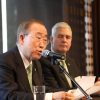
Former UN Chief Takes the Helm of Global Green Growth Institute
In the face of climate change and growing energy demand in developing countries, Ban Ki-moon, the new president and chair of the Global Green Growth Institute (GGGI), unveiled his vision for a more sustainable path by helping countries in their transition to greener economies and achieving the Sustainable Development Goals (SDGs).
GGGI supports Rwanda in solving pressure to the provision of water
Rwanda, although predominantly rural, has been urbanizing rapidly, from a half-million urban residents in 1995 to more than three and a half million today.
A Breath of Fresh Air in India
With India’s citizens clamouring for breathable air and efficient energy options, the country’s planners are more receptive than ever to explore sustainable development options, says Frank Rijsberman, Director-General of the Global Green Growth Institute (GGGI).
GGGI to Assist Thailand to Close Financial Gaps for Green Growth
Thailand, a member of GGGI, has set an ambitious greenhouse gas (GHG) reduction target of 20-25% from the business-as-usual level by 2030 under the Paris Agreement. However, the country is faced with a bold challenge in securing resources for green growth and low-carbon investment.
Greening India for a Sustainable Tomorrow
Actions taken today in the pursuit of environmentally sustainable and socially inclusive growth path in India stand to benefit more than 17 percent of the world’s population. A sustainable future for India carries an impact for the subcontinent and the entire world.Committed Investment Promises Huge Boost in Renewables Uptake
New study findings by the Global Green Growth Institute (GGGI), published yesterday in Energy Policy, an international peer reviewed journal, reveal that investment in renewables to the tune of US$258 billion will be required for 27 of its 36 member and partner countries to significantly reduce emissions and boost renewable target achievement by 2030.
Promoting Green Growth to Meet Global Aspirations for Gender Equality
The world has seen tremendous economic growth over the last decades, which has led to poverty reduction and increased welfare for millions of people. Environmental sustainability and social inclusiveness are key to the resilience of these gains and continued growth. “Leaving no one behind” as we navigate a shift towards green economies must be woven throughout the growth and development agendas.
Inclusive Green Growth Must Shape Thailand’s Future, Says GGGI Chief
Energy efficiency in industries presents a unique opportunity for Thailand’s environmental and economic policies as regional trends push towards more inclusive and sustainable green cities for the country and its neighbors, says the Director-General of the Global Green Growth Institute (GGGI) Dr. Frank Rijsberman.
GGGI and the OECS ink an MoU to establish green growth cooperation
The Global Green Growth Institute (GGGI) and the Organisation of Eastern Caribbean States (OECS), an international Inter-governmental organization dedicated to economic harmonization and integration in the Eastern Caribbean signed a Memorandum of Understanding (MoU) on February 23, 2018 in Saint Lucia to pursue joint programs and activities in support of capacity building and development of green growth options for developing countries.« Previous Page — Next Page »





Based in Seoul, the Global Green Growth Institute (GGGI) is an intergovernmental organization that supports developing country governments transition to a model of economic growth that is environmentally sustainable and socially inclusive. GGGI delivers programs in 26 partner countries with technical support, capacity building, policy planning & implementation, and by helping to build a pipeline of bankable green investment projects. More on GGGI’s events, projects and publications can be found on www.gggi.org.

The Week with IPS

NEXT STOP - SDGs
Tracking global progress towards a sustainable world
Tracking global progress towards a sustainable world
