Languages
Sunday, November 15, 2026



News and Views from the Global South
Global Governance

COVID-19 Pandemic Vulnerable to Exploitation by Proliferators, Terrorists & Criminals
Even during this pandemic, perhaps especially during this pandemic, the global institutions to help prevent the spread of biological and chemical weapons to proliferators or terrorists must continue their work.
Only Sustainable Investment & Global Cooperation Can Counter COVID’s Blow to SDGs
We are today in a time of crisis—a time when our shared choices will shape the way history tells our story and the paradigm shift it has so forcefully provoked.
The Crises of 2020 Will Delay the Transition to Clean Energy
The oil slump, global recession and uncertainty about the magnitude of the COVID-19 pandemic will fuel the appetite for cheaper fossil fuel energy and delay investments in renewables, affecting the targets of the Paris Agreement on climate change and the Sustainable Development Goals (SDGs).
SDGs: the Challenge to Improve Lives After the COVID-19 Crisis
The SDGs, with their universal scope, interlinked nature and focus on leaving no one behind will be more essential than ever during and after this crisis.
Children under Lockdown get a ‘Learning Passport’
Soon schools in Timor-Leste, Ukraine, and Kosovo, where some 6.5 million children are currently at home, will hopefully start teaching their children once again -- albeit online.
UN’s Development Goals Threatened by a World Economy Facing Recession
The UN’s 17 Sustainable Development Goals (SDGs), described as an integral part of its highly-ambitious development agenda, may be in deep trouble.
Q&A: Continued Social Distancing and Hundreds of Millions More in Poverty – A New Normal for the World?
With much of the global economy stalled amid an unprecedented lockdown of nations grappling to contain the COVID-19 pandemic, the author of a new United Nations report on the disease’s impact on poverty told IPS that hundreds of millions more could be pushed into poverty and we can expect to see social unrest.
Coronavirus, New Threat for Mexican Migrant Workers in the U.S.
As the high season for agricultural labour in the United States approaches, tens of thousands of migrant workers from Mexico are getting ready to head to the fields in their northern neighbour to carry out the work that ensures that food makes it to people's tables.
Haunting Forest Spirits – is Mother Nature Striking Back?
Epidemic diseases are not random events that afflict societies capriciously and without warning, on the contrary, every society produces its own specific vulnerabilities. To study them is to understand the importance of a society's structure, its standard of living, and its political priorities. […] Epidemics are a mirror, they show who we really are: Our ethics, beliefs, and socio-economic relationships. Frank Snowden 1
Global Leaders Must Prioritise Children’s Wellbeing amid Coronavirus Pandemic – UN
United Nations Secretary General António Guterres on Thursday pleaded with global leaders and families to ensure the protection of the world's children, millions of whom he says are vulnerable to a myriad of threats as a result of the shutdown arising from the global coronavirus pandemic.
UN Faces Financial & Liquidity Crisis as Global Pandemic Rages
The current financial crisis, triggered as a result of withholding or delaying payment of assessed contributions by Member States, is nothing new to the United Nations.
As US Unemployment Hits a Staggering 22 Million, Will UN Layoffs Be Far Behind?
The deadly coronavirus COVID-19, which has shut down the UN secretariat in New York, along with 32 of its agencies globally, has forced over 37,500 UN staffers worldwide to work from their homes.
On Watching Contagion: What Do We Learn?
Contagion is a 2011 film by US director Steven Soderbergh (Erin Brockovich, Traffic, Che) that has proved very popular viewing during the first few weeks of the Coronavirus crisis. Set in a fictional global pandemic – modelled on the outbreak of a bat-borne Nipah virus identified in 1999 that killed around 100 people in Malaysia - the film is a tightly-written topical drama with a great castthat includes Matt Damon, Gwyneth Paltrow, Jude Law, Laurence Fishburne, Kate Winslet, Marion Cotillard and Jennifer Ehle.
Concerns for the Nearly 400 Rohingya Refugees Rescued off the Coast of Bangladesh
Nearly 400 Rohingya refugees have been rescued in Bangladesh after being at sea for two months.
Amid Coronavirus Pandemic, SDGs are Even More Relevant Today Than Ever Before
Our world today is dealing with a crisis of monumental proportions. The vicious, novel coronavirus is wreaking havoc across the globe, destroying lives and ruining livelihoods.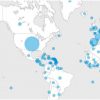
In His Fight Against WHO, Trump Plays Politics with Human Lives
President Donald Trump’s threat to abruptly cut all US funding to the World Health Organization (WHO) has been described as ‘reckless and deadly”—particularly at a time when the Geneva-based UN agency was engaged in an uphill battle against the spreading coronavirus.
The COVID-19 Cash Crisis: Will the UN Cease to Exist?
The coronavirus pandemic has set off an unprecedented institutional crisis at the United Nations – funds are drying up, key meetings are cancelled and the world body is fighting for its future.
Q&A: How to #BeActive during COVID-19 Lockdown
Growing up in Ramallah in Palestine, Maher Nasser, Director of Outreach Division at the United Nations Department of Global Communications, never really liked running. "I only ran when I needed to: to catch a bus or to run from soldiers," he tells IPS. But now with three marathons under his belt -- which raised thousands for scholarships for Palestinian women’s education -- Nasser is still running, albeit on his balcony.
Hegemony Shift in Times of COVID-19
We have long speculated on the moment when the shift of global leadership from the United States to China would take place. From Washington to Beijing for the political power, from New York to Shanghai for the economic one. It seems that we are witnessing it now.
Covid-19 & its Impact on the Work of Disarmament
Humanity has faced no challenge greater than COVID-19 since the Second World War. As this rapidly developing global health emergency places unprecedented strain on our medical, economic and social systems, we must work hard to prevent new risks for instability, unrest and conflict.
NGOs Pivot to COVID-19 Prevention in Refugee Camps
We are living in uncertain times. All of us are experiencing the Corona pandemic in various ways. For most it means quarantine and physical isolation. We worry about family members, loss of income and not knowing what the future will look like- or how long this will continue.« Previous Page — Next Page »


The Week with IPS

NEXT STOP - SDGs
Tracking global progress towards a sustainable world
Tracking global progress towards a sustainable world
