Languages
Sunday, November 15, 2026



News and Views from the Global South
Global Governance

U.N. Releases Report on Socio-economic Effects of Coronavirus
As the number of coronavirus cases continues to grow, concerns are simultaneously growing about the current and long-term effects this will have on certain demographics -- specifically, women, the youth, migrant workers, and many employees around the world.
What More than COVID-19 to Jolt G20 into Collective Action?
My recent study on “The G20@10: Time to shift gears” 1 shows that, during the past decade, the main joint, collective action of the G20 has been to issue communiqués and other types of statements.
Can We Use Digital Technology to Cushion the Pandemic’s Blow?
As the world grapples with COVID-19, governments face a daunting challenge: limiting the adverse impact of a pandemic that has ground economic activity to a halt, affecting people at a scale rarely seen before.
Coronavirus Proves Need for Free Healthcare for All– Now
The multi-layered crisis of the Coronavirus epidemic has been a dramatic shock to everyone. But, to communities affected by HIV and AIDS, the crisis has not only brought a further shock to already vulnerable people, it has brought other reactions too – a troubling sense of déjà vu, and a passionate, empathetic, fierce solidarity with all those affected by Coronavirus.
Modern Day Slavery Reaches a Far Corner of the World
The deadly, fast-spreading coronavirus which upended three key UN conferences—on the empowerment of women, on nuclear disarmament and on indigenous rights—claimed another casualty last week when a commemorative meeting on the transatlantic slave trade was postponed.
Saluting IPS Journalists and Supporters during Covid19 Pandemic
As the coronavirus pandemic shifts around the world, now stretching even the developed health services of richer nations to breaking point, here at IPS our dedicated journalists in developing countries are standing strong in giving a voice to the Global South.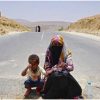
Coronavirus Worsens Yemen’s Long Tale of Woe
In every room in Yemen’s Al-Saba’een hospital, patients in critical condition waited on chairs, and still others laid on the bare ground. I saw women and girls sharing beds in pairs, and children laying close together being treated.
East Asian Lessons for Controlling Covid-19
By the third week of March 2020, the number of Covid-19 deaths in Italy had overtaken the number of deaths in China. Authorities all over the world are restricting the movements of their populations as part of efforts to control the spread of Covid-19.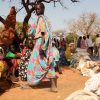
What does U.N. Secretary General’s Call for Ceasefire Mean for Countries in Conflict?
Conflict experts are concerned the the global ceasefire called for by the United Nations amid the coronavirus outbreak may not work and could lead to a rise in violence.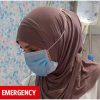
White Supremacists, Yellow Peril & “Chinese Virus” Add to a Volatile Political Mix
When US President Donald Trump repeatedly characterized the fast-spreading COVID-19 as a “Chinese virus” last week, it prompted some white supremacists to resurrect an age old ethnic slur against Chinese and East Asians: the “Yellow Peril” which, in a bygone era, was touted as a xenophobic threat to the Western world.
Fighting Coronavirus: It’s Time to Invest in Universal Public Health
Austerity policies pushed by international financial institutions have weakened public health systems, despite current financial support packages, condemning many people to die.
Could the Coronavirus Be a Biological Weapon in the Not-Too-Distant Future?
The devastating spread of the deadly coronavirus across every continent-- with the exception of Antarctica-- has triggered a conspiracy theory on social media: what if the virus was really a biological weapon?
Coronavirus & Water Pandemics: Doing the Math
As the COVID-19 coronavirus pandemic spreads, guidance on how wash your hands and other measures intensifies. These recommendations are important, but they are hardly of value to the 40% of humanity lacking access to even the most basic hand washing requirements — soap and water 1.
Could the Coronavirus Pandemic have been Avoided if the World Listened to Indigenous Leaders?
Mina Setra remembers the story clearly. As a Dayak Pompakng indigenous person from Indonesia, when visitors from the city who came into her community; brought bottled water with them because they were worried about the water not being suitable for drinking.
Why Rich Countries must Protect Developing Nations from Coronavirus Pandemic
Governments in wealthy, first world countries must not ignore the plight of poorer nations battling the coronavirus or the disease will not be brought under control, global development experts have said.
A Woman Peacebuilder’s Reflections on Beijing+25 & the Generation Equality Forum
Where are the women and youth peacebuilders in the Beijing+25 and the Generation Equality Forum processes? Their absence raises serious questions about the effectivity and coherence of the work of the UN on gender equality since armed conflict is both a cause and a consequence of gender inequality.
The 2020 NPT Review Conference: From the Sublime to the Ridiculous
This year marks the 50th anniversary of the nuclear Non-Proliferation Treaty (NPT) and coincidentally the tenth quinquennial (five yearly) review conference is scheduled to be held at the United Nations in New York from 27 April to 22 May.
UN Reaches 90:90 Gender Parity in Senior Leadership Transforming Organizational Culture
The United Nations claims it has reached one of its primary goals relating to women’s rights in the world body: gender parity at senior levels of management and in the highest echelons of the Organization.
TikTok: Expressive Mechanism for many dealing with today’s world
“What do you get from the TikTok videos? Do you prefer the platform for entertainment, passing time or for connecting with your friends? I have seen comical videos, venting sessions and some that do not make any sense what so ever and some are just rude, making fun of others.” I asked the 14-year-old k-popper teenager flipping through the pages of a manga book while he chose to respond in English coming from a Spanish speaking family and studying Mandarin as a third language.
The Arc of Justice: The World’s Religions Launch Strategic Priorities for Peace
As a growing public health crisis becomes increasingly urgent, prominent global actors and institutions, including the United Nations, are confronted by the realisation that all hands on deck are required to address the cross-cutting challenges faced by our world today.
There Can Be No Green Peace Without Gender Equality
Gender inequality - like the climate emergency - is not inevitable, but is kept in place by the poor choices too many cis men make on a daily basis. And it is not just womxn who are hurt and trapped by this patriarchal problem, but girls and non-binary people too, as well as many boys and men.« Previous Page — Next Page »


The Week with IPS

NEXT STOP - SDGs
Tracking global progress towards a sustainable world
Tracking global progress towards a sustainable world
