Languages
Thursday, November 12, 2026



News and Views from the Global South
Global

In a Watershed Year for Climate Change, the Commonwealth Secretary-General calls for Urgent, Decisive and Sustained Climate Action
This November, five years after signing the Paris Agreement and pledging to limit global warming to 2 degrees Celsius above pre-industrial levels, with a further target of below 1.5 degrees Celsius, world leaders will meet in Glasgow, UK amid COVID-19 pandemic shocks, rising hunger and an Intergovernmental Panel on Climate Change report that warns of more extreme temperature, droughts, forest fires and ice sheet loss due to human activity.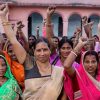
“Time Is A-Wasting”: Making the Case for CEDAW Ratification by the United States
The U.S. is one of only a handful of countries that has yet to ratify the Convention on the Elimination of Discrimination against Women (CEDAW), rendering it “strange bedfellows” with Sudan, Somalia, Iran, Tonga, and Palau.
End Vaccine Apartheid
Vaccine costs have pushed many developing countries to the end of the COVID-19 vaccination queue, with most low-income ones not even lining up. Worse, less vaccinated poor nations cannot afford fiscal efforts to provide relief or stimulate recovery, let alone achieve Agenda 2030.
The Main Contradiction of the Modern Era
The main contradiction of the modern era, and indeed of all human history, is not between capitalism and socialism, and not even between authoritarianism and democracy, but between individualism and collectivism, between public and personal interests. Countries that are getting ahead in the economic race allow themselves the luxury of individualism, prioritizing human rights, which ultimately undermines their political and economic power and causes their decline and the rise of more collectivist civilizations. It is literally the story that is as old, as the world itself…
Civil Society Must Build on Protest Movements – Podcast
 2020 was a year of tremendous upheaval. The murder of George Floyd, followed by global Black Lives Matter protests, Covid-19 and the stark light that the pandemic shone on inequality within countries and between the global north and south, protests and brutal repression after elections in Belarus, ongoing demonstrations for climate action led by youth around the world, to name just a few.

IUCN Congress to Push for Stronger Regulations against ‘Imported Deforestation’
As Arti Prasad rode the Kuala Lumpur Pavilion mall escalator up to the third floor, a pair of luscious lips pouted down at her. Next to the towering and oversized lips, the vibrant red shades of lipstick on the giant screen immediately caught the 36-year-old Indian tourist’s fancy.
South Korea’s Women Fire Back
A strong movement of feminism is sweeping South Korea. While women feel empowered to stand their ground, the men are retaliating. When South Korean archer An San won two gold medals in just two days during the recent Tokyo Olympics, the response the 20-year-old received at home was a mixed. Some men were angered and said her medals should be taken away. Why? Because her short hair was a sign that she was a ‘man-hating’ feminist.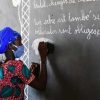
Social Protection at a Crossroad—and Poverty On the Rise
How can we ensure a resilient and inclusive recovery from COVID-19? How can we hold on to the target of eradicating poverty and hunger by 2030, with the pandemic still ongoing?
Allow Least Developed Countries to Develop
The pandemic is pushing back the world’s poorest countries with the least means to finance economic recovery and contagion containment efforts. Without international solidarity, economic gaps will grow again as COVID-19 threatens humanity for years to come.
Closed Borders and Hostile Receptions Await Afghan Refugees
Whether desperately trying to get a place on the last evacuation flights out of Kabul or trekking to the borders with neighbouring Pakistan and Iran, tens of thousands of Afghans are fleeing their country once more. Events are unfolding at speed. The Taliban are establishing a central government in the capital to fill the void of the collapsed western-backed administration, but they do not control all the country as the protracted civil war enters a new stage. The UN refugee agency UNHCR says that in its “worst case scenario” it is preparing for around 500,000 new refugees in the region by the end of this year. As with many past estimates that could prove optimistic.
Vaccine Access Negotiations to Resume as New Variants Spread
A committee that has spent almost a year negotiating the terms of a temporary intellectual property waiver for Covid-19 medicines will reconvene in September after pausing for the European Summer.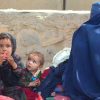
Crisis in Afghanistan: All Eyes on Central Asia
The political and human catastrophe in Afghanistan is threatening to boost autocratic tendencies in Tajikistan and Uzbekistan. With the withdrawal of US and coalition forces from Afghanistan and the rapid takeover by the Taliban, neighbouring Central Asian countries are once again at the focus of international attention.
Needed in the Global South: Wastewater Collection for COVID-19 Detection
Understanding the scale and intensity of the COVID-19 virus and its emerging variants, predicting the pandemic’s direction, and developing and refining associated management response options are challenges likely to confront public-health officials and national governments worldwide well into the future.
Why Do Organizations Fail to Keep Workplace Harassments in Check
“Sexual harassment is not about sexual attraction, it is about power. If an individual uses power plays to subjugate other people, when we have such dynamics going on in the workplace, what we need is a system that fights back against it, which unfortunately a lot of workplaces, they allow it to persist,”, says Adrienne Lawrence, anchor and legal analyst in an interview given to me here.
Resilience in a Riskier World
Over the past two decades, the Asia-Pacific region has made remarkable progress in managing disaster risk. But countries can never let down their guard. The COVID-19 pandemic, with its epicentre now in Asia, and all its tragic consequences, has exposed the frailties of human societies in the face of powerful natural forces. As of mid-August 2021, Asian and Pacific countries had reported 65 million confirmed coronavirus cases and more than 1 million deaths. This is compounded by the extreme climate events which are affecting the entire world. Despite the varying contexts across geographic zones, the climate change connection is evident as floods swept across parts of China, India and Western Europe, while heatwaves and fires raged in parts of North America, Southern Europe and Asia.
Prioritising Profits Reversed Health Progress
Instead of a health system striving to provide universal healthcare, a fragmented, profit-driven market ‘non-system’ has emerged. The 1980s’ neo-liberal counter-revolution against the historic 1978 Alma-Ata Declaration is responsible.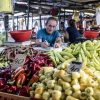
How to Feed the World Without Starving the Planet is a $15 Billion Question
A population of more than 9 billion people, hotter temperatures, decaying ecosystems and increasingly severe natural disasters. That is what our world is facing by 2050 because of climate change.
NDC Partnership: Supporting a Global Network of Youth Climate Advocates
Just over six months after launching its Youth Engagement Plan, the NDC Partnership, the coalition assisting governments with their climate action plans, has brought together youth climate advocates for its inaugural NDC Global Youth Engagement Forum.
How to Protect Your Data from Malicious Encryption?
Ransomware is deploying its encryption right on your computer. The malicious process runs in the background as you continue your everyday activities suspecting no cyber disaster ahead.
A New Global Agenda on Sport for 2030
Does sport need to change to better serve society? What can sport and development actors do better in the future? How can sport play a greater role in contributing to development and peace? Can we reimagine the role of sport? Can we resolve the conflict and contradictions inherent within sport?
Privatised Health Services Worsen Pandemic
Decades of public health cuts have quietly taken a huge human toll, now even more pronounced with the pandemic. Austerity programmes, by the International Monetary Fund (IMF) and World Bank, have forced countries to cut public spending, including health provisioning.« Previous Page — Next Page »





The Week with IPS

NEXT STOP - SDGs
Tracking global progress towards a sustainable world
Tracking global progress towards a sustainable world
