Languages
Wednesday, November 18, 2026



News and Views from the Global South
Global

Coronavirus Exposes Global Economic Vulnerability
As the outbreak of the novel coronavirus COVID-19 threatens a global pandemic, major stock markets around the world have suffered their worst performance since the 2008 financial crush.
To Attack a Female Journalist’s Credibility, Go After Her Body
Brazilian journalist Patrícia Campos Mello made her career reporting from conflict zones around the world -- but lately, the greatest threats to her security are coming from closer to home.
UN Report: World remains a ‘violent, highly discriminatory place’ for girls
Twenty-five years after the historic Beijing women’s conference in China – a milestone in advancing equal rights – violence against women and girls is not only common, but widely accepted, a new UN report revealed.
Coronavirus Threatens to Wreck Nuclear Review Conference
First, it was the ill-fated annual sessions of the UN Commission on the Status of Women (CSW), scheduled for March 9-20, which was undermined by the spreading coronavirus COVID-19.
Sexist Economies Where World’s 22 Richest Men Have More Wealth than All the Women in Africa
This International Women’s Day, 25 years after we first heard it declared that “women’s rights are human rights” at the historic Beijing 1995 Fourth World Conference on Women, we need to take the space and time to reflect on just how far we’ve come – and just how much more work there is to do.
It is Time for Action! Uniting for Africa’s Transformation
Twenty-five years ago, thousands of representatives adopted the Beijing Declaration, one of the most progressive universal agreement to advance women’s rights.
Helping Advance Women’s Political Rights in Ecuador
Inclusion of women in political processes is one of the key ingredients of sustainable peace. Although the number of women in political office has increased worldwide over the past 25 years, progress has been slow.
Coronavirus Claims its First UN Casualty
The deadly coronavirus COVID-19, which is spreading across China, Japan, South Korea, Iran, Italy-- along with new cases in Asia, Western Europe and the Middle East-- has claimed one of its first casualties at the United Nations.
Q&A: Misinformation in the Time of an Uncontainable Virus
Just a month since the World Health Organization declared the Coronavirus a public health emergency, it is now taking steps to contain misinformation being spread about the disease. Globally, there have been more than 82,000 cases of Coronavirus, which has claimed 2,800 lives -- the majority being in China, where the disease has been traced to.
Let’s Prevent Post-partum Depression and Provide Care to Those in Need
Recently, Nigerian feminist author Ukamaka Olisakwe spoke about her post-partum depression after giving birth in the city of Aba, southeast Nigeria. This follows her 2019 Longreads essay, in which she narrated painful details of her experience.
UN Chief Should Lead by Example on Human Rights
United Nations Secretary-General Antonio Guterres has long needed to overhaul his approach to human rights. Hopefully his call to action announced in Geneva yesterday is the start of something new.
Preserving World’s Biodiversity: Negotiations Convene at FAO Headquarters
“The world out there is watching and waiting for results,” Elizabeth Maruma Mrema warns while talking to IPS regarding the preservation of biodiversity of our planet.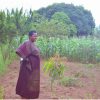
Ugandan Farmer Ends Food Insecurity for Family & Community
In Aboke, Uganda, a modest restaurant serves locals breakfast, lunch and dinner. Carol Agoa isn’t just the owner and cook, she also supplies all of the food for her restaurant.
No Country On Track to Ensuring a Better Future for its Children
There is no country that is on the right path to ensure the safety, health and proper environment for their children, an explosive report has claimed.
SDGs Corporate Tracker to Monitor Progress of UN’s Development Agenda
This year marks just ten years ahead of the deadline for completing the UN Sustainable Development Goals (SDGs) by 2030. These universally supported targets were always ambitious in their scope – yet what is clearer now than ever before is that quicker progress is crucial in the decade to come.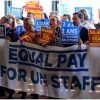
UN Accused of “Hypocrisy” Launching Equal Pay Day While Condoning Wage Discrimination
The United Nations, which has long preached the irrefutable concept of income equality to the outside world, is now accused of condoning wage discrimination in its own backyard.
A Post-2020 Global Biodiversity Framework Aims at Reinforcing Efforts to Save World’s Ecosystem
The UN’s highly-touted socio-economic agenda, which lays out an ambitious global plan for “people, planet and prosperity”, has been dominated by “goals, targets and deadlines.”
Generation Equality: Four Ways to Accelerate Progress
The global gender community will meet in New York in March to review progress on gender equality and women’s empowerment in the 25 years since the Beijing declaration. The theme for this year’s Commission on the Status of Women gathering is Generation Equality, emphasizing how the current generation must close the gender gap.
Fiscal Policies For Women’s Economic Empowerment
Making sure that opportunities to enter the workforce are fair and rewarding for women benefits everyone. Yet, the average female workforce participation rate across countries is still 20 percentage points lower than the male rate, largely because gender gaps in wages and access to opportunities, such as education, stubbornly persist.
As Planet Burns, One Million Species in World’s Eco-System in Danger of Extinction
When UN Secretary-General Antonio Guterres addressed the 193-member General Assembly last December, he focused on the smoldering climate crisis-- pointing out that the last five years have been the hottest ever recorded.
Global Economy Still Slowing, Dangerously Vulnerable
In an annual ritual early in the year, most major economic organizations have released forecasts for the global economy in 2020. Incredibly, almost as a reminder of where financial power resides in this day and age, the International Monetary Fund (IMF) released its forecasts at the World Economic Forum’s 50th annual meeting in Davos.« Previous Page — Next Page »


The Week with IPS

NEXT STOP - SDGs
Tracking global progress towards a sustainable world
Tracking global progress towards a sustainable world
