Languages
Saturday, November 21, 2026



News and Views from the Global South
Global

Women and Girls Imperative to Science & Technology Agenda
Can you imagine an entire day without access to your mobile phone, laptop, or even to the internet? In our rapidly changing world, could you function without having technology at your fingertips?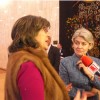
Dying for the News: Media Call for Help from Gov’t and Public against Attacks
“No story is worth dying for.” This comment at a landmark conference on media safety at UNESCO last Friday emphasised the bewilderment the media felt at the brutal slayings of journalists as they carry out their work.
IPS joins in the call to enforce international law to protect journalists
While our goal at Inter Press Service is to provide information – a precious global public good – we naturally applaud all efforts to foster and promote the safety of journalists, and so applaud UNESCO’s international conference in Paris on Friday, February 5, 2016 with media executives and member states to discuss just that.After 20 Years, Nuclear Test Ban Treaty Still in Political Limbo
After nine years in office, UN Secretary-General Ban Ki-moon will step down in December perhaps without achieving one of his more ambitious and elusive political goals: ensuring the entry into force of the Comprehensive Nuclear-Test-Ban Treaty (CTBT).
“A Fair Day’s Wage for a Fair Day’s Work?”
“During the first months in Italy, I always prayed for rain. I spent hours checking the weather forecast” said Roni, a 26 year old graduate from a middle-income family in Bangladesh. His father, a public servant and his mother a home maker, Roni had to sell umbrellas on the streets of Rome for more than a year before finding a summer job by the sea at a coffee shop, popularly known as a ‘bar’ in Italy.
Europe is disintegrating while its citizens watch indifferent
We are witnessing the slow agony of the dream of European integration, disintegrating without a single demonstration occuring anywhere, among its 500 millions of citizens. It is clear that European institutions are in an existential crisis but the debate is only at intergovernmental level.
2 Billion Couples and 10 Relationship Challenges
The relationship challenges that the world’s 2 billion couples confront vary considerably by circumstances, including age, sex, education, income, marital status, family size, length of relationship, urban-rural residence, customs, religion and region of the world. Nevertheless, 10 major challenges among married and cohabiting couples may be identified across countries.
Media Come Together to Discuss Safety of Journalists, Fight Against Impunity
Amid continuing attacks on journalists, media representatives from around the world will meet in the French capital this week to discuss how to reinforce the safety of those working in the sector. Organized and hosted by the United Nations cultural agency, UNESCO, this “unprecedented” meeting between media executives and the agency’s members states on Feb. 5 is an attempt to “improve the safety of journalists and tackle impunity for crimes against media professionals”, UNESCO said.Ebola Recovery Funds Impossible to Track, Says New Study
When the Ebola epidemic devastated three West African countries – Liberia, Sierra Leone and Guinea two years ago – the international community responded with pledges of over $5.8 billion in funds to fight the disease which has killed over 11,300 people.Core Principals of Climate Finance to Realize the Paris Agreement
The Paris climate change conference brought together 197 countries and over 150 Heads of State – the largest convening of world leaders in history – to agree on measures and work together to limit the global average temperature rise.
Global Renewable Energy Investments a Win-Win Scenario
The Paris climate change agreement adopted at the end of 2015 has put renewable energy at the heart of global energy system with investments expected to grow further even amidst the decline in fossil fuels.
The Lesson from Davos: No Connection to Reality
The rich and the powerful, who meet every year at the World Economic Forum (WEF), were in a gloomy mood this time. Not only because the day they met close to eight trillion dollars has been wiped off global equity markets by a "correction". But because no leader could be in a buoyant mood.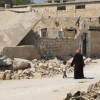
UN Fighting Losing Battle Over Global Humanitarian Crises
As the global refugee crises continues to worsen by the hour, UN Secretary-General Ban Ki-moon is quick to point out that when he took office in January 2007, the international appeal for funds for humanitarian emergencies was only about 4.0 billion dollars annually.
Bali holds Family Planning Conference Amidst Many Unmet Needs
Porter Ngengh Tike is in her late thirties, but looks well over 50. For 8 hours every day, she carries around a large bamboo basket on her head, delivering supplies to local traders in the biggest traditional market of Bali – Pasar Badung. At the end of the week, she earns about 18 dollars - a sum that Tike uses for food, household expenses and her 10- year old son’s education. So, when it comes to seeing a doctor, there is no money, says Tike who suffers from genital infections.
The Trans-Pacific Partnership Fraud
The Trans Pacific Partnership Agreement (TPPA), negotiated in Atlanta in October 2015 and to be signed in Auckland in February 2016, privileges foreign investors while imposing substantial costs on partner countries. Touted as a ‘gold standard’ 21st century trade deal, it is critical to ascertain what gains can really be expected and whether these exceed costs.Zero Hunger? UN Leads With Landfill Salad and Recycled Food
When the United Nations hosted a high-level lunch for visiting world leaders at the UN dining room during the General Assembly sessions last September, they were in for an unexpected surprise.The State We’re In: Ending Sexism in Nationality Laws
Everyone has the right to be born with a nationality – safe, fearless and free – and secure in their human right to equally transfer, acquire, change or retain it. There is no reason why over 50 countries should still have sexist nationality and citizenship laws, which largely discriminate against women, potentially putting them and their families in danger and denying them the rights, benefits and services that everyone should enjoy.Iraq’s Civilians Continue to Bear the Brunt of Instability: UAE Paper/Newswire
At least 18,802 people were killed in Iraq and another 36,245 were injured; this is the number of civilians killed in violence over the past two years and it is staggering.
After a Historic Success, Urgent Challenges Face the WTO
In 2015 the international community took some huge strides forward on a number of vital issues. There was the agreement on the United Nations new Sustainable Development Goals.
One Fish Two Fish, No Fish: Rebuilding of Fish Stocks Urgently Needed
A major new study has revealed that the global seafood catch is much larger and declining much faster than previously known.New Year, New Fight Against Inequality
With New Year’s resolutions already fading fast for most people, attention turns to what 2016 will really hold. And so it is for those wanting to tackle the world’s biggest problems.« Previous Page — Next Page »


The Week with IPS

NEXT STOP - SDGs
Tracking global progress towards a sustainable world
Tracking global progress towards a sustainable world
