Languages
Monday, November 23, 2026



News and Views from the Global South
Global

Expo 2012 Shadows Rio+20 on Sustainable Oceans
When the U.N. Conference on Sustainable Development (UNCSD) takes place in Brazil next week, it will be closely shadowed by another event thousands of kilometres away in the South Korean coastal town of Yeosu: Expo 2012.
U.S.: Law of the Sea Treaty Ratification Faces Unsettled Waters
Given the wide range of its supporters – everyone from the U.S. Chamber of Commerce and the Joint Chiefs of Staff of the U.S. Armed Forces to Greenpeace – one would think that Senate ratification of the 1982 Law of the Sea Treaty (LOST) would be a slam dunk.
Money Still “Buys” You Gold at the Olympics
The Olympic Games are widely viewed as a chance for countries to showcase their fastest, strongest, most skilled and disciplined athletes, a time when political, economic and cultural differences are set aside and individuals are judged on personal merit alone.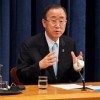
RIO+20: Earth Summit Negotiated the Size of the Zero
Amidst much political fanfare, the 1992 Earth Summit in Rio de Janeiro concluded with the adoption of the Rio Declaration on Environment and Development and the landmark Agenda 21 blueprint for a sustainable future in the 21st century.
Activists Call for Creation of High Commissioner for Future Generations at Rio+20
The theme of the United Nations Conference on Sustainable Development (Rio+20) is "The Future We Want", but there is no official role for youth nor a spokesperson for future generations who will inherit that future.
Politics Heats Up Around Arctic Thaw
The best way to protect the Arctic is for all nations with an interest in the region to participate in its governance - including non-Arctic nations like China, Brazil, and Singapore - suggests a new report.Fewer but Newer Nuclear Arms Deemed Future Threat
"The best way to eliminate the nuclear threat anywhere is by eliminating nuclear weapons everywhere," says Secretary-General Ban Ki-moon, who is increasingly viewed as one of the strongest opponents of nuclear arms.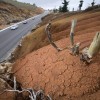
“Land Is Our Ally, But Its Patience Is Not Eternal”
Land degradation poses a threat to all life on Earth including humanity. To stop the enormous loss of life-giving land, the United Nations Convention to Combat Desertification (UNCCD) is pushing for a sustainable development goal of Zero Net Land Degradation (ZNLD) to be adopted at the upcoming Conference on Sustainable Development, known as Rio+20, in Brazil.World Bank Lauded for Publishing Sanctions Decisions
This week, for the first time, the World Bank began publishing decisions by the institution's sanctions board on cases involving fraud or corruption.
U.N. Aims To Offset its Own Carbon Footprint
As the international community readies for a global mega-conference on sustainable development in Brazil mid-June, the United Nations is determined to practice what it preaches to the outside world: improve resource efficiency and drastically reduce its own greenhouse gas emissions.
For an Ailing Planet, the Cure Already Exists
The planet's climate recently reached a new milestone of 400 parts per million (ppm) of carbon dioxide in the Arctic.
Syria Simmers Amid U.N. Security Council Deadlock
The United States and its Western allies appear increasingly inclined to push for regime change in Syria, although the latest round of diplomatic talks at the U.N. Security Council Wednesday suggest that it remains a distant possibility.
RIO+20: Canada, Last Holdout, Drops Opposition to Water as Human Right
Canada, in a dramatic political turnaround, has signaled its willingness to recognise water and sanitation as a basic human right.
Rio+20 – a Call to Responsibility, a Call to Action
We are all going through a period of great confusion and uncertainty.Billions of Development Dollars in Private Hands
With governments and international institutions focusing increasingly on a stronger role for the private sector in development aid, a new report by the European Network on Debt and Development (Eurodad) released yesterday suggests there is good reason to doubt this approach.Korea Takes the Spotlight with Yeosu Expo
The Yeosu Expo 2012 exemplifies how the Republic of Korea (ROK) has made its debut on the world stage.
Time for a More Sustainable Global Food System
It is vitally important that governments and civil society organisations start transitioning to a more sustainable global food system in order to achieve lasting development.
Canadian Banks Navigate Treacherous Waters
Potential storms are on the horizon for much praised, regulated and privately-owned Canadian banks which survived the 2008 financial meltdown unscathed, unlike some of their larger counterparts in the United States.Energy Agency Looks to Natural Gas “Golden Age”
If a series of "golden rules" can be followed, a new report from the International Energy Agency (IEA) suggests, global natural gas usage could grow by more than 50 percent by 2035.
A Future With Food, or No Future At All
The upcoming Rio+20 Conference on Sustainable Development will not succeed if the crises of hunger and malnutrition are not effectively addressed. The issues are so inextricably linked with sustainable development that they have to be part of the agenda, according to a report released Wednesday by the United Nations Food and Agricultural Organisation (FAO) for the upcoming Earth Summit that will take place in Rio de Janeiro from Jun. 20-22.
Climate Change and Family Planning – Twin Issues for LDCs
The reproductive rights agenda, from improving women’s access to education to systematic family planning to reducing birth rates and combating poverty, has become a cornerstone of most industrialised nations’ development policies toward the least developed countries (LDCs), comprised primarily of sub-Saharan African states.« Previous Page — Next Page »


The Week with IPS

NEXT STOP - SDGs
Tracking global progress towards a sustainable world
