Languages
Tuesday, October 13, 2026



News and Views from the Global South
Global
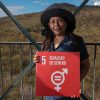
There Is No Democracy Without Gender Equality
Violence against women and girls is one of the most widespread and persistent abuses of fundamental rights at a global level that, to a certain extent, derives from what we consider "normal" in our societies. In addition to firmly condemning that every three women in the world suffer from physical or sexual violence, we must question what we are normalizing as a society for this to happen.
Amidst a Horrendous 2023, Civil Society is Fighting Back Society
The year 2023 has brought so much tragedy, with incomprehensible loss of lives, whether from wars or devastating ‘natural’ disasters, while our planet has seen yet more records broken as our climate catastrophe worsens. And so as the clock ticks towards the (mostly western) New Year, readers are traditionally subjected by media outlets like ours to the 'yearender'—usually a roundup of main events over the previous 12 months, one horror often overshadowed by the next.
The Opaque Chain of Electric Cars Assembled in Mexico
The city of Austin, Texas, on the U.S.-Mexico border, had 945,000 residents in 2021 and on average each household owned two cars, hundreds of them electric. Among the manufacturers of these electric vehicles are companies such as the US Tesla, Ford and General Motors (GM).
World Bank Enables Private Capture of Profits, Public Resources
The World Bank insists commercial finance is necessary for achieving economic recovery and the Sustainable Development Goals (SDGs), but does little to ensure profit-hungry commercial finance serves the public interest. By failing to address pressing challenges within their purview, the second-ever Bretton Woods institutions’ (BWIs) annual meetings on the African continent, in Marrakech in October 2023, set the developing world even further back.
Watching the Arctic Melt, Meteorologist’s Experience on Icebreaker Oden
Conflicting emotions greet the outcomes of COP28. After 28 years of climate conferences, an agreement has, for the first time, proclaimed that fossil fuels are the biggest culprit behind the warming of our planet and stated that it would encourage all nations to “accelerating action in this critical decade so as to achieve net zero by 2050 in keeping with the science." The agreement calls for, among other things, a tripling of renewable energy by 2030, but also an increased pace in the work to develop technical solutions for the separation and storage of carbon dioxide, an extremely expensive and, so far, limited effort.
UN and Humanitarian Partners Seek USD 46 Billion for Humanitarian Assistance
Funding humanitarian programs will continue into the new year, but the funding cuts of the previous year may impact the prioritization of the most immediate and most life-threatening needs. The Office for the Coordination of Humanitarian Affairs (OCHA) released the Global Humanitarian Overview (GHO) for 2024. This annual assessment of the global humanitarian sector provides insight into the humanitarian action undertaken by the UN and its partners and reviews current and future trends in this sector.
IFAD’s Record-Breaking Pledges: Lifeline for Rural Communities Cornered by Climate, Hunger
The world is not on track to end hunger and poverty as a future of growing food insecurity and climate challenges beckon. Small-scale farmers are the backbone of food production, producing one-third of the world’s food and up to 70 percent of the food consumed in Africa and Asia, yet they are often cut off from the services they need to pull themselves out of poverty and food insecurity.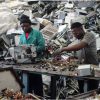
Sustainability, Human Wellbeing Depend on Rethinking, Redefining Value of Resources
While the COP28 presidency celebrated an “historic deal” to transition away from fossil fuels, we must remind ourselves that the future wellbeing of human societies in a livable planet depends on more than that.
‘Imperfect COP28’ Gives Direction For Managed, Equitable Move From Fossil Fuels
While the outcomes of COP28 are being hotly debated in both the scientific and social justice arenas, the climate conference has taken an unprecedented step forward toward a just transition, says Yamide Dagnet, Director for Climate Justice at the Open Society Foundations.
COP28: Deal to ‘Transition Away’ From Fossil Fuels Agreed
It was an extraordinary COP Summit in a year characterized by record-breaking temperatures combined with El Niño, producing a climatic carnage in Africa—deaths from fatal floods in the Democratic Republic of the Congo, Kenya, and Libya, where floods wiped out a quarter of a city. Deadly cyclones in Malawi, Madagascar, Mauritius, Mozambique, and Zimbabwe; a severe drought in Kenya, Niger, Somalia, Ethiopia, Mauritania, and Djibouti; and a months-long winter heatwave in southern African countries—the need for COP28 to deliver the highest ambition on all items.
Rich Nations, IMF Deepen World Stagnation
With the US Fed raising interest rates, the world economy is slowing as debt distress spreads across the global South, increasing poverty worldwide to pre-pandemic levels, with the poorest countries faring worst.
What Is the Cost of Phasing Out Fossil Fuels in Latin America?
One of the most heated debates at the annual climate summit coming to a conclusion in this United Arab Emirates city revolved around the phrasing of the final declaration, regarding the "phase-out" or "phase-down" of fossil fuels within a given time frame.
The Solutions to Child Poverty Must Reach the Most Vulnerable Communities
Child poverty persists even in some of the world’s richest countries, new findings from a UNICEF report reveal.
‘Stop Wars and Step Up ‘Measly’ Contributions’ to Climate Finance—Jeffrey D. Sachs
The United State's contribution to the Loss and Damage Fund equals nine minutes of Pentagon spending, says Jeffrey D. Sachs, a world-renowned economist, bestselling author, innovative educator, and global leader in sustainable development.
Finance at COP28: After the Euphoria, Come Questions Galore
On November 30, the first day of COP28, the much-awaited Loss and Damage Fund—a landmark decision to compensate the world’s most climate-affected and climate-vulnerable people—was declared operational. Announcing the decision, COP28 President Dr Sultan Al Jaber said, ‘the fact that we have been able to achieve such a significant milestone on the first day of this COP is unprecedented. This is historic.”
Charting Out a Sustainable Path for Island, Coastal Communities Facing Climate Crisis
There is an irreparable connection between culture and the seas: loss of land due to rising sea levels and loss of livelihood due to changing fish migration patterns are having a massive impact on coastal communities.
Fair taxation for All
Champagne corks popped in New York after the majority voted in favour of a UN tax convention. The clear result paved the way for a stronger role of the United Nations in shaping more inclusive and effective international tax cooperation. This fulfils a decades-long demand by the G77 group and the international civil society.
U.S. Misuses Trade Agreements to Undermine Food Sovereignty
The dispute mounted by the U.S. government over Mexico's policies to restrict the use of genetically modified corn is the latest example of the misuse of a trade agreement to impede social programs in Mexico and other countries. The U.S. government has been doing this for years.
Freedom, Equality and Justice Lead to Peace
Today we mark a milestone in history: the 75th anniversary of the Universal Declaration of Human Rights. As people around the world commemorate Human Rights Day, we must also deeply reflect on the meaning of this historic document and what it takes to achieve peace in the world.
Farm to Fork: COP28 Provides RoadMap to Fix Africa’s Broken Food Systems – IFAD
In the absence of sufficient urgency to curb greenhouse gas emissions, it is becoming too hot to farm in Africa. Confronted by extreme, intense, and frequent climate events such as record-breaking prolonged dry spells, current agriculture and farming systems are ill equipped to adapt to or alleviate climate change.
Fashion Forward: Protect Africa from ‘Fagia’ Amid Alarming Global Stocktake
Thousands of bales of cheap, poor-quality secondhand clothing arrive on boats and ships docking on Africa’s extensive 26,000-kilometer-long coastline, dotted with at least 100 ports and harbors. From Nigeria, Zimbabwe, Madagascar, Uganda, and Kenya, Africa’s ecosystems are chocking with cheap, air-polluting, and emissions-producing low-quality clothing as they often contain plastic-based fibers.« Previous Page — Next Page »





The Week with IPS

NEXT STOP - SDGs
Tracking global progress towards a sustainable world
Tracking global progress towards a sustainable world
