Languages
Wednesday, November 11, 2026



News and Views from the Global South
Headlines

Human Rights Protection Crucial to Meeting the 2030 AIDS Public Health Goals
Gaps in realising human rights could stop AIDS being ended as a public health threat by 2030, UNAIDS has warned in a report to mark World AIDS Day.
Explainer: Why COP29 Baku Outcome is a Bad Deal for Poor, Vulnerable Nations
The culmination of bitter, difficult, and challenging climate negotiations concluded with an announcement from the COP29 Presidency of Azerbaijan of the "agreement of the Baku Finance Goal—a new commitment to channel USD1.3 trillion of climate finance to the developing world each year by 2035." This is on top of the USD 300 billion that the developed world is to extend to developing nations annually by 2035.
Nature, Climate, and Prosperity: Unlocking the Power of Integrated Action
As the world faces escalating challenges, from climate change to biodiversity loss and ecosystem degradation, there is now a rapidly expanding understanding that these crises are deeply interconnected.
Expand choices for Women, Prevent New HIV Infections in Africa
In Uganda, women and girls are more affected by HIV. Out of 1.4 million people living with the disease, 860 000 are women and girls. According to UNAIDS, every week, 4,000 adolescent girls and young women aged 15–24 years became infected with HIV globally in 2023, with 3,100 of these infections occurring in sub-Saharan Africa.
Mayan Farmers Improve Their Livelihoods and Polyculture of Milpa in Mexico
María Bacab, a Native Maya, considers herself the “guardian of seeds” as she cares for the milpa - an ancestral Mesoamerican polyculture that mixes maize, beans, squash and other vegetables - and promotes its practice and use in Mexico.
Free Cesarean Sections in Nigeria: Can This Policy Truly Deliver?
In Nigeria, over 80,000 women die each year from pregnancy and childbirth complications. Recently, Nigeria’s coordinating minister of health and social welfare, Muhammad Pate, announced the Maternal Mortality Reduction Initiative. It aims to provide free cesarean section (CS) and essential maternal care to poor women nationwide, ensuring safer childbirth and improved maternal health outcomes. Free CS is a life-saving solution. But while the idea is great, let’s take a closer look to unpack how it can really help Nigerian women.
UNiTE: Violence Against Women—A Plight That Spares No Country Across All Continents
Despite the 1,583 legislative measures in 193 countries around the world, violence against women has not been eradicated or even abated.
60 Percent of Femicides Are at the Hands of a Partner or Family
Every 10 minutes, one woman or girl is killed at the hands of their partner or other family member. This is only scratching the surface on how femicide, one of the most extreme forms of violence against women, persists at high levels around the world. UN-Women and the UN Office of Drugs and Crime (UNODC) released a joint report, Femicides in 2023: Global Estimates of Intimate Partner/Family Member Femicides, on November 25, the International Day for the Elimination of Violence against Women.
Sudan Ravaged By Disease, Famine, and War
As living conditions in Sudan deteriorate as a result of the Sudanese Civil War, levels of famine and violations of international humanitarian law continue to accelerate among the roughly 11.5 million displaced persons. Conflict between the Rapid Support Forces (RSF) and the Sudanese Armed Forces (SAF) have severely hampered aid efforts, leaving millions of civilians to deal with widespread disease and an overall lack of essential resources.
Ensuring Violence-Free Homes for Sri Lankan Women
A woman’s right to live free from violence is upheld by international agreements like the 1979 Convention on the Elimination of All Forms of Discrimination against Women and the 1993 UN Declaration on the Elimination of Violence against Women.
It’s About our Entire Planet: The Pandemic of Violence Against Women
The 16 Days of Activism to end gender-based violence, started with seeking to eliminate violence against women (VAW). This year’s theme highlights the reality that violence against women and girls is of pandemic proportions. The figures are galling.
Can Pay, Won’t Pay—COP29 Outcome Far from Promised Historic Deal of a Lifetime
They say it is taboo to talk about money. But this is exactly what developing countries came for: to haggle and push for the climate finance deal of a lifetime, as the climate crisis is, for them, a matter of life and death. Wealthy nations also came for their own deal of a lifetime—to hoist the climate finance burden on the private sector as they take the bare minimum financial responsibility.
Global Climate Challenges: Perspectives from a Chinese COP29 Delegate
As COP29 draws to a close, voices from diverse regions have shed light on their contributions, challenges, and aspirations in tackling the climate crisis.
Insights From Negotiator into How COPs Move Needle Towards Healthy, Liveable Planet
Every year, the Conference of the Parties creates a global milestone for the climate movement, setting new standards and advancing action towards a net-zero planet to sustain all life on earth. COPs provide a platform for the global community to agree on what it would take to restore planet Earth and the contributions that all signatories to the Paris Agreement should make.
‘AI-powered Weapons Depersonalise the Violence, Making It Easier for the Military to Approve More Destruction’
CIVICUS discusses the dangers arising from military uses of artificial intelligence (AI) with Sophia Goodfriend, Post-Doctoral Fellow at Harvard Kennedy School’s Middle East Initiative.
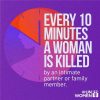
Climate Change in Azerbaijan is Putting Women at Increased Risk of Gender-Based Violence
Climate change exacerbates existing gender inequalities and gender-based violence. At COP29 in Azerbaijan, governments have been urged to prioritize gender-responsive climate policies that address the specific needs of women and girls, and serious concerns have been raised about backtracking on women’s rights during these crucial negotiations on climate action.
Once in a Blue Moon, Things Don’t Fall Apart
The drive home is uneventful. Our Bolt driver is a careful driver—the bright, half-moon provides a delightful end to an evening of song and good food. Our last night as an IPS team at COP29 in Baku, Azerbaijan.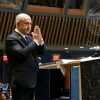
International Criminal Court Issues Arrest Warrant for Netanyahu
On November 21, the International Criminal Court issued arrest warrants for Israeli Prime Minister Benjamin Netanyahu, as well as the former defense minister Yoav Gallant. In a statement released by the ICC, both Netanyahu and Gallant are wanted for crimes against humanity and war crimes that spanned from at earliest October 8 2023 through May 20 2024. This coincides with Israel’s respective wars with Lebanon and Palestine, for which there have been extensive damage on civilian infrastructure, thousands of civilian casualties, and repeated blockages of humanitarian aid.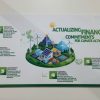
Explainer: Green Climate Fund Draft Negotiations at COP29
The Green Climate Fund (GCF) negotiations brought attention to the progress, challenges, and future strategies for enhancing its effectiveness in fostering a just and sustainable energy transition.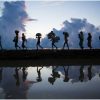
Migration Remittances: Pursuit of Greener Pastures Opens Door for Climate Financing
COP29 delegates have elaborated on how Africa’s dependency on agriculture is becoming increasingly untenable amidst alarming levels of global warming, wrecking havoc on the sector. Coastal communities, pastoralists, and those in the drylands are in the thick of the climate chaos.
Stand Up, Speak Out: A Global Call to Men on the 25th Anniversary of International Day for the Elimination of Violence Against Women
In 1960, the Rafael Trujillo regime in the Dominican Republic assassinated the Mirabal sisters— renowned and respected for their courage and activism against dictatorship. To give their senseless violent death some meaning and to preserve their legacy, in 1999, the United Nations inaugurated November 25—the day of their assassination—as the International Day for the Elimination of Violence Against Women (EVAW).« Previous Page — Next Page »





