Languages
Thursday, November 19, 2026



News and Views from the Global South
Health

PPPs Likely to Undermine Public Health Commitments
The United Nations Agenda 2030 for the Sustainable Development Goals (SDGs) is being touted in financial circles as offering huge investment opportunities requiring trillions of dollars. In 67 low- and middle-income countries, achieving SDG 3 — healthy lives and well-being for all, at all ages — is estimated to require new investments increasing over time, from an initial $134 billion annually to $371 billion yearly by 2030, according to recent estimates by the World Health Organization (WHO) reported in The Lancet.
Fate of the Rohingyas – Part Two
With discussions underway between Bangladesh and Myanmar about the repatriation of more than a half a million Rohingya refugees, many critical questions remain, including how many people would be allowed back, who would monitor their safety, and whether the refugees even want to return to violence-scorched Rakhine state.
Thousands Still Dying at Sea En Route to Europe
Amid concerns that 160 people may have drowned while attempting to cross the Mediterranean this week alone, the UN refugee agency have urged countries to offer more resettlement places.
The Data Revolution Should Not Leave Women and Girls Behind
If there is one political principle that has been constant throughout the history of human civilization it is the fact that land is power. This is something that is particularly true, and often painfully so, for women who farm in Africa.
Marooned in Bangladesh, Rohingya Face Uncertain Future
Hundreds of thousands of Rohingya refugee women from Myanmar are currently living in the cramped camps along Bangladesh Myanmar border. Victims of sexual and physical violence in the Rakhine state, women have been disproportionately affected by this crisis and these women’s perils are far from over in the host country as they continue to face multifaceted challenges.
The Political Responsibility in the Collapse of Our Planet
On 20 December, Europe’s 28 Ministers of Environment met in Brussels, to discuss the plan for reducing emissions prepared by the Commission, to comply with the Paris Agreement on climate change. Well, it is now clear that we have lost the battle in keeping the planet as we have known it. Now, of course, this can be considered a personal opinion of mine, devoid of objectivity.
How a Venezuelan Living with HIV Could Change the Way Mexico Deals with Refugees
As Daniel*, a 26-year-old architect, stood before a visibly exhausted doctor in the main public hospital of the once-idyllic beach resort town of Isla Margarita, northern Venezuela, a terrifying premonition took hold of him.
Rise of Teenage Pregnancy Deters Development Goals
A few years ago, someone shared a video with me that deeply impacted me. It was called "The Girl Effect". In three minutes, the video demonstrates the fate of millions of girls and teenagers around the world.
Production Diversity, Diet Diversity and Nutrition in Sub -Saharan Africa
Lack of diet diversity is viewed as the major cause of micronutrient malnutrition in Sub-Saharan Africa. Imbalanced diets resulting from consumption of mainly high carbohydrate based-diets also contribute to productivity losses and reduced educational attainment and income. Consequently, micronutrient malnutrition is currently the most critical for food and nutritional security problem as most diets are often deficient in essential vitamins and minerals. In Tanzania, for example, most rural and urban households consume mainly staples as their main food, which are high in carbohydrates, but low in micronutrients and vitamins. Staple food items increase energy availability but do not improve nutritional outcomes if not consumed together with micro-nutrient rich foods.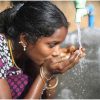
Water, Water Everywhere, Costs More Than You Might Think
Without reliable access to water, human beings cannot survive. Yet 3 out of 10 people do not have a safely managed water supply, and 6 out of 10 lack safely managed sanitation. Over 2 billion people drank water that was fecally contaminated in 2015, and the World Bank estimates that the annual cost of poor sanitation is in excess of $260 billion annually.
No Health Protection for Migrant-Women Healthcare Givers
While the media may be attracted by images of migrants drowning or sold as slaves, another flagrant but lesser-known drama is that of care workers, who are overwhelmingly women, often migrants, and who make a very large contribution to global public health, but are exposed to great health risks themselves with little or no protection, let alone basic labour rights.
Rohingyas: Lurching from Crisis to Crisis
Ferdous Begum was cleaning her child after he had defecated in the open, using leaves she collected from a nearby tree at Bangladesh’s Teknaf Nature Park. The settlement is packed with Rohingya refugees who fled military persecution in Myanmar since August.
Rohingya Refugees Endure Lingering Trauma
Twelve-year-old Rubina still struggles with the horrors she witnessed in her homeland in Myanmar before fleeing to neighbouring Bangladesh three months ago.
For Freedom from Poverty, Universal Health Coverage Is a Must
Today is 12 December 2017 is an auspicious day, as it marks Kenya’s independence from colonial rule in 1963. Today is also Universal Health Coverage Day. It is the anniversary of the first unanimous United Nations resolution calling for countries to provide affordable, quality health care to every person, everywhere.
Debate on Glyphosate Use Comes to a Head in Argentina
In and around the city of Rosario, where most of Argentina's soybean processing plants are concentrated, a local law banned the use of glyphosate, the most widely-used herbicide in Argentina. But two weeks later, producers managed to exert enough pressure to obtain a promise that the ban would be overturned.
Rohingya Refugees: The Woes of Women (Part Two)
Under pouring rain, hundreds of young and expectant mothers stand in line. With her bare feet and the bottom of her dress covered in mud, Rashida is one of them, clutching her emaciated infant. She lost her husband on the treacherous trek from Myanmar to Bangladesh, and with nowhere to go and her resources exhausted, rain-drenched and standing in this long, muddy line for food and medicine for her child is her only hope.
Rohingya Refugees: The Woes of Women – Part One
Afia* lines up her bucket every morning in the refugee camp for water delivery from humanitarian relief workers. On one particularly sweltering day, she kept four water pitchers in a row with gaps between them, hoping to insert another empty container in the space when the water arrived.
Resistance to Antibiotics: The Good, the Bad and the Ugly
The growing resistance to antibiotics and other antimicrobials due to their overuse and misuse both in humans and animals has become an alarming global threat to public health, food safety and security, causing the deaths of 700,000 people each year. This is a fact.
Rohingya Exodus Is a “Major Global Humanitarian Emergency”
In less than four months, over 600,000 Rohingya refugees have fled brutal persecution in Myanmar to seek safety across the border in Bangladesh. They are now crowded into camps across a stretch of 30 kms in Cox's Bazar, a southeastern coastal region of the small South Asian nation.
Action Needed to Avoid the End of Modern Medicine
The next time you have a bad cold and reach for the antibiotics left over from your last visit to the doctor, think again.
Rohingya Refugees Face Fresh Ordeal in Crowded Camps
Mariam Akhtar, 23, is desperately searching for her young daughter two weeks after arriving from Myanmar in Cox’s Bazar, a southeastern coastal district in Bangladesh.« Previous Page — Next Page »


 Bangladesh: Sarid, born one month early, receives specialized newborn care and grows stronger every day. Credit: UNICEF/UNI944397/Mojumder
Since the onset of the 2000s, global life expectancy has seen an overall rise, attributed to significant technological and scientific innovations in healthcare. Due to an increased understanding of different conditions as well as a rise in cooperation among healthcare experts around the world, there have been major strides made in ensuring that as few people die from chronic illnesses as possible. Despite the belief that healthcare is a fundamental human right, people from low- or middle-class backgrounds, marginalized groups, and underdeveloped countries have far more limited access to basic healthcare services.
The COVID-19 pandemic showed how marginalized communities are disproportionately affected by health crises, proving that we have much work to do in ensuring that no one dies of terminal conditions. While the global response to the coronavirus saw significant strides in immunization and vaccine development, the global outbreak of mpox in 2022 and its upsurge in parts of Africa in 2024 must remind us to remain vigilant.
Other major disease outbreaks in recent years have been linked to the destruction of infrastructure during warfare. Notably, in 2024, the Gaza Strip witnessed a return of the poliovirus since its eradication in the region 25 years ago. Israel’s blockade on Gaza has resulted in the collapse of the region’s sewage plants and desalination plants, and also destroyed healthcare capacities. The UN stated that this lack of clean water and sanitation would lead to an outbreak of cholera and other deadly infectious diseases. The 2026 OCHA Humanitarian Situation Report confirmed that the over two years of conflict in Gaza has produced a catastrophic health emergency, with millions remaining dependent on relief aid amid tight restrictions and no functioning public health system.
IPS is committed to providing full and comprehensive coverage on healthcare challenges around the world. IPS seeks to address the multifaceted causes of such challenges, including unprecedented pandemics, conflict-driven disease outbreaks, as well as socioeconomic barriers to equal healthcare access. IPS is also dedicated to reporting on innovations in the healthcare industry.

The Week with IPS

NEXT STOP - SDGs
Tracking global progress towards a sustainable world
Tracking global progress towards a sustainable world
