Languages
Monday, August 24, 2026



News and Views from the Global South
Health

Maquila Female Workers in Their Own Words: Fighting COVID and Labor Abuse
A compilation of testimonies collected by Blanca Velázquez Díaz and published by the Ebert Foundation (available at: http://library.fes.de/pdf-files/bueros/mexiko/17328.pdf) offers an account of the harsh reality by which some workers of the maquila industry in the Mexican state of Morelos have gone through over these last twelve months. Their words reflect, undoubtedly, similar experiences of millions of workers in different parts of the country.
„We will overcome it“: Experiences of the impact of COVID-19 in Suva, Fiji
 This short video explores the experiences of COVID-19 in Fiji's capital, Suva, by University students. The participants reflect on the impact of the virus in the Pacific nation, where themes such as the emotional implications of COVID as well as its effects on the economy, food security, resilience and more are discussed.

Centering Equity: A Vision for Global Health in 2021
2020 will be remembered as the year that changed the world, as COVID-19 spared no country, no community, and no person. As the pandemic continues in 2021, there is recognition that some groups are impacted more than others, not just by the virus itself, but also by the socio-economic and access inequities exacerbated by global shutdowns. Globally, countries, and organisations are seeking to build back better and address inequities.
Hope & Numbers: What will it take to Tip the Scales on Climate Action?
We should be well on the way to solving the climate crisis by now. According to the Paris Agreement, last year should have been the year that all countries presented their commitments to cut carbon emissions for limiting global climate heating to within 1.5oC of pre-industrial levels.
End Vaccine Apartheid Before Millions More Die
At least 85 poor countries will not have significant access to coronavirus vaccines before 2023. Unfortunately, a year’s delay will cause an estimated 2.5 million avoidable deaths in low and lower-middle income countries. As the World Health Organization (WHO) Director-General has put it, the world is at the brink of a catastrophic moral failure.
Water Governance and Data Collection is Key to Reach Development Goals
Prioritising water governance and ensuring data collection and investment in groundwater use around the world are some of the key issues that need to be addressed with regards to achieving development goals.
The UN Food Systems Summit: How Not to Respond to the Urgency of Reform
Global food systems have been failing most people for a long time, and the COVID-19 pandemic has made a critical situation even worse. 265 million people are threatened by famine, up 50% on last year; 700 million suffer from chronic hunger; and 2 billion more from malnutrition, with obesity and associated diet-related diseases increasing in all world regions.
Why Water & Sanitation Systems are Vital for the Economy
This World Water Day, we celebrate the value of water, which at first might be a given: after all, water is the basis of all life. Without water we have no health, wealth, equality, or education.
The Value of Water Goes Far Beyond its Stock Price
In the midst of a global pandemic, when the presence of water in our lives has never seemed more important, its future availability has also never been more uncertain.
Access to Safe Water Never Loses Value
The global community is celebrating World Water Day 2021. In the COVID-19 pandemic era, the importance and value of water for all people has never been clearer. Access to safe water is essential for public health and thriving communities.
Oral Health Should be a Development Priority
The mouth is a barometer of social inequities -- it reflects the injustices in our society. As George Cuvier, an 18th century naturalist said: "Show me your teeth, and I will tell you who you are". To me, as a dentist, the mouth is like a microscope that reveals more than just tooth decay. It exposes us to a world where people lack access to water, health, quality education and live on low income.
A Moral Failure: Billions of People with No Access to Clean Drinking Water
Water is integral to sustainable development, but we are well behind on the goals and targets that we have set ourselves.
Clean Water Vital for Protecting Those on the Frontline of Climate Change in Post-Pandemic World
For many, the last year will be remembered as the time our day-to-day lives screeched to a halt. As Covid-19 spread mercilessly across the world, wreaking havoc on health and livelihoods, world leaders, health experts and scientists grappled with how to protect populations and stem the tide of the virus.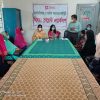
Five Steps to Combat Gender-Based Violence Globally
The 410 Legal Aid Centers that I manage in Bangladesh for BRAC’s Human Rights and Legal Aid Services received approximately 35,900 requests for assistance in 2020. Almost all of them involve gender-based violence against women and girls.
Inequality, COVID-19 and the Plight of the Young
Inequality characterizes the world we live in, predisposing how we act and think. We perceive our existence as composed of dichotomies – men and women, young and old, black or white, as well as a difference between those who have and those who do not have access to wealth, health, education and influence. Dichotomies are also born out of comparisons, about how things are now and how they could have been, how they were before and how they are now.
Sustainable Development Goals Can Guide Asia-Pacific to Build Back Better
The COVID-19 crisis poses an unprecedented threat to development in the Asia-Pacific region that could reverse much of the hard-earned progress made in recent years. The good news is we know how to tackle this challenge. Recovery from the pandemic and our global efforts to deliver the United Nations Sustainable Development Goals (SDGs) by 2030 must go hand-in-hand. The Goals provide a compass to navigate this crisis, faster and greener, everywhere and for everyone.
International Women’s Day, 2021
More Women Leaders Make Better Societies
This year it will be 128 years since the right of women to vote was first recognized, with New Zealand becoming the first nation to allow the participation of women in its general election in 1893.
From the suffragettes - to today’s feminists, both men and women have fought to increase women’s political participation and representation. It has been a slow, sometimes bitter and occasionally even dangerous struggle. Yet global progress remains slow and uneven – as it does in Samoa. As we approach the 2021 General Election on 9 April, it is important to remember that women’s full and effective participation in all areas of life drives progress for everyone.

The Ongoing Fight for Gender Parity in Lebanon
The fight for equality around the globe has taken a few steps forward in some countries which provides a glimmer of hope for future generations for increased female participation and representation. However, that particular fight is taking new shapes and forms in multiple corners of the world, where women are still persecuted, silenced, threatened, killed, harassed, and stripped off their basic human rights on a daily basis. The question today is, when will the world become a safer place for women and girls?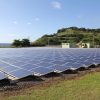
Only Small Percentage of COVID-19 Recovery Allocated to Green Initiatives
Last year, only $368 billion of a $14.6tn budget geared towards COVID-19 recovery measures across the world’s largest 50 countries took into account green recovery initiatives, according to a report launched yesterday, Mar. 10.COVID-19 Education Response: Education Cannot Wait and Partners Reach over 9 Million Vulnerable Children and Youth
As the world marks the one-year anniversary of the COVID-19 pandemic on 11 March 2021, initial progress reports on Education Cannot Wait’s (ECW) COVID-19 emergency responses to date show that the Fund and its partners have already reached over 9 million vulnerable girls and boys in the midst of the worst education crisis of our lifetime.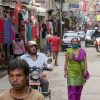
More ‘Can & Must be Done’ to Eradicate Caste-Based Discrimination, Says UN Rights Chief
There is hardly a better way to promote human rights in Nepal than celebrating Muskan Khatun for being one of the winners of the prestigious International Women of Courage (IWOC) Award, released on the International Women’s Day by the Government of the United States of America.« Previous Page — Next Page »


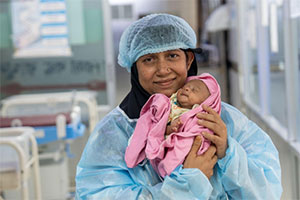 Bangladesh: Sarid, born one month early, receives specialized newborn care and grows stronger every day. Credit: UNICEF/UNI944397/Mojumder
Since the onset of the 2000s, global life expectancy has seen an overall rise, attributed to significant technological and scientific innovations in healthcare. Due to an increased understanding of different conditions as well as a rise in cooperation among healthcare experts around the world, there have been major strides made in ensuring that as few people die from chronic illnesses as possible. Despite the belief that healthcare is a fundamental human right, people from low- or middle-class backgrounds, marginalized groups, and underdeveloped countries have far more limited access to basic healthcare services.
The COVID-19 pandemic showed how marginalized communities are disproportionately affected by health crises, proving that we have much work to do in ensuring that no one dies of terminal conditions. While the global response to the coronavirus saw significant strides in immunization and vaccine development, the global outbreak of mpox in 2022 and its upsurge in parts of Africa in 2024 must remind us to remain vigilant.
Other major disease outbreaks in recent years have been linked to the destruction of infrastructure during warfare. Notably, in 2024, the Gaza Strip witnessed a return of the poliovirus since its eradication in the region 25 years ago. Israel’s blockade on Gaza has resulted in the collapse of the region’s sewage plants and desalination plants, and also destroyed healthcare capacities. The UN stated that this lack of clean water and sanitation would lead to an outbreak of cholera and other deadly infectious diseases. The 2026 OCHA Humanitarian Situation Report confirmed that the over two years of conflict in Gaza has produced a catastrophic health emergency, with millions remaining dependent on relief aid amid tight restrictions and no functioning public health system.
IPS is committed to providing full and comprehensive coverage on healthcare challenges around the world. IPS seeks to address the multifaceted causes of such challenges, including unprecedented pandemics, conflict-driven disease outbreaks, as well as socioeconomic barriers to equal healthcare access. IPS is also dedicated to reporting on innovations in the healthcare industry.

The Week with IPS

NEXT STOP - SDGs
Tracking global progress towards a sustainable world
Tracking global progress towards a sustainable world
