Languages
Tuesday, November 17, 2026



News and Views from the Global South
Health
OSCE PRESS RELEASE: COVID-19/Human Trafficking
How to address the consequences of the COVID-19 pandemic for the most vulnerable in our societies, especially for human trafficking victims and survivors, is the focus of a set of recommendations to governments published by the OSCE Special Representative and Co-ordinator for Combating Trafficking in Human Beings Valiant Richey today.
The COVID-19 Pandemic and the Reinvention of the Spirit of Solidarity and Cooperation
An invisible adversary has thrown the world – Global South and Global North alike – into disarray. The psychosocial and economic consequences of the COVID-19 crisis will remain with us long after it has been overcome. There will be no anti-viral return to the pre-coronavirus status quo, nor can we afford to idly wait for a viral transformation of our world. The future is not inevitable, abstract promise – it will depend on our collective readiness to forge it, or to be forged by it.
Public Health and Epidemics
For some time Wuhan in China and Lombardy in Italy were epicentres of the COVID-19 virus, something that has changed when the contagion is spreading fast in the US. A Lombardy in the grip of a deadly epidemic might among several Italians give rise to memories of their school days. For almost a century, Alessando Manzoni’s massive novel The Betrothed (I promessi sposi) from 1842 has been obligatory reading for all Italians during their last primary school year. A quite impressive endeavour considering that the novel is more than 700 pages long.
Only Sustainable Investment & Global Cooperation Can Counter COVID’s Blow to SDGs
We are today in a time of crisis—a time when our shared choices will shape the way history tells our story and the paradigm shift it has so forcefully provoked.
Press Freedom Needs Protection from Pandemic too
Wearing an orange jacket and face mask, Li Zehua, a Chinese freelance journalist, can be seen filming himself in a car. He is sure that state security agents have been pursuing him since he began documenting events in Hubei’s capital Wuhan, the first epicentre of the COVID-19 pandemic. A second YouTube video, circulating widely since he launched his appeal, ends abruptly when two men knock at his apartment. He has just reappeared online after two months, saying police interrogated him and put him in quarantine and that he was well looked after during this period.
Amid Covid-19 Hunger Fear Mounts in Bangladesh
 The world is at risk of widespread famines resulting from lockdowns to contain the spread of the coronavirus pandemic. The devastating economic impact of Covid-19 is seeing a huge rise in the number of hungry people.

Argentina’s Debt Restructuring “Groundhog Day”… or Maybe Not? Three Key Points
On April 17, the Alberto Ángel Fernández administration in Argentina officially unveiled its offer for debt restructuring on USD 66 billion foreign currency-denominated bonds. Starting on that date, the offer is valid for 20 days, a period during which difficult negotiations with bondholders are expected to take place. Based on the first reactions from some of creditor groups, one could well get the sense that the offer is “dead on arrival.”
Remembering Beethoven – a Genius with a Disability
Do you recognize this man? You do, of course. It is the silhouette of Beethoven, the famous composer and pianist, well known all over the world. The year 2020 marks his 250th anniversary and the UN city of Bonn, Germany is very proud of its famous son, born here, next to the river Rhine. The calendar for 2020 shows many festivals, musical events, and exhibitions, attracting tourists and people appreciating classic music from all around the globe. We all immediately recognize his famous Fifth Symphony with the sound known worldwide of ‘da-da-da-daaaa’. As Europeans we honor his Ninth Symphony, this having been chosen as the European anthem.
Governments Cautioned Not to Use COVID-19 Lockdown to Cause Harm
The United Nations High Commissioner for Human Rights is calling on governments and leaders around the world to ensure that their respective lockdown measurements don’t end up causing harm to people by those enforcing the lockdowns. 
Pandemic Lays Bare Africa’s Deficits, but Youth Will Grow the Future
Africa’s frailties have been brutally exposed by the coronavirus pandemic. The virus has reached nearly every country on this continent of 1.3 billion people and the World Health Organization warns there could be 10 million cases within six months. Ten countries have no ventilators at all.
World Press Freedom Day: The Assault on Media Freedom in Asia Worsens During COVID-19 Pandemic
May 3rd marks World Press Freedom Day around the world. During this COVID-19 pandemic, a robust media environment is critical: access to life-saving information is key in the fight against the virus. As governments impose a range of restrictions in attempts to curb the pandemic, journalists help hold authorities to account by providing analysis, engaging in debate about government actions, and creating a space for dialogue about the future we all hope to see.
WORLD PRESS FREEDOM DAY: Journalism Without Fear or Favour
 MEDIA WORLDWIDE is facing crises on multiple fronts, exacerbated by the COVID19 pandemic. Reporters without Borders released its 2020 World Press Freedom Index on April 21st, noting that the Coronavirus is being used by authoritarian governments to implement “shock doctrine” measures that would be impossible in normal times.
Understanding the Hunger Surge Caused by the COVID-19 Recession to Mitigate It Before It Is Too Late
Many uncertainties haunt the world’s campaign to counter the COVID-19 pandemic, but one thing is now sure: Global economic activity will suffer greatly, with large-scale consequences for the incomes and welfare of all, but especially for the most vulnerable food import-dependent countries.Staring at a Human Security Catastrophe
The defining images of South Asia’s battle against Covid-19 are hundreds of thousands of migrants, many with children on their shoulders, trudging from New Delhi, Kathmandu or Dhaka to their far-flung villages. They are daily wage earners engaged in construction, small enterprises, plying rickshaws or street selling in the informal sector. With lockdowns and economic activity shut down to combat the virus, these migrants lost their low-paying jobs and were forced to flee to their rural homes. Those who remained in these cities face food insecurity, rising joblessness and risk falling deeper into poverty.
All-of-Government, Whole-of-Society Involvement Needed to Fight Virus
The Covid-19 pandemic is now widely considered more threatening than any other recent viral epidemic. Most believe that many more have been infected or even died than officially confirmed.
Why Reproductive Rights Must Be a Critical Part of Our Arsenal to Fight Pandemics
Sexual and reproductive health and pandemics might seem to be unrelated topics, but large and dense populations are drivers of the high velocity transmission of COVID-19, and there are lessons to be learned for the future.
COVID-19 Stimulus Measures Must Save Lives, Protect Livelihoods, and Safeguard Nature to Reduce the Risk of Future Pandemics
There is a single species that is responsible for the COVID-19 pandemic - us. As with the climate and biodiversity crises, recent pandemics are a direct consequence of human activity – particularly our global financial and economic systems, based on a limited paradigm that prizes economic growth at any cost. We have a small window of opportunity, in overcoming the challenges of the current crisis, to avoid sowing the seeds of future ones.
Ensuring Russia’s Sex Workers’ Rights Essential for Wider Gender Equality
Despite seeing a shift in attitudes towards them in recent years, Russian sex workers say they continue to struggle with marginalisation and criminalisation which poses a danger to them and the wider public.
Coronavirus Shows the Urgency of Ensuring that Research gets into the Public Domain
Following the outbreak and declaration of COVID-19 as a global pandemic, there has been a flurry of scientific research and publications to address challenges posed by the virus. Publications have risen exponentially over the past few months as scientists work tirelessly to find out more about the pandemic, and the SARS-CoV-2 virus causing it.
Post-Pandemic Mental Health Epidemic
The number of Nepalis suffering from mental health issues is increasing with the prolonged COVID-19 lockdown, and the lack of treatment and counselling means the country may be facing an epidemic of psychosocial disorders.
Why Covid-19 Choices Are Critical for Children
Children may escape the worst symptoms of Covid-19 and suffer lower mortality rates, but for millions, the pandemic will have devastating effects.« Previous Page — Next Page »


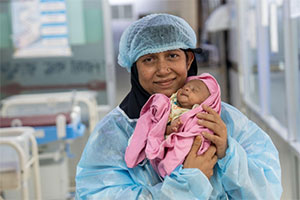 Bangladesh: Sarid, born one month early, receives specialized newborn care and grows stronger every day. Credit: UNICEF/UNI944397/Mojumder
Since the onset of the 2000s, global life expectancy has seen an overall rise, attributed to significant technological and scientific innovations in healthcare. Due to an increased understanding of different conditions as well as a rise in cooperation among healthcare experts around the world, there have been major strides made in ensuring that as few people die from chronic illnesses as possible. Despite the belief that healthcare is a fundamental human right, people from low- or middle-class backgrounds, marginalized groups, and underdeveloped countries have far more limited access to basic healthcare services.
The COVID-19 pandemic showed how marginalized communities are disproportionately affected by health crises, proving that we have much work to do in ensuring that no one dies of terminal conditions. While the global response to the coronavirus saw significant strides in immunization and vaccine development, the global outbreak of mpox in 2022 and its upsurge in parts of Africa in 2024 must remind us to remain vigilant.
Other major disease outbreaks in recent years have been linked to the destruction of infrastructure during warfare. Notably, in 2024, the Gaza Strip witnessed a return of the poliovirus since its eradication in the region 25 years ago. Israel’s blockade on Gaza has resulted in the collapse of the region’s sewage plants and desalination plants, and also destroyed healthcare capacities. The UN stated that this lack of clean water and sanitation would lead to an outbreak of cholera and other deadly infectious diseases. The 2026 OCHA Humanitarian Situation Report confirmed that the over two years of conflict in Gaza has produced a catastrophic health emergency, with millions remaining dependent on relief aid amid tight restrictions and no functioning public health system.
IPS is committed to providing full and comprehensive coverage on healthcare challenges around the world. IPS seeks to address the multifaceted causes of such challenges, including unprecedented pandemics, conflict-driven disease outbreaks, as well as socioeconomic barriers to equal healthcare access. IPS is also dedicated to reporting on innovations in the healthcare industry.

The Week with IPS

NEXT STOP - SDGs
Tracking global progress towards a sustainable world
Tracking global progress towards a sustainable world
