Languages
Sunday, November 15, 2026



News and Views from the Global South
Humanitarian Emergencies
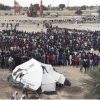
Migrants, Militias & the Mediterranean Sea
When the Italian police recently arrested Carola Rackete, captain of the Sea-Watch 3 search and rescue vessel, the Central Mediterranean Sea suddenly entered the international limelight once again.
Let’s Talk About Sex – and Why Power Matters
Every year on World Population Day (July 11), UNFPA receives queries from journalists about the total number of people around the world. Numbers are indeed important because they help governments develop policies that respond to evolving needs for services such as education and health.
Climate Change Victims: What Will You Do Next?
Contemporary politics generates a lot of noise and smoke, with little attention devoted to understanding, analysing and fixing the causes of the noise and smoke. The global public discourse is dominated by statements made by politicians and aspirants to power, designed to shock, awe and draw support.
Libya Tragedy: Why Lock up Migrants in the First Place?
A military strike on a detention centre for migrants in Libya that claimed dozens of lives on Wednesday Jul. 3 has reignited a debate over the poor treatment of the mainly African people who transit through the turbulent country.
Why Environmental and Humanitarian Action Must Be Linked
Environmental and humanitarian action is often understood as two different sectors. However, the lack of awareness regarding its intersections could lead to further long-term devastation.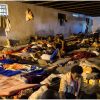
“Unimaginable Horrors” in Libya’s Migrant Detention Centers
For over 10,000 migrants fleeing to Libya from war and violence, their fate often comes down to the mercy of human traffickers or the dark unknown awaiting in detention centers.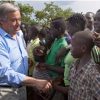
Sharing the Burden of Refugees; the World Can Do Better
As the world marks World Refugee Day on June 20th to celebrate the strength, courage and perseverance of refugees, a glaring concern remains just how inadequate the global response to the refugee crisis has been.
The Importance of the Upcoming FAO Election
With each passing day, the world gets just a little smaller as the internet and cell phones bring our communities together, reveal our shared challenges, and lay bare our failures. As global citizens, we are all concerned about the growing number of hungry people around the world and the threats to food security. The simple fact is that more than 800 million people go hungry every day, and if that number shocks you, know that experts predict the number to grow significantly over the next ten years.
The Storm is Over, But in Southern Africa, Cyclone Idai Continues to Rage for Women and Girls
In late March Cyclone Idai carved a path of devastation across Zimbabwe, Mozambique, and Malawi. It was the deadliest cyclone to hit the region in more than a century, others have even referred to it as “Africa’s Hurricane Katrina.” More than 1,000 people were killed. Many more saw their homes, food crops, and even entire villages washed away.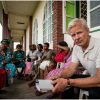
World’s Displacement Crises Worsened by Lack of Funds, Political Will or Media Attention
The world’s 10 most under reported displacement crises— which have rendered millions of people homeless– have continued to worsen due either to political neglect, a shortage of funds or lack of media attention, according to a new report released by the Norwegian Refugee Council (NRC).
Mobilisation Needed for Climate-Related Disasters
Climate-related displacement and food insecurity is not a future possibility, but it is already happening and it’s only projected to worsen without urgent action in coming years.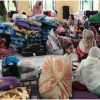
Pakistani and Afghan Refugees Seek Safe Haven in Sri Lanka
Thirteen-year-old Bariea, a Pakistani asylum seeker in Sri Lanka, is taking shelter at a mosque in the city of Negombo, where an uneasy mix of high anxiety and extreme boredom hover over the room.
Realistic & Fair Immigration: A Policy to Unite Denmark
Immigration policy has divided the people of Denmark for many years. There are few other areas where the fronts are drawn so divisively and where arguments become attacks. Maybe this is understandable? Immigration policy plays an important part when it comes to defining the country we want to be. There are deeply held emotions at stake. And more and more people are experiencing for themselves what happens when integration fails.
The Time is Now: End Sexual and Gender-Based Violence
It’s time to end sexual and gender-based violence once and for all, participants of a two-day conference said.
The UN Has Failed Civilians
Despite the United Nations Security Council’s task of protecting civilians, millions around the world are still being displaced and killed with little to no accountability for perpetrators.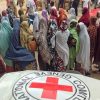
The Contribution of Humanitarian Action to Peace
The connection of humanitarian action to broader objectives like peace, development and human rights is understandably complex, but it is also an area in which some fresh thinking is important.
Cyclones and Struggling Economy Could Impact Mozambique’s Elections
Mozambique, which was affected by an unprecedented two tropical cyclones over a matter of weeks, is still reeling from the impact a month after the latest disaster. But resultant devastation caused by the cyclones could impact the country’s elections as concerns are raised over whether the southern African nation can properly hold the ballot scheduled for later this year.
Stop The War on Children
Too many children are dying as a result of explosive weapons, and the international community must step up to protect and declare children off limits in war.
Do We Need a Global Convention of Common Principles for Building Peace?
When the Stockholm International Peace Research Institute (SIPRI) concluded a three-day forum on “Peace and Development” on May 16, the primary focus was the daunting challenges threatening global security, including growing military interventions, spreading humanitarian emergencies, forced migration, increasing civil wars, extreme weather conditions triggered by climate change and widespread poverty and conflict-related hunger.
Cameroon Crisis “More Alarming Than Ever”
The United Nations must act to prevent further devastation from the escalating crisis in Cameroon, human rights groups said.
Frontex Mandate Expanded
The European Union plans to deploy 10 000 armed border guards by 2027 to patrol its land and sea borders. The force will have the power to use armed force on the EU's external borders.« Previous Page — Next Page »


 MONUSCO Peacekeepers and FARDC Soldiers Patrol Fataki Area. Credit: UN Photo/Jorkim Jotham Pituwa
Conflict, human rights violations, natural disasters, and famine have been at the forefront of concerns for humanitarian organizations. The escalation of humanitarian crises has led to over 239 million people in need of humanitarian assistance at the start of 2026, as estimated by OCHA’s Global Humanitarian Overview. The 2025 humanitarian appeal received only $12 billion, the lowest funding in over a decade, which has left 24 million fewer people reached in comparison to 2024. Conflict has remained the primary driver of crisis.
Humanitarian emergencies massively impact progress towards the Sustainable Development Goals (SDGs), adversely affecting economic development, inequality, education, planetary well-being, and poverty. Millions of people are faced with reduced access to essential services, including shelter, food, healthcare, and access to clean drinking water. UN Organizations such as UNHCR and the United Nations Children’s Fund (UNICEF) are committed to providing direct relief to affected communities when state governments cannot.
The United Nations 2024 Summit of the Future discussed measures that will be taken to reduce global inequality and promote peacekeeping efforts around the world. The recent UN Climate Change Conference (COP30) in Belém, Brazil, agreed to mobilize $1.3 trillion annually for climate action by 2035, operationalize the loss and damage fund, and triple adaptation finance. However, a fossil fuel transition commitment was not secured, despite climate change and the greenhouse effect being major contributors to humanitarian crises worldwide.
Countries across the world have also rallied to end humanitarian crises, as witnessed in conflicts such as Palestine and Ukraine. IPS is committed to providing relevant and in-depth reports of humanitarian emergencies around the world and their implications.

The Week with IPS

NEXT STOP - SDGs
Tracking global progress towards a sustainable world
Tracking global progress towards a sustainable world

