Languages
Wednesday, August 26, 2026



News and Views from the Global South
Latin America & the Caribbean
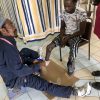
For People with Disabilities, COVID-19 Lays Bare the Weaknesses in Social Safety Nets
People with disabilities were particularly hard hit by the social and economic impacts of efforts to control COVID-19.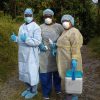
The Caribbean Looks to Research for Answers to COVID-19, NCD’s and Climate Change Challenges
In 1956, the Caribbean held its first major scientific meeting, organised by the Standing Advisory Committee for Medical Research in the British Caribbean. At the time, the Mayaro Virus, a dengue-like viral disease often called ‘jungle flu’ had just been identified as a new human disease agent by W.G Downs and G.H Wattley in Trinidad.
Soil for Survival: Countries Commit to Halt Land Degradation
India’s Prime Minister Narendra Modi has told the first United Nations General Assembly meeting on desertification and drought in a decade, that his country’s report card will show it is well on track to meet its land restoration commitments.

Betting on Green Hydrogen in Chile, a Road Fraught with Obstacles
Chile is in a privileged position in the world to produce green hydrogen and boost the development of the new fuel thanks to the country’s optimal conditions for generating solar and wind energy, but the large investment required and the scarcity of water are two of the biggest obstacles to overcome.
Damage to Coral Reefs Hurts Fishing Communities in Central America
As fisherman Luis Morán walked towards his small boat, which was floating in the water a few meters from the Salvadoran coast, he asked "How can the coral reefs not be damaged with such a warm sea?”
Infrastructure Expands in Brazil Despite Crises
Health, fiscal, environmental and political crises have not prevented Brazil from attracting private capital to expand infrastructure, according to the sector's minister, Tarcísio de Freitas.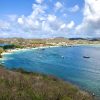
Life Below Water – the UN Calls for Action on Ocean Protection
President of the United Nations General Assembly Volkan Bozkir has told a high-level debate on oceans that the world cannot afford to delay action on ocean protection. “There is simply no scenario wherein we live on a planet without an ocean,” he said.
Sowing Water by Restoring Ancient Ditches in the Peruvian Highlands
In the highlands near the capital of Peru, more than 3,000 metres above sea level, ageold water recovery techniques are being used to improve access to water for 1,400 families, for household consumption and for crops and livestock.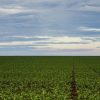
Illegal Clearing by Agribusiness ‘Driving Rainforest Destruction’
Deforestation in Latin America and the Caribbean accounts for 44 per cent of the global loss of tropical forests, with most of the conversion to agricultural land being carried out illegally, concludes a study by the non-profit organisation Forest Trends.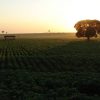
Why Latin America is the Middle East of Biofuel
Latin America has lots of natural advantages for the coming energy transition. It already has the greenest power matrix in the world. While having the planet’s largest reserves of copper make it a key provider for international electrification programmes.
China’s Firms Gain a Foothold in South America as Energy Providers
Over the past decade, state-owned enterprises (SOEs) from China have carved out a niche as owners and operators of electric utilities in South American countries through acquisitions of energy grids. As SOEs shift from their previous role as mostly builders to investors in large energy assets, policymakers in South America and in Washington should consider the implications of having these companies at the helm of such services.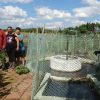
International Cooperation Gives Biogas a Boost in Rural Cuba
Yunia Cancio cooked with firewood until a few years ago, when a biodigester was built on her family’s El Renacer farm in Cabaiguán, a municipality in the central Cuban province of Sancti Spíritus, under the Biomass Cuba project. That change meant a lot for her family’s quality of life, but it was not the only one.
– Jamaica Failing to Cope with Plastic Waste –
On the occasion of World Environment Day, 5 June 2021, drawing from IPS’s bank of features and opinion editorials published this year, we are re-publishing one article a day, for the next two weeks. The original article was published on January 20 2021

Q&A: On the Frontline, Islands Aim to Seize Climate Initiatives
The “all-virtual” Latin America and the Caribbean Climate Week (LACCW) that took place May 11-14 highlighted islands’ particular vulnerabilities in the face of both climate change and the Covid-19 pandemic. But the event - hosted by the Dominican Republic - also provided “important momentum for a successful UN Climate Change Conference” (COP 26) in November in Glasgow, according to the United Nations.
South America’s Gas Dreams
The gas producing countries of South America are debating on how to make better use of the resource and how to integrate the sector, amid geographical and infrastructural barriers.
Biogas in Argentina: Turning an Environmental Problem into a Solution
"Until five years ago, we didn't know about the circular economy, but today our waste generates environmentally neutral products that also offer a return,” says José Luis Barrinat, manager of a cooperative that brings together some 550 small farmers in Monje, Argentina.
Brazil Relies on Rainfall that Depends on the Forests
"Rainfall is fundamental; the streams and rivers we have would not suffice for irrigation, even if they were the Amazon River," said Dirceu Dezem, referring to the amount of water required for the extensive crops in Brazil’s midwest.
The Complex Energy Transition of Chile’s “Sacrifice Zones”
Standing on Punta Ventanilla, Carlos Vegas, 65, looks across at the industrial park which has been there most of his life. He looks at the impact of the 15 industries spread around the bay that connects the towns of Quintero and Puchuncaví, in central Chile.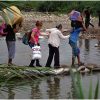
Colombia Gives Nearly 1 Million Venezuelan Migrants Legal Status and Right to Work
Colombia will grant legal status to all Venezuelan migrants who fled there since 2016 to escape their country’s economic collapse and political crisis.
Ecological Cookstoves Help Preserve El Salvador’s Coastal Mangroves
 A score of coastal communities in El Salvador are staking their bets on sustainable development as a form of life that does not overexploit natural resources diminished by years of government neglect and a lack of environmental awareness, using instruments ranging from ecological cookstoves to mangrove reforestation.
Farmers in Brazil Benefit as Biogas Replaces Firewood
"Biogas is worth gold to us, we can no longer live without it," Claudete Volkswey, a poultry farmer in the municipality of Toledo, in the southwestern state of Paraná, Brazil, said enthusiastically about the new source of energy that has allowed her to get a good night’s sleep again, because she no longer has to get up to stoke the fire every two hours.« Previous Page — Next Page » *#*

The Week with IPS

NEXT STOP - SDGs
Tracking global progress towards a sustainable world
Tracking global progress towards a sustainable world

