Languages
Sunday, November 29, 2026



News and Views from the Global South
Latin America & the Caribbean

South-South Cooperation in a Transformative Era
On 12 September, the international community commemorated the UN Day for South-South Cooperation. This is an important acknowledgement of the contributions of Southern partnerships in addressing the many development challenges that confront the international community, such as poverty, climate change, inequality, contagious diseases and humanitarian crises.
Salmon Farming, Questioned in Chile, Arrives to Argentina
Questioned for its environmental and health impacts in Chile, where it is one of the country's main economic activities, salmon farming is preparing to expand in Argentina from Norway, the world's largest farmed salmon producer. The news has triggered a strong reaction from civil society organisations.
Four-Year Drought Forces Cuba to Find Ways to Build Resilience
Eastern Cuba has suffered drought since time immemorial. But the western and central regions of the island used to be almost free of the phenomenon, until the latest drought that plagued this country between 2014 and 2017.
Maya Farmers in South Belize Hold Strong to Their Climate Change Experiment
In one of Belize’s forest reserves in the Maya Golden Landscape, a group of farmers is working with non-governmental organisations to mitigate and build resilience to climate change with a unique agroforestry project.
Equality and Territory: the Common Struggle of Indigenous Women in the Andes
"At the age of 18 I was the first female leader in my organisation, my grandfather who was a male chauvinist demanded that I be beaten because I was sitting among men," said Teresita Antazú, an indigenous leader of the Yanesha people in Peru's Amazon region.
How Guyana Must Prepare to Cope With the ‘Jeopardies and Perils’ of Oil Discovery
Recent huge offshore oil discoveries are believed to have set Guyana– one of the poorest countries in South America–on a path to riches. But they have also highlighted the country’s development challenges and the potential impact of an oil boom.
Land, Water and Education, Priorities for Chile’s Mapuche People
The right to land and water, as well as to multicultural education, are the top priority demands of Mapuche leaders working with their communities in the Araucanía region and in Santiago, Chile’s capital.
The Fight for the Right to Abortion Spreads in Latin America Despite Politicians
The Argentine Senate's rejection of a bill to legalise abortion did not stop a Latin American movement, which is on the streets and is expanding in an increasingly coordinated manner among women's organisations in the region with the most restrictive laws and policies against pregnant women's right to choose.
Kofi Annan Strengthened the U.N.’s Dignity with the Help of Two Brazilians
Kofi Annan’s stature as a global leader grew after he finished his second term as United Nations Secretary-General in 2006. Time confirmed his excellence in defending the principles and values of multilateralism, which is currently on the decline and subject to all kinds of attacks.
Mixed Signals as Guyana Develops its Green Economy Strategy
Guyana is forging ahead with plans to exploit vast offshore reserves of oil and gas, even while speaking eloquently of its leadership in transitioning to a green economy at a recent political party congress addressed by the country's president.
New Relationship Evolves Between Society and Energy in Brazil
“We want to make history," agreed the teachers at the Chiquinho Cartaxo Comprehensive Technical Citizen School. They are the first to teach adolescents about generating power from bad weather in the semi-arid Northeast region of Brazil.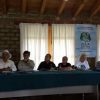
Use of Water for Electricity Generation Triggers Outcry in Mexico
One of the fears of the people of the Sierra Huasteca mountains in the state of San Luis Potosi in northeast Mexico is the construction of combined cycle power plants, which would threaten the availability of water.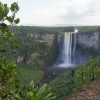
When Salt Water Intrusion is Not Just a Threat But a Reality for Guyanese Farmers
Mikesh Ram would watch his rice crops begin to rot during the dry season in Guyana, because salt water from the nearby Atlantic Ocean was displacing freshwater from the Mahaica River he and other farmers used to flood their rice paddies.
Scientists Warn of the Imminent Depletion of Groundwater in Chile’s Atacama Desert
Eighteen national science prize-winners in Chile have called for a halt to the over-extraction of water in the four regions over which the Atacama Desert spreads in the north of the country, a problem that threatens the future of 1.5 million people.
Campaigns Promote Women’s Participation in Latin America
An alternative network in Brazil promotes women's participation in elected offices with media support. This campaign, like others in Latin America, seeks to reverse a political landscape where, despite being a majority of the population, women hold an average of just 29.8 percent of legislative posts.
Sousa, a Solar Power Capital in an Increasingly Arid Brazil
Sousa, a municipality of 70,000 people in the west of Paraíba, the state in Brazil most threatened by desertification, has become the country's capital of solar energy, with a Catholic church, various businesses, households and even a cemetery generating solar power.
Why the Flooding in Grenada is a Clear Reminder of its Vulnerability to Climate Change
Grenada is still tallying the damage after heavy rainfall last week resulted in “wide and extensive” flooding that once again highlights the vulnerability of Small Island Developing States (SIDS) to climate change.
VIDEO: Climate Change Could Have Devastating Consequences for Saint Lucia
 The Caribbean island nation of Saint Lucia is home to more than 2,000 native species — of which nearly 200 species occur nowhere else in the world. Though less than 616 square kilometres in area, the island is exceptionally rich in animals and plants.

As It Recovers, Argentina’s Beef Production Faces Environmental Impact Questions
Beef is one of the symbols historically identified with Argentina. After lean years, production and exports are growing, as is the debate on the environmental impact of cattle, which is on the radar of environmentalists and actors in the agricultural value chain.
Laws and Threats Undermine Freedom of Expression in Honduras
A series of laws that came into force in the last five years and the petition for amparo by 35 journalists and 22 social communicators against the government's "Secrecy Law" give an idea of the atmosphere in Honduras with regard to freedom of expression.
The Sun Powers a Women’s Bakery in Brazil’s Semi-arid Northeast
“The sun which used to torment us now blesses us," said one of the 19 women who run the Community Bakery of Varzea Comprida dos Oliveiras, a settlement in the rural area of Pombal, a municipality of the state of Paraiba, in Brazil's semi-arid Northeast.« Previous Page — Next Page » *#*

The Week with IPS

NEXT STOP - SDGs
Tracking global progress towards a sustainable world

