Languages
Tuesday, November 17, 2026



News and Views from the Global South
Middle East & North Africa

Egypt Seeks End to Foreign Wheat Dependence
Egypt is stepping up its wheat production in a bid to stem the country’s rising dependence on foreign imports that escalated during the 30-year rule of former President Hosni Mubarak, who was ousted in February.Within the Arab Left, Contradictions Emerge Over Syria
Though the Arab Spring has heralded newfound hope and optimism across the Middle East, the mood has darkened considerably as entrenched governments have fought back viciously against democratic opposition.OP-ED: Secularism to the Rescue of the Arab Spring
Spring has come early this year to the Arab world. Climate change has awakened the once comatose Middle East from the stupor of singular leaderships. A new dawn of democracy and freedom is sprouting from Morocco to Oman. Or so we are told.Sunni Monarchies Close Ranks
Reports that the Gulf Cooperation Council (GCC) is considering some form of membership for two non-Gulf states – Jordan and Morocco – confirm that the conservative Sunni monarchies of the Middle East are closing ranks against Iran, Shiite-led Iraq and the democratic wave sweeping the region.
YEMEN: Youth Want New Faces and a New Modern Country
Yemen’s young anti-government protesters have learnt a vital lesson about the world of politics during their seemingly endless revolution - betrayal is inevitable.Deaths as Tanks Shell Syrian City
At least five people have been killed in shelling by tanks of the Syrian city of Homs as President Bashar al-Assad attempts to crush anti-government protests, defying calls for an end to the brutal crackdown.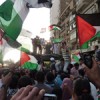
MIDEAST: Egyptian Activists Gear Up For Third Intifadah
Following the February ouster of Egypt’s longstanding President Hosni Mubarak, calls have been circulating in Egypt and throughout the region for a ‘Third Intifadah’ to begin May 15.Obama Faces Tough Choices on Mideast Diplomacy
With Israeli Prime Minister Benjamin Netanyahu scheduled to descend on Washington in less than two weeks, President Barack Obama faces some difficult decisions about how to restore the credibility of his promise to achieve a two-state solution to the Israeli-Palestinian conflict without triggering a backlash in a Congress that is solidly pro-Israel.Calls Mount to Push U.S. Troop Presence in Iraq Past 2011
Amid high-level U.S. congressional delegations to evaluate developments in Iraq, a growing number of voices here, from both the Barack Obama administration and members of Congress, are concerned about a complete withdrawal of U.S. forces from the country by December 2011 – a deadline set forth in the supposedly inviolable Status of Forces Agreement (SOFA) between the U.S. and Iraqi governments back in 2008.Fatah and Hamas’ Honeymoon Could Face Problems
Despite the euphoria surrounding the recent signing in Cairo of the groundbreaking unity accord between Palestinian rivals Fatah and Hamas, ending their four-year feud, numerous obstacles remain which could impinge on the implementation of a unity government.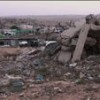
MIDEAST: The Indigenous Become Squatters
As plans to demolish a Palestinian Bedouin village to make way for a new, Jewish-only town move forward in Israel’s Negev desert, the Bedouin residents have submitted a motion for the right to appeal to the Israeli Supreme Court.Radio Free Libya Transmits Live from Misurata
For residents of besieged Misurata, all it takes is a flick of the dial to tune into freedom.Former Minister Warns of Tunisia Coup Risk
Tunisia's former interior minister has warned that lingering members of the country's former political elite may carry out a coup d'etat if Islamists win a majority in the upcoming election.Arab Spring Comes in Western Arms
Global spending on arms in 2010 were an estimated 1.6 trillion dollars, with governments in the Middle East dishing out more than 111 billion for weapons - raising questions as to whether Western arms suppliers circumvented international treaties by exporting to repressive regimes.SYRIA: Obama Pressed to Take Stronger Action Against Assad
Amid a continuing crackdown against opposition forces, U.S. President Barack Obama is coming under growing pressure to impose tougher sanctions against the government of Syrian President Bashar al-Assad.EGYPT: After Mubarak, the Military Fist
Thousands of Egyptian civilians, including protesters who helped topple the authoritarian regime of president Hosni Mubarak, have been tried in military courts without due process. "The use of military trials on this scale is without precedent," says Adel Ramadan, a rights lawyer at the Egyptian Initiative for Personal Rights (EIPR).Egypt’s Moves Raising Anxiety in Washington
With U.S. lawmakers threatening this week to cut aid to Pakistan over its alleged harbouring of the late Osama bin Laden, concern is growing steadily here over the future of ties with another key predominantly Muslim ally heavily dependent on U.S. aid: Egypt.ICC Poised to Issue Warrants on Libya
The International Criminal Court (ICC) appears poised to issue arrest warrants for three yet unnamed high-level members of the Libyan government for committing alleged crimes against humanity during the past two months of political turmoil that has taken thousands of lives.Libyan Rebels Feel the Heat of NATO’s Swan Song
A week after U.N. Security Council Resolution 1973 sanctioned air strikes against the regime of Colonel Muammar el-Gaddafi in Libya, U.S. President Barack Obama made clear that it would not be U.S. planes maintaining the No-Fly Zone (NFZ). Rather, the effort to safeguard Libyan civilians would be led primarily by the North Atlantic Treaty Organization (NATO).MIDEAST: Egypt Plays Best Man at Hamas-Fatah Union
Rival Palestinian factions Hamas and Fatah signed a reconciliation agreement in Cairo on Wednesday, paving the way for the formation of a Palestinian national unity government. The move, say local analysts, reflects the changing political equation in the Middle East amid the ongoing wave of Arab popular uprisings.Israel Gathers Support from ‘Best Enemy’
First Egypt, then Syria, finally the Palestinians – while most Israelis concur with their Prime Minister that the revolutions, upheavals and shifting alliances closing in on their country have postponed peace prospects, remarkably, the evolving events convulsing the region may yet restore their country's battered legitimacy.« Previous Page — Next Page »


The Week with IPS

NEXT STOP - SDGs
Tracking global progress towards a sustainable world
Tracking global progress towards a sustainable world
