Languages
Wednesday, June 24, 2026



News and Views from the Global South
Middle East & North Africa
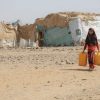
Trump’s Veto Will Trigger More US Arms to Kill Civilians in Yemen
President Donald Trump’s decision to veto a bi-partisan Congressional resolution to end US military involvement in a devastating Saudi-led four-year conflict in Yemen-- is expected to escalate the ongoing war in the trouble-plagued region.
Syrian Crisis Enters Ninth Year with 11 Million Refugees Overseas & 6 Million Home
The bell rings and the halls erupt with the sounds of chatter and excitement as hundreds of children run to the dusty courtyard for recess. I joined them to play football but the game instead turned into a round of questions.
De-radicalization and the Defeat of Isis: Radicalization Will Not Disappear by Itself
The defeat of ISIS in Middle East and North African battlefields is now a reality. The terrorist group - which brought bereavement to the populations of the Arab region - has been defeated militarily in Iraq and in Syria.
The Upcoming Generations Can Lift the Arab Region out of Its Current Crisis
History testifies that there is no end to its evolution despite what some have claimed. This is because aspirations of its actors are in constant flux and because the quest for an « ideal city » is asymptotic. Each generation wants to put its imprint on the present and to be the architect of its future in the pursuit of its own ideal.
The Arduous Search for Dignity Through Integration and a Pay Check
One of the most common words used by speakers during the Global Compact on Migration was “dignity”—granting migrants the dignity they deserve. As with any advocacy, there is a danger a word can lose meaning through overuse. But on the streets of Morocco the same word means a lot to migrants looking for work. And when they find it—both work and dignity—it can alter the entire migration equation.
Tunisia – the Exception
Eight years have passed since the Arab Spring. In many countries, the uprising was crushed, but in Tunisia democracy gained a foothold. Arbetet Global travelled to the small country town Side Bouzid to find out why.
Why Did You Come to Marrakech?
The whole world met at Marrakech, Morocco, during the two days of the Global Compact for Migration. IPS met six people to ask what led them to come to this international event.
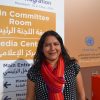
Q&A: How Will the Global Compact for Migration Aid the Work of Civil Society
Claudia Interiano from Fundación para la Justicia y el Estado Democratico de Derecho, a Latin American organisation that works to access justice for persons killed or missing during transit through Mexico to the United States, spoke to IPS about the foreseeable future of migration in a world after the end of the Global Compact for Safe, Orderly and Regular Migration (GCM) conference.
Final Thoughts as the Global Compact for Migration Starts its Own Long Journey Against the Odds
As the red carpets are rolled up in Marrakesh after two days of intense declarations and commitments by more than 160 countries, what are the smaller players in this global phenomenon taking back with them?

Q&A: The Global Compact that Respects Human Rights During all Stages of Migration
Amid the hustle and bustle of the two-day Global Compact for Migration, IPS spoke to Younous Arbaoui, advocacy and coordination officer at the National Migrant Protection Platform (PNPM), about the importance of the GCM in tackling the migration challenge that the world faces.

Radio Migration – the Station with a Different Message about Migration
The topic of migration has been beaming across the airwaves of Marrakech, Morocco, to bring light to the Global Compact for Safe, Orderly and Regular Migration conference (GCM) and all its myriad components.
A Migrant Turned Saviour of Others
Seven years ago, when Cameroon began experiencing inter-regional conflict, Armand Loughy, a 55-year old Cameroonian psychiatrist, strapped her youngest child on her back and with her five other children embarked on the dangerous Journey from Cameroon towards Rabat, Morocco’s capital. They fled the deteriorating security situation in Cameroon, looking for a better life.
Migration and the Economy—an Inseparable Pairing
On the streets of Casablanca there is only one thought on the mind of Ibrahima, a young Senegalese migrant.
Morocco’s Migrant Workers Struggle to Send Money Home
Morocco may be hosting the United Nation’s historic Global Compact for Safe, Orderly and Regular Migration (GCM) conference. But when it comes to remittances—migrant employees, entrepreneurs and business owners all face the same challenge in Morocco: sending money legally to their home countries.
Global Compact for Migration Backed by Most of the World
Safe, orderly and regular migration received support today, Dec. 10, with the adoption by 164 countries of the first-ever inter-governmentally negotiated agreement to cover all dimensions of international migration.
U.N. Remains Defiant Amid Last Minute U-turns on Global Compact for Migration
Amidst negative sentiments and last-minute withdrawals from the Global Compact for Safe, Orderly and Regular Migration (GCM) by some member countries, the United Nations says the regrettable decisions are being fuelled by misinformation.
Middle Eastern Countries Can Overcome Pressing Challenges By Developing a Blue Economy
The Blue Economy is becoming an ‘El Dorado’, a new frontier for traditionally arid and water-stressed nations in the Middle East and North Africa (MENA), according to Christian Averous, Vice President of Plan Bleu, one of the Regional Activity Centres of the Mediterranean Action Plan developed under the United Environment Regional Seas Programme.
Inside a Wagon in the Forest of Compiègne
What is the link between the current civil war in Syria, the austerity policy imposed by Germany during the last economic crisis or the Arab-Israeli conflict? Its origin, which lies in the world that was born a hundred years ago, inside a wagon in the middle of the Forest of Compiègne, northeast of Paris.
UAE-Caribbean Renewable Energy Fund projects underway
The first three renewable energy projects under the US$50 million United Arab Emirates-Caribbean Renewable Energy Fund, UAE-CREF, have broken ground in the Bahamas, Barbados and Saint Vincent and the Grenadines, the UAE Ministry of Foreign Affairs and International Cooperation, MOFAIC, announced today.
UAE to host Global Future Councils’ 3rd meeting
Under the patronage of His Highness Sheikh Mohammed bin Rashid Al Maktoum, the Vice President, Prime Minister and Ruler of Dubai, and in collaboration with the World Economic Forum in Davos, the Government of the UAE will host the World Economic Forum’s (WEF) third Annual Meeting of the Global Future Councils, on 11-12 November in Dubai.
Op-Ed: ADNOC is UAE’s ubiquitous vehicle for economic diversification
The recent trailblazing steps taken by ADNOC to deliver growth across value chain and expand its partnership model on international markets are seen as a step forward on the path to underpin its integrated 2030 Strategy, which is premised to transform the way the Group maximises value from every barrel, and deliver the greatest possible return to Abu Dhabi while helping meet the world’s growing demand for energy.« Previous Page — Next Page »


The Week with IPS

NEXT STOP - SDGs
Tracking global progress towards a sustainable world
Tracking global progress towards a sustainable world
