Languages
Thursday, June 25, 2026



News and Views from the Global South
Middle East & North Africa

‘Worse Than World War I’
When the leaders of 28 European states enjoy again this week their exclusive flights, luxurious suites and official limousines, to meet for a new summit in Brussels to adopt a final decision on their proposed plan of using refugees as bargaining chips, 20.000 Syrians will most probably be still starving in the Idomeni camp in Greece, in a situation that has been described as “worse than World War I.”
Turkey’s Crackdown on the Press
On the evening of March 4, heavily armed police forced their way into the headquarters of the Turkish daily Zaman. The hundreds of protesters that had gathered in front of the building in an Istanbul suburb in solidarity with their newspaper were violently dispersed.
Palestinian Refugees from Syria
In the safety of his sister's bare flat in Beit Hanoun, Gaza, 42 year-old Iyad Yusef still shakes his head in disbelief when he recounts the journey that from war-torn Syria, brought him and his family to the relative safety of the blockaded strip.
“Take My Iraqis and Give Me Some Syrians” – Europe to Turkey
In a yet another violation of international laws and their own human values, 28 European countries have just agreed with Turkey to open a new “bazaar” of refugees, this time using the old barter system. i.e. Iraqis and Afghans in exchange of Syrians.
Anti-Mining Protests in Turkey Book Temporary Victory
Over the past weeks, thousands of people across Turkey have protested against the planned construction of a gold mine in Cerattepe, close to the town of Artvin in the northeast of the country. Protesters fear that the mine will cause irreparable damage to the unique natural environment of the region.
New Nuclear Hysteria in the Middle East
Three years ago when the tsunami of panic around Iran's potential capability to develop nuclear weapons reached its peak, a combined diplomatic, media campaign warning that a Gulf Arab state would think of purchasing atomic bombs was spread like an oil spot.Garbage, Garbage Everywhere, but…
Imagine a river bursting its banks and flooding entire cities and towns. But when the river is made of malodorous garbage and is in Beirut, this is a stark and dramatic situation affecting the city’s 2.226 million people. It all started in July 2015, when the Lebanese administration closed the major landfill of the city. Since then, trash is being piled all over the streets of Jdeideh in Beirut’s northern suburbs. This river of garbage grew steadily, as reported in recent days by a wide section of news media, including Al Jazeera, CNN and Reuters. Thousands of kilometers away in Pakistan, a very similar situation is reported by Dawn.Mideast Arms Supplies Continue Despite Falling Oil Prices
The continued decline in oil prices is threatening to have a direct and indirect impact on several fronts, including development aid, migrant workers and remittances, voluntary contributions to UN agencies, humanitarian assistance to refugees and infrastructure-building in the Gulf countries.
Elections in Iran, a Test for the Regime
Iran will hold two crucial elections on February 26, 2016, which could decide the fate of the Islamic Republic for many years to come. Earlier this month, Iranians celebrated the 37th anniversary of the victory of the Islamic Revolution. During that period, the country experienced revolutionary upheavals, a disastrous eight-year war with Iraq that killed and wounded nearly a million Iranians, eight years of populist rule by a hard-line president, Mahmoud Ahmadinejad, and crippling Western sanctions.
The Nuclear Deal Implementation Day: Can the Deal with Iran Survive Iranian and US Elections? (part three)
Although the implementation of Iranian nuclear deal has been welcomed by all those who had been involved in the negotiations as part of the P5+1, the deal has had many vociferous opponents.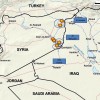
Big War Lords Playing Brinkmanship Game in Syria
When 25 million Syrians--half of them refugees abroad or at home and the other half terrorised by daily bombing, learnt that major world leaders in their meeting in Germany launched an unprecedented confrontation threatening with unleashing World War III, instead of easily agreeing on a ceasefire to alleviate their inhumane suffering, they most probably fell into an even deeper desperation. See what happened.
Gulf migration at an inflexion point
The steep fall in global oil prices has hit Gulf economies severely. Saudi Arabia, United Arab Emirates (UAE), Qatar, Bahrain are expected to run huge budget deficits as shrinking revenues from selling cheaper oil cannot fund their mounting expenditures. As they tighten their belts, the brunt of adjustment will be felt by migrants, who constitute the bulk of the labour force. Reforms include cutting fuel, power, water, education subsidies and a value-added tax (VAT). This will affect migrants and reports indicate family members are returning home.
Costa Rica, UAE Cement Relations with Energy and Tourism
A visit by United Arab Emirates Foreign Minister Sheikh Abdullah bin Zayed Al Nahyan to Costa Rica paved the way for closer trade ties between the two countries, especially in the areas of tourism and sustainable energy.Attacks on Medical Workers in War Zones under Fire
The growing number of indiscriminate bombings in three of the most devastating military conflicts currently underway -– in Syria, Afghanistan and Yemen – are taking a heavy toll on medical personnel serving with humanitarian organizations — along with thousands of civilians caught in the crossfire between government forces and rebel groups.
Novel Joint Committee Enhances Relations between the UAE and Panama
The visit by the United Arab Emirates foreign minister, Sheikh Abdullah bin Zayed Al Nahyan, to Panama ended Thursday Feb. 11 with the creation of a novel Joint Cooperation Committee on trade and investment.
Views Split on Nuclear Deal Implementation (Part Two)
The implementation of the Iranian nuclear deal with the P5+1 (the United States, Russia, China, the United Kingdom, France and Germany) on January 16, which resulted in the lifting of the sanctions imposed on Iran, has split the views of current and former US politicians.
Eight Cooperation Accords Strengthen Ties between Colombia and UAE
“I am honoured to be in Colombia at a time when important steps towards peace are being taken,” the foreign minister of the United Arab Emirates, Sheikh Abdullah bin Zayed Al Nahyan, said after meeting with Colombian President Juan Manuel Santos.
The Nuclear Deal Implementation Day: A Win-Win Agreement (part one)
After many years of unprecedented, crippling Western sanctions that stopped Iran’s oil exports and even banking transactions, the long and arduous negotiations between Iran and the P5+1 (the United States, Russia, China, United Kingdom, France and Germany) culminated in the Joint Comprehensive Plan of Action (JCPOA) agreed on 14 July 2015. That agreement finally reached the Implementation Day on 16th January 2016, coincidentally 37 years to the day when the late Mohammad Reza Shah left Iran for good and paved the way for the victory of the Islamic revolution.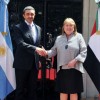
Argentina and United Arab Emirates Open New Stage in Bilateral Relations
With United Arab Emirates’ foreign minister Sheikh Abdullah bin Zayed Al Nahyan’s visit to Argentina, the two countries launched a new stage in bilateral relations, kicked off by high-level meetings and a package of accords.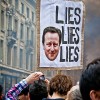
Cameron at large: Want Not to Become a Terrorist? Speak Fluent English!
“Do you speak English fluently? No? Then you risk to become a terrorist!.” IPS posed this dilemma to some young Muslim women living in Cairo, while explaining that this appears to be UK prime minister David Cameron's formula to judge the level of Muslim women's risk to fall, passively, into the horrific trap of extremism.
Turkey descends into civil war as conflict in southeast escalates
The latest footage to come out of Sur, the historical district in Diyarbakir that has been under total lock down by Turkish armed forces for the past sixty days, shows a level of devastation one would sooner expect in Syria. In more ways than one – empty streets lined with debris, bombed-out buildings, tanks and soldiers shooting at invisible assailants – the situation in Turkey's predominantly Kurdish southeastern regions resembles a war zone.« Previous Page — Next Page »


The Week with IPS

NEXT STOP - SDGs
Tracking global progress towards a sustainable world
Tracking global progress towards a sustainable world
