Languages
Friday, October 23, 2026



News and Views from the Global South
Migration & Refugees

Europe Should Rethink Assumptions about African Migrants: UN
Sub-Saharan African migrants who risk perilous sea crossings to Europe are often assumed to be illiterate, jobless chancers in desperate bids to flee stagnation and rampant corruption in their home countries. But a survey of some 2,000 irregular African migrants in Europe found them to be more educated than expected, while many of them were leaving behind jobs back home that paid better-than-average wages.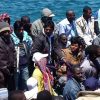
More than 90 per cent of Africa Migrants Would Make Perilous Europe Journey Again, Despite the Risks
A landmark UN migration study published on Monday shows that 93 per cent of Africans making the journey to European countries along irregular routes, would do it again, despite facing often life-threatening danger.
Beaten and Tortured for a Ransom, Lured by the Promise of a Livelihood
After his father passed away two years ago, the burden of caring for a six-member family rested on the shoulders of the now 19-year-old Farhad Hossain. He had no clue how he would support his family and pay for the education of his four younger siblings.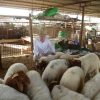
Global Challenges for the ‘NextGen’
Success has many parents – so the saying goes. In the case of the massive successes of international agricultural research, no one person can claim parentage. There are heroes along the way such as Norman Borlaug and his early cereal breeding, and the team that eliminated the cattle disease Rinderpest from the world – smallpox is the only other disease that has been totally eradicated. Another is the founder of The Crawford Fund, Derek Tribe, who was also instrumental in the creation of what is now the International Livestock Research Institute (ILRI), which I chair. However, it would be more correct to highlight the thousands of scientists who have contributed to the world’s greatest feat of feeding an extra three billion people when pundits said it was impossible.
Why Are So Many Nepali Workers in Korea Committing Suicide?
For many Nepalis, it is dream to find work in Korea where they expect to earn many times more than in Nepal. Yet, there is a dark side to the Korean Dream: between 2009 to 2018, there were 143 deaths of Nepali workers in South Korean soil, and of them 43 were suicides.
Justin Trudeau´s Blackface
Politics is a dodgy game, maybe even more so if you represent political views based on a moral approach. When the charismatic Justin Trudeau, son of a cosmopolitan liberal who served as Canada´s Prime Minister for 16 years, in 2015 was elected Prime Minister it was within a global political climate different from what it is today. Barack Obama was in the White House, Angela Merkel served her third period as German Chancellor, and the UK Government had not yet announced its country's withdrawal from the EU. Nevertheless, Russia had three months before Trudeau´s election annexed Crimea, while Viktor Orbán´s Hungarian government the month before initiated the construction of a 4 metres high barrier along its nation´s eastern and southern borders to keep immigrants out.Statement by NRC Secretary General Jan Egeland following the announcement of the Nobel Peace Prize winner for 2019:
"We congratulate Dr. Abiy Ahmed on the Nobel Peace Prize and his courageous efforts in bringing ambitious reforms to Ethiopia and offering the hand of peace to neighbouring Eritrea. The Norwegian Refugee Council is among the very few international groups operating in Eritrea and Ethiopia and assisting people in need in both countries. We have witnessed the dramatic improvement in relations between the two countries during Dr. Abiy Ahmed´s government after conflict and tension over the years produced displacement and suffering.
Hollywood and Business Luminaries Spotlight World’s ‘Stateless’ Woes
Movie star Cate Blanchett and businessman Richard Branson spoke up this week for the millions of people around the world who cannot get passports and other papers because they lack an official nationality.
Human Trafficking – It Came Disguised as the Opportunity of a Lifetime
Six years ago Mary Njambi* received news of a once-in-a-lifetime job opportunity far away from her poverty-stricken village situated in the heart of Kiambu County, Central Kenya. She was 20 years old, a single mother and out of work.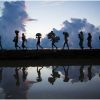
Right-Wing Politicians Fear “Invasion” of Europe & US by Migrants and Refugees
The United Nations commemorated its annual World Day of Migrants and Refugees (WDMR) on September 29 ---- this time amidst rising anti-immigrant rhetoric and widespread xenophobia.
Jersey, a Gorilla and the Civil War in Cameroon
A month ago I visited Jersey, one of the few European territories still welcoming refugees, though in the case of Jersey they have to be wealthy and are generally fleeing not from war and misery, but from taxes. Once Jersey and the nearby island of Guernsey harbored one of Europe´s most famous political refugees – Victor Hugo (1802-1885), who after he had been too outspoken in his criticism of the autocrat Louis Napoleon found it more convenient to live on the Channel Islands than in France. In spite of being very close to France and with a population that at the time was mainly French-speaking, these islands were nevertheless British territory.
World’s Hard Fought Battle Against Climate Change
UN Secretary-General Antonio Guterres describes the ongoing crisis as a “climate emergency”-- as the world continues its hard fought battle against devastating droughts, floods, hurricanes and rising sea levels that threaten the very existence of small island developing states located in low-lying areas.
Rural Bangladesh Families Spend 2.0 Billion Dollars on Climate Change ― Dwarfing Government & International Finance
In an alarming imbalance struggling families in rural Bangladesh spend almost US$2 billion a year on preventing climate-related disasters or repairing damage caused by climate change ― far more than either the Bangladesh government or international bodies.
Key Changes in International Agriculture and Rural Development Issues: Three Priority Areas in the Context of the 2030 Development Agenda
Transformations in international agricultural and rural development issues Some major changes in international agricultural and rural development over the last 30-40 years need to be taken into account in efforts to promote sustainable development and an inclusive rural transformation (IFAD 2016) as we approach the third decade of the millennium. This opinion piece, drawing on a longer article published in Agriculture for Development Journal (Summer 2019 Issue), seeks to stimulate reflection and debate on how work to support agricultural and rural development can evolve to address key challenges and opportunities related to migration, sustainable urbanization and youth in a changing global policy context.
Human trafficking: A Disorganised Response to an Organised Crime
Human trafficking is perhaps one of the most well-organised crimes being committed in India. How else do we explain the phenomenon of adolescent girls and young women from remote villages across India being found in brothels in our cities?
When the Search for Jobs Ends in Slavery
In 2017, Zubedah Nakitende’s electronics shop was robbed with thieves taking her entire stock. But she had heard from a colleague about lucrative jobs in Jordan and decided to take on work as a domestic helper, earning an income of 740 dollars a month.
A New World? Are the Americas Returning to Old Problems?
When I in 1980 first arrived in America it was a new world to me. I went from New York to Puerto Rico and the Dominican Republic and like so many visitors and migrants before me I was overwhelmed by both familiar and strange impressions. Familiar due to books I had read and movies I had seen, strange since I encountered unexpected things and new because both I and several of those I met compared themselves to the “old world”, i.e. Euroasia and parts of Africa.
What Research Reveals about Drivers of Anti-immigrant Hate Crime in South Africa
Mobs have attacked foreign-owned businesses on the streets of at least three South African cities in recent days. This has caused outrage across Africa. There have even been retaliatory attacks. The South African government, under pressure to protect her large international migrant community, quickly defused the attacks.
After Two Years of Horrors in Burma, the U.S. Is Still Doing Too Little, Too Late
Monsoon season is currently wreaking havoc on the more than 911,000 Rohingya refugees displaced from their homeland in Burma (Myanmar) to the ramshackle camps of Cox’s Bazar, Bangladesh.
Little Hope of Justice for Rohingya, Two Years after Exodus
Two years after the start of an exodus of Rohingya civilians from genocide-like attacks in Myanmar, members of the mainly Muslim minority have little hope of securing justice, rights or returning to their homes, according to the United Nations and aid groups.
Five Million Palestinians Deserve Better!
An old adage passed on by veteran U.N. staff to younger recruits is, “Do nothing whenever possible. It’s safer.” For a junior officer that might indeed be career-enhancing.« Previous Page — Next Page »





Human migration is a matter of global concern. Flows of migrants and refugees influence and change the social, economic and political dynamics of their destinations -- and the places they have left behind. IPS covers crucial issues such as migrant and refugee rights, irregular or undocumented migration, human trafficking, remittances, displaced persons and forced labour. And the positive: in many cases migration creates a new dialogue among civilisations. Migrants themselves become the building blocks of bridges connecting different cultures.

The Week with IPS

NEXT STOP - SDGs
Tracking global progress towards a sustainable world
Tracking global progress towards a sustainable world
