Languages
Friday, October 23, 2026



News and Views from the Global South
Migration & Refugees
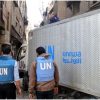
Will Palestinian Refugees Pay a Heavy Price for UNRWA Bungling?
A crisis that has threatened to undermine the future of the UN Relief and Works Agency (UNRWA) is expected to have a devastating impact—not only on the credibility of the United Nations-- but also on the lives of over five million Palestinian refugees whose very survival depends on the humanitarian services provided by the beleaguered UN agency based in Amman and Gaza.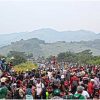
Environmental Migration a Global Challenge
The Atlas of Environmental Migration, which gives examples dating as far back as 45,000 years ago, shows that environmental changes and natural disasters have played a role in how the population is distributed on our planet throughout history.
Protect, Support and Empower Girls in Lake Chad Region
As Lake Chad enters its 10th year of conflict, millions of young girls are being used and manipulated in grotesque ways. Maria Sole Fanuzzi, Lake Chad Child Protection Specialist at Plan International, said: “New York City has 8.25 million people, so when we talk about the girls in the Lake Chad crisis, you have to imagine the whole city where we are now is completely filled by children, and half of that would be girls.”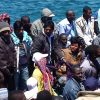
Migration and Human Solidarity
The migrant and refugee crisis has become a serious test for the unity of Europe as a political project. The inflow of destitute migrants and refugees has tested Europe’s political unity to an unprecedented extent. With a long-term solution to the migrant and refugee crisis nowhere in sight, the adverse impact of the current situation has the potential to unfold further and to give rise to a broader crisis with long-term implications, affecting Europe and the MENA region alike.
One Month Since Libya’s Migrant Tragedy, Detentions Continue
It is almost one month since an airstrike on a detention centre in Libya killed and injured scores of migrants and refugees locked up inside, many of whom were detained for doing nothing worse than fleeing instability or seeking better lives in Europe.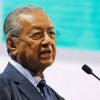
Rohingyas should be given citizenship or their own state: Dr Mahathir tells Myanmar
The Rohingyas should be treated as Myanmar nationals or be given a chance to form their own state, said Malaysian Prime Minister Dr Mahathir Mohamad.
Human Rights Watch Disappoints on Human Rights
On 22 July 2019, Kenneth Roth published an article in Publico, Lisbon, entitled: “UN Chief Guterres has disappointed on Human Rights”.
Horn of Africa Drought Threatens Re-run of Famines Past
Humanitarian groups and the United Nations are warning of another drought in the Horn of Africa, threatening a repeat of the deadly dry spell and famine that claimed lives in Somalia and its neighbours eight years ago.
The Precipitous Barbarisation of Our Times
When all is said and done, it appears that Thomas Hobbes, the 17th century English philosopher who had a dire vision of man, was not totally wrong. From the frivolous to the serious, in just a week we have had four items of news which would not happen in a normal world. An English porn beauty with 86,000 followers on social media has put bottles of the water she bathes in on sale at 30 pounds a bottle and has sold several thousand bottles.
Treaty Violators Make Mockery of Refugee Convention
With the rise of rightwing nationalism, primarily in the Western world, an increasingly large number of countries are not only abandoning multilateralism but also violating international treaties and conventions signed and ratified in a bygone era.
Desperation and Fear on the Mexican Border
On the 2,000-mile journey from San Pedro Sula, Honduras, to the US-Mexico border, the 20-year-old asylum seeker and her 16-year-old brother took turns sleeping every time they managed to catch a ride or get on a bus. She told me they kept each other safe that way.
The Geneva Centre issues publication on enhancing access to justice for workers in the United Arab Emirates (UAE)
A new publication entitled “Improving access to justice for workers: The case of the UAE” has been published by the Geneva Centre for Human Rights Advancement and Global Dialogue. The publication is an outcome of a panel discussion held on 20 March 2018 at Palais des Nations in Geneva addressing the same subject. The debate was jointly organized by the Geneva Centre, the European Public Law Organization (EPLO) and the Permanent Mission of the United Arab Emirates to the United Nations Office in Geneva (UNOG).
Migrants, Militias & the Mediterranean Sea
When the Italian police recently arrested Carola Rackete, captain of the Sea-Watch 3 search and rescue vessel, the Central Mediterranean Sea suddenly entered the international limelight once again.
Let’s Talk About Sex – and Why Power Matters
Every year on World Population Day (July 11), UNFPA receives queries from journalists about the total number of people around the world. Numbers are indeed important because they help governments develop policies that respond to evolving needs for services such as education and health.
The Libyan Disaster: Little Bits of History Repeating
The Libyan catastrophe and the suffering of ”illegal” migrants are generally depicted as fairly recent events, though they are actually the results of a long history of greed, contempt for others and fatal shortsightedness. Like former Yugoslavia, Libya was created from a mosaic of tribal entities, subdued by colonial powers and then ruled by an iron-fisted dictator. Now, Libya is a quagmire where local and international stakeholders battle to control its natural resources. The country holds the largest oil reserves in Africa, oil and gas account for 60 percent of GDP and more than 90 percent of exports.1 This is one reason why Egypt, France, Russia, Saudi Arabia, the U.S., and many other nations are enmeshed in Libya. Furthermore, European nations try to stop mainly sub-Saharan refugees and migrants from reaching their coasts from Libya. An attempt to understand Italy´s essential role in the struggle over Libya´s oil and attempts to control unwanted immigration may help to clarify some issues related to the current situation.
Of Leaders Then and Now
Richard Dossevi parks his motorcycle taxi on one of the busiest street corners in Cotonou, Benin's commercial capital, to wait for commuters amid the summer heat.
Australia’s Forgotten Asylum Seekers
As the focus of Australian politics shifts away from refugee and asylum-seeker policies, the government avoids accountability for inhumane actions.
Libya Tragedy: Why Lock up Migrants in the First Place?
A military strike on a detention centre for migrants in Libya that claimed dozens of lives on Wednesday Jul. 3 has reignited a debate over the poor treatment of the mainly African people who transit through the turbulent country.
Unseen and Unsafe: Violence Against Women within Migrant Families
Refugee and migrant women often face inescapable violence in the home. And the potential for intimate forms of violence is exacerbated by humanitarian crises and job insecurity.
“Unimaginable Horrors” in Libya’s Migrant Detention Centers
For over 10,000 migrants fleeing to Libya from war and violence, their fate often comes down to the mercy of human traffickers or the dark unknown awaiting in detention centers.
Myanmar must give Rohingya ‘pathway to citizenship’: UN investigator
Myanmar must grant citizenship to stateless Rohingya with roots in the country, a senior UN investigator said yesterday, as she urged the country's leader Aung San Suu Kyi to "be the democrat she once told us she was".« Previous Page — Next Page »





Human migration is a matter of global concern. Flows of migrants and refugees influence and change the social, economic and political dynamics of their destinations -- and the places they have left behind. IPS covers crucial issues such as migrant and refugee rights, irregular or undocumented migration, human trafficking, remittances, displaced persons and forced labour. And the positive: in many cases migration creates a new dialogue among civilisations. Migrants themselves become the building blocks of bridges connecting different cultures.

The Week with IPS

NEXT STOP - SDGs
Tracking global progress towards a sustainable world
Tracking global progress towards a sustainable world
