Languages
Monday, October 26, 2026



News and Views from the Global South
Migration & Refugees
Russia’s African Cannon Fodder
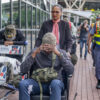
On 7 April, the government of Cameroon published a list of 16 of its citizens confirmed killed fighting for Russia against Ukraine. That means the number of Cameroon citizens killed in this distant war has likely surpassed a hundred, making the country the biggest victim of a Russian recruitment drive increasingly focused on Africa.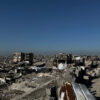
Gaza Crisis Deepens as Aid Restrictions and Ongoing Strikes Strain Humanitarian Operations
Roughly six months after the ceasefire in the Occupied Palestinian Territory went into effect, the humanitarian situation in Gaza remains precariously fragile, despite a relative decline in hostilities. The crisis, marked by ongoing Israeli airstrikes and shelling, continued blockades on humanitarian aid, and widespread displacement, has pushed the majority of Palestinians in Gaza to the brink. Amid the vast scale of needs, basic services are increasingly strained, and humanitarian experts warn that the situation could deteriorate further in the coming months unless sustained aid and funding are secured.
Denmark’s Warning
When Danish Prime Minister Mette Frederiksen addressed her supporters on election night on 24 March, she chose her words carefully. Losing four percentage points after almost seven years in power, she suggested, wasn’t so bad given there’s been a pandemic, a war in Europe and a confrontation with Donald Trump over Greenland. The reality was the Social Democrats had recorded their worst general election result since 1903. Meanwhile, the far-right Danish People’s Party (DPP) tripled its seat count, despite years of the Social Democrats leading a systematic crackdown on immigration to try to prevent it gaining support.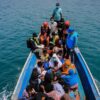
Why the Rohingya Refugees in Bangladesh Need Work, Not Just Rations
While global attention right now is on escalating geopolitical tensions involving the United States, Israel, and Iran, another crisis continues quietly in Bangladesh.
Humanitarian Response in Lebanon ‘Under Significant Strain’ after Wednesday Airstrikes
On April 8, Israeli military forces launched the deadliest series of airstrikes on Lebanon since hostilities escalated in early March, resulting in the deaths of at least 254 civilians. This latest incident threatens to further complicate humanitarian efforts in Lebanon that are already under immense pressure.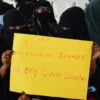
Stateless at Home: Kenyan Somalis Struggle to Reclaim Citizenship from Refugee Records
In 2006, Amina Saida was only two years old when her parents moved to the Dadaab refugee camp in northern Kenya, near the border with Somalia.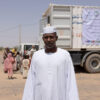
WHO: Migrants and Refugees Face Rising Health Risks as Global Systems Fall Short
Global human migration is at record-high levels, as the World Health Organization (WHO) estimates that roughly 1 in 8 people—about one billion individuals—are on the move. Many of these migrants and refugees face harsh living conditions and heightened challenges, such as poverty, insecurity, and limited access to basic services. With the number of international migrants having doubled since 1990, new findings from WHO call for expanding health systems to meet the growing scale of needs.
ITALY: ‘White Supremacist Concepts Are Entering Mainstream Political Discourse on Migration’
CIVICUS discusses Italy’s restrictive immigration policies with Eleonora Celoria, a researcher at FIERI (Forum Internazionale ed Europeo di Ricerche sull’Immigrazione), a research centre on migration, and a member of the Association for Legal Studies on Immigration (ASGI), an Italian legal organisation that defends migrants’ and asylum seekers’ rights through advocacy, public awareness and strategic litigation.
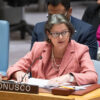
Escalating Violence and Influx of Returnees in DRC Fuel Regional Instability
In the month following the reopening of the Burundi-Democratic Republic of Congo (DRC) border, the humanitarian crisis in the DRC has deteriorated considerably, recently marked by an influx of Congolese refugees returning home, where they face overcrowded conditions and a severe shortage of essential services. This comes in the midst of escalating clashes between rebel groups AFC and M23, and forces affiliated with the Kinshasa government, with drone strikes causing widespread destruction and pushing violence closer to Burundi’s borders, where conditions are most dire.
PORTUGAL: ‘The Far Right’s Electoral Legitimacy Can Eventually Become Governmental Power’
CIVICUS discusses Portugal’s presidential runoff election and the rise of the far-right Chega (Enough) party with Jonni Lopes, Executive Director of Academia Cidadã (Citizen Academy) and a Steering Committee member of the European Civic Forum, an organisation working on civic engagement, democratic participation and the protection of civic space at national, regional and international levels.

Iran War: Winners and Losers
Who benefits from a war of choice against Iran? The immediate political winners may include President Donald Trump and Prime Minister Benjamin Netanyahu. But if the war continues for a longer period, the political consequences for both Trump and Netanyahu could be uncertain. However, the most consistent beneficiaries are defense contractors, defense manufacturers and military lobbyists, who profit regardless of the outcome.
Sudanese Civil War Escalates as Drone Strikes Deepen Civilian Toll and Regional Risks
The past two weeks have marked a significantly violent escalation in the Sudanese Civil War, with drone strikes and artillery shelling between the Rapid Support Forces (RSF) and the Sudanese Armed Forces (SAF) causing widespread destruction, casualties, and displacement. With humanitarian responses critically underfunded and the scale of needs, including the hunger crisis, continuing to grow, experts warn that millions in Sudan could be affected by famine, violence, or prolonged displacement.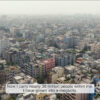
My Name is Dhaka
 My Name is Dhaka is a one-minute experimental film portraying Dhaka as a living, breathing entity with a 400-year history. Through a reflective voice, the city recounts its transformations, crises, and resilience. It captures contrasts between pollution and celebration, hardship and hope, revealing a megacity shaped by climate change, migration, and human survival.
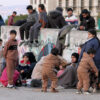
UN Launches 300 Million Dollar Humanitarian Appeal for Lebanon
During a solidarity visit to Lebanon, the UN chief announced a flash appeal of USD 308.3 million to support humanitarian operations there in the wake of escalated fighting.
VENEZUELA: ‘An Economically Stable Authoritarian Model Could Become Entrenched’
CIVICUS discusses the situation in Venezuela following US intervention and the ousting of President Nicolás Maduro with Verónica Zubillaga, a Venezuelan sociologist who specialises in urban violence, state repression and community responses to armed violence.
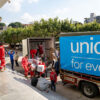
UN: Amid Security Risks in Middle East, Humanitarian Work is Underway
As military fighting breaks out across the Middle East with increasing frequency and intensity, the United Nations promises to ramp up its humanitarian response on the ground.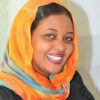
Sudan: World’s Worst Humanitarian Crisis
The ordinary sounds of Nahid Ali's home in Khartoum were completely drowned out by the sound of war which began on April 15 2023. Her baby was just 21 days old. The morning started as any typical day for a mother who had just given birth to her baby and needed to nurse her newborn while she took care of her other children. The gunfire began to erupt. The fighting began when two groups started to battle each other in the streets. The fighting which began in her area developed into a destructive countrywide war in Sudan which spread to her street within moments.
Iran: A Regime with Nothing Left but Force
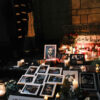
The Islamic Republic of Iran has put down another uprising, with a ferocity that makes previous crackdowns seem restrained. The theocratic regime has survived, but it has done so by substituting violence for the economic security it cannot provide and the political legitimacy it no longer has. Its show of force is also an admission of weakness.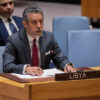
UN Report Warns of Escalating Human Rights Abuses Against Migrants and Refugees in Libya
A new UN report warns of the “brutal and normalized reality” for migrants, refugees and asylum seekers in Libya as they face exploitation and human rights violations.
IRAN: ‘Sustainable Change Will Depend on Domestic Organisational Capacity, Not External Force’
CIVICUS discusses the recent protests in Iran with Sohrab Razaghi, executive director of Volunteer Activists, a Netherlands-based diaspora organisation empowering Iranian civil society.
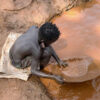
Africa at the Epicenter of Child Labour Crisis as Migration Fuels Exploitation
Although global rates of child labour have declined since 2020, the practice remains a serious and persistent violation of children’s rights, undermining their safety, social development, and long-term economic stability. These risks are intensified by structural pressures— poverty, climate shocks, protracted conflict, and unsafe migration— that continue to push vulnerable children into crisis, and in some cases, trafficking and exploitation. The United Nations Children’s Fund (UNICEF) warns that African countries remain among the most affected regions, underscoring the urgent need for coordinated policy action, cross-border cooperation, and sustained investment to protect children on the move and those at risk of labour exploitation.« Previous Page — Next Page »





Human migration is a matter of global concern. Flows of migrants and refugees influence and change the social, economic and political dynamics of their destinations -- and the places they have left behind. IPS covers crucial issues such as migrant and refugee rights, irregular or undocumented migration, human trafficking, remittances, displaced persons and forced labour. And the positive: in many cases migration creates a new dialogue among civilisations. Migrants themselves become the building blocks of bridges connecting different cultures.

The Week with IPS

NEXT STOP - SDGs
Tracking global progress towards a sustainable world
Tracking global progress towards a sustainable world
