Languages
Tuesday, October 20, 2026



News and Views from the Global South
Migration & Refugees

End the ‘harmful narrative’; migration is a net-gain for Africa, finds UN report
The large-scale migration of people within Africa tends to boost growth and lifts the continent’s whole economy, a new United Nations report has said, urging the world to dispel misconceptions and “harmful narratives” targeting migration.
Why Would an Immigrant Support Trump?
Giuseppe DiMarco is 83 years old. He has recognized the U.S. as his home for over 30 years. In the aftermath of World War Two, DiMarco fled an impoverished farming town in Southern Italy in the pursuit of advancement and the promise of wealth he had never known.
“See a child begging? Call the police!” UN Migration Agency Calls on Ukrainians to Fight Child Exploitation
We see them in the metro. We see them in pedestrian tunnels. We see them in the streets. Every day we see begging children, but usually we just ignore them.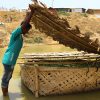
Grass Planting Reduces Soil Erosion, Risk of Landslides in Rohingya Refugee Camps
Over two million vetiver grass plants have been distributed by IOM, the UN Migration Agency, in the past two weeks to reduce soil erosion and the risk of landslides in southern Bangladesh’s Rohingya refugee camps, where hundreds of thousands of people are at risk from impending monsoon rains.
Will Climate Change Cause More Migrants than Wars?
Climate change is one of the main drivers of migration and will be increasingly so. It will even have a more significant role in the displacement of people than armed conflicts, which today cause major refugee crises.
Chile, an Oasis for Haitians that Has Begun to Run Dry
A wave of Haitian migrants has arrived in Chile in recent years, changing the face of low-income neighbourhoods. But this oasis has begun to dry up, thanks to measures adopted by decree by the new government against the first massive immigration of people of African descent in this South American country.
IOM Moves Thousands of Rohingya Refugees to Safer Ground
Almost 12,000 Rohingya refugees have now been moved to safer ground by IOM, the UN Migration Agency, as storms continue to lash southern Bangladesh, damaging tarpaulin shelters and raising the risk of landslides on the steep sandy slopes of the refugee settlements. IOM is racing to support the ongoing relocation of 24,000 people recognized as being highest risk.
We Need a Gender Shift to save Our Girls from the Jaws of Extremism
Consider this. Boko Haram, the ISIS-affiliated insurgent group has sent 80 women to their deaths in 2017 alone. The majority of suicide bombers used by terror group Boko Haram to kill innocent victims are women and children, US study reveals.
Displacement Survey Shows 3.5 Million Internally Displaced, Returnees from Abroad in 15 Afghan Provinces
One in six people is either a returnee or an internally displaced person (IDP) in the 15 Afghan provinces of Baghlan, Balkh, Farah, Herat, Kabul, Kandahar, Khost, Kunar, Kunduz, Laghman, Logar, Nangarhar, Nimroz, Paktya, and Takhar, according to the third round of IOM’s Afghanistan’s Displacement Tracking Matrix (DTM) Baseline Mobility Assessment.
IOM DG Marks 3rd Anniversary of EU-China Migration Dialogue Project
IOM Director-General William Lacy Swing yesterday addressed European and Chinese stakeholders marking three years of the EU-China Dialogue on Migration and Mobility Support Programme (MMSP), a project funded by the European Partnership Instrument and implemented jointly by IOM and ILO.
First New Land Ready: Will Allow Rohingya Refugees to Move to Safer Ground Before Monsoon
Humanitarian agencies working in Bangladesh’s Rohingya refugee camps today marked the completion of the first new plot of land prepared to relocate families most at risk of landslides during the upcoming monsoon season.
Economies Flourish and Traffickers Profit from the Struggles of Low-Skilled Migrants
I was 14-years-old the first time I came face to face with a human trafficker. The Lord’s Resistance Army (LRA) raided my home. Ruthless, they demanded virgins and young girls. In a horrifying escape, I endured a treacherous, long journey that ended in an internally displaced people’s camp. I was lucky. Many Ugandan children were not. By the end of the nineteen years’ civil war, UNICEF estimated that the LRA had abducted some 20,000 children.
Out of the Ashes
FIRE! FIRE!, someone screamed as a huge blaze ripped through a small community in Tanza, Navotas in the Philippines. The tragic irony was that this was the night before the Philippines began its annual Fire Prevention Month, which falls in March.
From the Syrian War to Argentina – Or How to Start a New Life
Fares al Badwan moved to Buenos Aires alone, from Syria, in 2011. He was 17 years old then and the armed conflict in his country had just broken out. Since then he has managed to bring over his whole family and today he cannot imagine living outside of Argentina. "I like the people here. No one makes you feel like a foreigner," he said.
Protecting the Health & Rights of People on the Move
A staggering 258 million people migrated internationally in 2017. While many of these migrants chose to leave their home countries in search of jobs, education, or to reunite with family, many others had no choice but to leave--to escape poverty, violence or a dearth of opportunities for a better life.
People on the move and the politics of human solidarity: The 21st century’s most protracted crisis could end up as the forgotten chapter of human solidarity
The world is heading into troubled waters in the figurative and in the real sense of this expression, as we are witnessing an unprecedented movement of people – refugees, migrants and internally displaced persons (IDPs) alike – fleeing from insecurity, climate change, natural disasters, calamities and social instability. The migrant and refugee crisis has swept across the Middle East and across the Mediterranean Sea to Europe. It is becoming the 21st century’s most protracted crisis with no immediate solution in sight. Thousands of human beings undertake perilous and treacherous journeys in hope for a better and a safer future. Many of them perish during these hazardous journeys over the Mediterranean Sea which has become a liquid graveyard.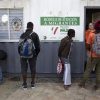
Mexico’s Solidarity Towards Haitians Only Goes So Far
In the airport of this Mexican city, on the border with the United States, customs agents warn that they will carry out a "random" inspection. But it's not so random. The only people who are stopped and checked have dark skin and kinky hair, and virtually do not speak a word of Spanish.
Bangladesh’s Rohingya Refugee Camps Face ‘Life Threatening’ Funding Crisis: Aid Agencies
Work by aid agencies in Bangladesh’s Rohingya refugee camps to create life-saving access routes and prepare people for floods, landslides and other disasters ahead of the upcoming monsoon and cyclone season is under imminent threat unless urgent funding is secured in the next six weeks, according to IOM, the UN Migration Agency.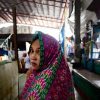
Holding on to Hope
Almost a year after the historic city of Marawi in Mindanao was attacked by extremists, tens of thousands of displaced Filipinos remain homeless, unlikely to return to their devastated homes anytime soon.
Displaced Pashtuns Return to Find Homes “Teeming” with Landmines
"If I'm assured that my home and my village has been de-mined, I'd be the first to return with my family," says 54-year old Mohammad Mumtaz Khan.
Syrian children talk about their futures on the way to school in Jordan
In Jordan’s Azraq Camp where over 45,000 Syrian refugees are seeking shelter from the conflict across the border, 14-year-old Abdallah is finishing the 8th grade at a school run by the Ministry of Education.« Previous Page — Next Page »





Human migration is a matter of global concern. Flows of migrants and refugees influence and change the social, economic and political dynamics of their destinations -- and the places they have left behind. IPS covers crucial issues such as migrant and refugee rights, irregular or undocumented migration, human trafficking, remittances, displaced persons and forced labour. And the positive: in many cases migration creates a new dialogue among civilisations. Migrants themselves become the building blocks of bridges connecting different cultures.

The Week with IPS

NEXT STOP - SDGs
Tracking global progress towards a sustainable world
Tracking global progress towards a sustainable world
