Languages
Sunday, October 25, 2026



News and Views from the Global South
Migration & Refugees

Women Peace Laureates Condemn Inaction on Rohingya “Genocide”
Nobel Laureates Mairead Maguire, Shirin Ebadi and Tawakkol Karman met with more than 100 women refugees in camps in the coastal Cox’s Bazar region of Bangladesh this week, as well as travelling to the “no man’s land” where thousands of Rohingya have been stranded between Myanmar and Bangladesh.
Call Myanmar to Account
The painful experiences of Rohingyas have once again been poignantly narrated to the visiting Nobel trio, and anyone who hasn't really been through the harrowing experiences cannot actually comprehend the horrendous nature of violence that these people have been through.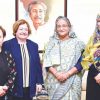
Suu Kyi sold her soul to devil: Nobel Laureate Shirin Ebadi
Claiming that Aung San Suu Kyi has chosen to turn a blind eye to the genocide taking place in her country to retain her political power, Nobel Peace Prize Laureate Iran's Shirin Ebadi today said that their fellow laureate has sold her soul to the devil.
Monsoon Season Threatens More Misery for Rohingyas
More than half a million Rohingya refugees crammed into over 30 makeshift camps in Cox’s Bazar in southeast Bangladesh face a critical situation as the cyclone and monsoon season begins in a few weeks’ time.
Wake Up And Stop Rohingya Abuses
 No one would realise better than a woman how it feels when a child is snatched away from the arms of a mother and slaughtered, a man is murdered before the eyes of his wife, or a girl is raped.

Nobel Women Laureates at Zero Point with Rohingya Refugees
Nobel Laureates, Mairead Maguire (Northern Ireland), Shirin Ebadi (Iran) and Tawakkol Karman (Yemen) speak to Rohingya refugees stranded in the no-man’s land between Myanmar and Bangladesh. They promise to seek justice for the Rohingya genocide. 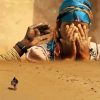
The Perils of Irregular Migration
Contemporary music is a powerful tool to counsel West African youth at risk of being lured into attempting the dangerous journey as undocumented migrants through North Africa and the Mediterranean, to Europe.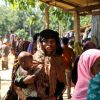
Six Months on, IOM Praises Joint Efforts, but Warns of New Challenges for Rohingya Response
It will be six months, this Sunday (25/02), since almost 700,000 Rohingya refugees fleeing violence in Myanmar started arriving in Bangladesh.
Migration Should Not be Politicized, Warns General Assembly President
This week, we began intergovernmental negotiations on the Global Compact on Migration. Therefore, it has never been more important to have a fact-based discussion on this issue. To start us off, I want to make main three points. First, I want to stress that migration is a fact. It is not an idea. It is not a theory. It is not a trend. It is a fact.
A Step Towards the Light: Ending Human Trafficking
A new initiative aims to use data to shed light on a pervasive multi-billion dollar criminal industry: human trafficking. Created by the International Organization for Migration and Polaris, the Counter-Trafficking Data Collaborative (CTDC) is the world’s first human trafficking data portal.
Chairman of the Geneva Centre: “Refugee and Migrant Crisis Must Not Become the Symbol of Denial of Social Justice to People on the Move”
In commemoration of the 2018 World Day of Social Justice and its annual theme “Workers on the Move: the Quest for Social Justice.” the Chairman of the Geneva Centre for Human Rights Advancement and Global Dialogue (hereinafter “the Geneva Centre”) H. E. Dr. Hanif Hassan Ali Al Qassim appeals to decision-makers to adapt to global human mobility and advance social justice through the empowerment of migrants.
Migration Means Reinvention – Even to Olympian
Every Olympian, in their way, is a migrant—undertaking a life-changing journey towards their goal of athletic perfection.
A Crisis Deepens in Libya but Where Are the Cameras?
Perhaps no major political or humanitarian disaster is as overlooked as the ongoing crisis in Libya. For example, although the New York Times in September 2017 published a total of seven articles mentioning Libya, only one of them touched on the violence ripping it apart. Even the Times’ gesture merely highlighted the latest permutation of the US government’s foreign military decisions.
Migrants and Refugees Must “Have the Right to Have Rights” Says Jazairy of Geneva Centre
During the 23rd International Humanitarian and Security Conference held from 15 to 16 February 2018 in Geneva - organized by Webster University with the support of the International Committee of the Red Cross (ICRC), the United Nations High Commissioner for Refugees (UNHCR) and the Canton of Geneva - the Executive Director of the Geneva Centre for Human Rights Advancement and Global Dialogue (the Geneva Centre), Ambassador Idriss Jazairy called upon decision-makers in the West and in the Arab region to identify joint solutions to the migrant and refugee crisis.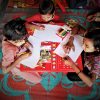
Rohingya Children Draw Their Dreams: And It Looks Like Home…
When 10-year-old Ansarullah was asked to draw his dream and greatest wish, he drew a house. So did almost every other of the 25 Rohingya refugee children who took part in a recent drawing activity session run by IOM’s psychosocial support team in Cox’s Bazar, Bangladesh.
Migrants Are Up Against Nicaragua’s “Containment Wall”
Nicaragua’s "containment wall", aimed at bolstering internal security, has been successful with regard to the fight against transnational crime. But its victims are migrants who are relentlessly blocked from passing through the country en route to their destination: the United States.
African Migration to Europe, Not a Crisis but an Opportunity
An increasingly common justification for European development assistance to Africa is the notion that it will reduce migration from the South. While this sounds intuitive and makes for an appealing argument, the research shows that it is highly unlikely.
World Migration: How Much Do You Know?
So how much do you really know about world migration? Watch this video that presents key numbers and facts about migration discussed in the World Migration Report (WMR) 2018. It also challenges misconceptions on migration often circulated in various media.
Ethnic Violence in Ethiopia Stoked by Social Media from U.S.
In Ethiopia social media is a double-edged sword: capable of filling a sore need for more information but also of pushing the country toward even greater calamity.
UN Security Council Must Halt Disastrous March of Myanmar’s Ethnic Cleansing of Rohingya
Abdu Salam stayed in his village as Myanmar soldiers and local vigilantes burned down dozens of homes there last August. He stayed as news spread of atrocities that soldiers had committed in other Rohingya villages across northern Rakhine State. He stayed because Hpon Nyo Leik village was his home, the only home he’d known, and he wanted to protect his family’s property and right to live there.
UN Migration Agency Facilitates Release of Refugees from Indonesian Detention Centres
IOM, the UN Migration Agency, has facilitated the release of over 500 refugees from immigration detention centres in North Sumatra, Riau, and Riau Island provinces to community housing.« Previous Page — Next Page »





Human migration is a matter of global concern. Flows of migrants and refugees influence and change the social, economic and political dynamics of their destinations -- and the places they have left behind. IPS covers crucial issues such as migrant and refugee rights, irregular or undocumented migration, human trafficking, remittances, displaced persons and forced labour. And the positive: in many cases migration creates a new dialogue among civilisations. Migrants themselves become the building blocks of bridges connecting different cultures.

The Week with IPS

NEXT STOP - SDGs
Tracking global progress towards a sustainable world
Tracking global progress towards a sustainable world
