Languages
Wednesday, November 11, 2026



News and Views from the Global South
Human Rights

Rohingya Refugees Seeking Safe Haven in Bangladesh Hit by Fresh Disasters
Abdu Rozork awoke suddenly to the sound of children screaming. Heavy monsoon rains had sent a landslide barrelling into the section of their bamboo shelter where the women and children were sleeping.
CHINA: ‘The Ethnic Unity Law Means There Is One Acceptable Way to Be Chinese’
CIVICUS speaks about China’s recently implemented Ethnic Unity Law with Gulchehra Hoja, a correspondent for Reporters Without Borders and a Uyghur activist and journalist known for her reporting on human rights abuses against Uyghur people in China.

Green transition: Pay the Least, Benefit the Most
Inaction and maintaining the status quo of fossil fuel dependence carry significant costs. The recent closure of the Strait of Hormuz, for instance, caused enormous losses to the global economy, with many Asia-Pacific countries bearing disproportionately larger adverse impacts. Had these economies had a more diversified energy mix, they would have benefited from such resilience under current circumstances.
Climate Change Makes Sacred Ice Vanish in Kashmir, Locals Fear Loss of Livelihoods
Every summer, before dawn breaks over the Himalayas, Bashir Ahmad leads his horses onto the narrow mountain trail that winds toward the Amarnath cave shrine. For decades, the annual Hindu pilgrimage has been the most important season of the year for his family. The money earned over two months pays for food, school fees, winter supplies, and the upkeep of his animals through the long snowbound months.
U.S.-Iran War Escalates Amid Growing Fears of Regional Instability and Rises In Arbitrary Executions
Over the past several weeks, the humanitarian landscape in the Middle East has deteriorated significantly, exacerbated by escalating security concerns and serious human rights violations. In late July, the United Nations (UN) highlighted a sharp uptick in hostilities between the United States and Iran, alongside growing concerns over wider regional instability.
Saudi Arabia Forms Multinational Red Sea Defence Alliance as U.S.-Iran War Threatens Global Shipping
As the United States and Iran continue to escalate with military strikes across both fronts, the conflict took a new turn with Saudi Arabia becoming militarily involved on July 29, following coordinated airstrikes with U.S. Central Command according to the Saudi Ministry of Defence.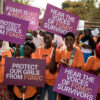
Female Genital Mutilation: Winning the Argument, Losing the Funding
Last August, a one-month-old girl in The Gambia bled to death after being subjected to female genital mutilation (FGM), a practice that had been illegal in the country since 2015. FGM is a human rights violation, whatever the appeals to faith or tradition made in its defence, but now the Gambian Supreme Court is being asked to strike the country’s ban down. This is the second attempt in two years to make FGM legal again.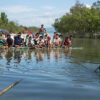
Rohingya Repatriation: A Roadmap Without a Road
The Rohingya crisis remains one of the most enduring humanitarian and political failures in South and Southeast Asia. Since the 2017 mass expulsion from Myanmar’s Rakhine State, Bangladesh has hosted more than one million refugees in Cox’s Bazar and Bhasan Char, while Myanmar has failed to create conditions for safe return. What began as an emergency response has hardened into protracted displacement marked by statelessness, insecurity, aid dependency, and diplomatic fatigue. Repatriation is repeatedly presented as the preferred durable solution, yet every major attempt has failed because the core political question remains unresolved: the Rohingya cannot safely return to a state that denies them citizenship, protection, and equal belonging.
ARMENIA: ‘Anti-LGBTQI+ Discourse Is Increasingly Tied to Anti-democratic Narratives’
CIVICUS discusses disinformation campaigns targeting the LGBTQI+ community in Armenia with Hripsime Kizogyan, Executive Director of Pink Armenia, a community-based organisation that defends the human rights of LGBTQI+ people and advocates for policy change.

US Casualty Figures Keep Fluctuating in War with Iran
An age-old axiom in Statistics reads : Figures Cannot Lie, But Liars Can Figure. And more so, in military conflicts, including the five-month-old US-Iran war, where casualty figures are difficult to track down because of lack of transparency and false accounting.
Dual Crises in Eastern DRC as Ebola Surges and Hunger Deepens
The Democratic Republic of Congo (DRC) is battling the fastest-growing Ebola outbreak on record, with United Nations officials warning that hunger is actively undermining efforts to contain the spread.
From the Foothills of Mount Kilimanjaro, Magnolia Athletics Camp Is Helping Girls Stay in School, Pursue Athletics and Escape the Pressures of Harmful Traditional Practices
Before sunrise each morning, 19-year-old Josephine Sembeyo joins dozens of teenage runners leaving Magnolia Athletics Camp for training beneath the shadow of Mount Kilimanjaro.
A New Wave of “Communist” Hysteria is Threatening to Spread Across US Politics
Senator Joseph R. McCarthy (Republican of Kansas) rose to public attention in the 1950s with his allegations that hundreds of “Communists” had infiltrated the State Department and other federal agencies.
The United Nations in a Time of Opportunity & Uncertainty: a Time to Choose
On 15 September 1953, Vijaya Lakshmi Pandit of India was elected the eighth president of the UN General Assembly — the first woman to hold the UN's second-highest position. Since then, only four women have followed her. Since its founding, the UN has had nine Secretaries-General. All men. Now, 81 years after the UN's founding, we have a historic opportunity to correct that record. It is time to entrust the UN leadership to a woman of the Global South who shapes a more inclusive, effective and forward-looking UN.
Extreme Heatwave Escalates Urgency of Climate Adaptation in Europe
As Western Europe endured its worst-ever June heatwave in recorded history, the imperative for climate adaptation is now urgent as the continent accelerates beyond others to become the fastest-warming region in the world.
The Americas have the Tools to Eliminate HIV, but Gaps in Access & Coverage remain, says PAHO
The Region of the Americas has more tools than ever before to prevent, diagnose, and treat HIV, yet many of them are still not reaching everyone who needs them, Pan American Health Organization (PAHO) Director Jarbas Barbosa said during the opening session of the International AIDS Conference (AIDS 2026).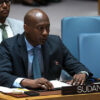
Sudan’s War Economy: Funded by Gum Arabic and Gold
In the three years since the outbreak of the Sudanese Civil War, the humanitarian crisis has deteriorated significantly, with the United Nations underscoring a blatant disregard for international humanitarian law among warring parties. This includes the deliberate targeting of civilians in residential areas, widespread sexual violence, and attacks on critical infrastructure that have hindered aid efforts and pushed communities to the brink of collapse. To manage rising military expenses, the warring parties have increasingly relied on the exploitation of trade routes and territories, prompting humanitarian experts to express concern about a persistent, self-sustaining “war economy.”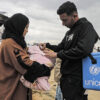
Ongoing Need for Humanitarian Assistance in the Occupied Palestinian Territory
On Monday July 20, a team from the United Nations Office for the Coordination of Humanitarian Affairs (OCHA) visited two displacement sites in Gaza where they found two family tents decimated by domestic fires. This incident is indicative of the increasing frequency of domestic fires in Gaza.
Cockroach Protests: How India’s Youth Movement Led to Minister’s Resignation
On July 25, after 50 days of protest at Delhi's Jantar Mantar, Union Education Minister Dharmendra Pradhan resigned.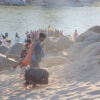
UNHCR: 75 years on, the Refugee Convention Remains a Lifeline for Millions
Seventy-five years after the Refugee Convention was opened for signature on 28 July 1951, it remains the foundation of the international refugee protection system and one of the most consequential international legal instruments ever adopted.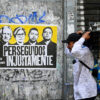
Guatemala: A Narrow Opening in a Captured Justice System
José Rubén Zamora, founder of elPeriódico, Guatemala’s now-defunct leading investigative newspaper, spent 1,295 days in detention before a court granted him house arrest on 12 February. He endured long stretches of solitary confinement in a military jail, held in near-constant darkness and subjected to treatment that six UN experts warned could amount to torture. His offence was simply doing his job. For decades, he exposed the corrupt dealings of Guatemala’s economic and political elites. Prosecutors are still trying to send him back to prison.« Previous Page — Next Page »





One world, one humanity, now one court to defend its rights. Another step towards universal human rights, but not remotely a step far enough. The United Nations adopted the Universal Declaration of Human Rights more than half a century ago, but that has done little to stop violations the world over, just as the Geneva Convention has not protected prisoners of war enough. Democracy itself and the freedom it presupposes has not been protective enough. This is the century to move from politicisation of human rights towards humanising political ways. IPS keeps an eye on that difficult path.

The Week with IPS

NEXT STOP - SDGs
Tracking global progress towards a sustainable world
Tracking global progress towards a sustainable world
