Languages
Monday, November 9, 2026



News and Views from the Global South
Human Rights

Central America Fails to Acknowledge or Legislate in Favor of LGBTI Community
There is still a long way to go before the LGBTI population in Central America stops being discriminated against and begins to make progress in gaining recognition of their full rights, including the possibility of changing their name to match their gender identity, in the case of trans people.
Negotiations Must Accelerate Climate Action and Save Vulnerable Countries
Vulnerable countries, banking on robust climate negotiations, want an inclusive funding package to help them with the devastating impacts of climate change. The poor progress at the 2023 Bonn Climate Change Conference, known as the 58th session of the Subsidiary Bodies of the United Nations Framework Convention on Climate Change (UNFCCC), has dampened hopes for successful climate negotiations at COP 28.
Migration: Europe’s Complicity in Massive Human Rights Violations
Make no mistake: European States are complicit in the death of thousands and thousands of human beings on their shores, land borders and at home. The massive drowning of hundreds of migrants close to Greece shores on 14 June is just a new chapter in Europe's long series of continued violations of all international human rights laws.
A Shipwreck in Greece Reminds Us of the Mess in Libya
A new catastrophe in the Mediterranean, this time off the coast of Greece. The number of drowned still to be determined — barely 100 survivors speak of more than 700 passengers on board— will be added to almost 30,000 lost at sea since 2014, according to the International Organization for Migrations.
Sexual Violence – In All Forms and Contexts – Must Stop
Sexual violence is unacceptable in any shape or form, in all contexts, including those of conflict. As we come together on the International Day for the Elimination of Sexual Violence in Conflict, we must reflect together on the pain, horror, fear and inhumanity that rape, sexual abuse, trafficking, slavery, child marriage and other forms of conflict-related sexual violence bring to a young child’s life, hence, our collective humanity.
Making the Impossible Possible, Chronicles of an Ambassador’s Lifelong Frontline Battle to End Leprosy
In 1974, Yohei Sasakawa accompanied his father to a leprosy hospital he had funded. He saw leprosy patients inside the hospital still and expressionless. The smell of leprosy filled the air, the smell of pus from open sores.
Bolivia’s Natural Gas Dreams Are Fading
One of the largest natural gas reservoirs in South America is showing signs of decline and the hopeful expectations that emerged in 2006, to turn Bolivia into a regional energy leader, are waning.
UN Cybercrime Convention: Could the Cure Be Worse than the Disease?
If you’ve never heard of the Cybercrime Convention, you’re not alone. And if you’re wondering whether an international treaty to tackle cybercrime is a good idea, you’re in good company too.
Healthy Homes – A Right of Rural Families in Peru
Adopting a “healthy housing” approach is improving the living conditions of rural Peruvian women like Martina Santa Cruz, a 34-year-old farmer who lives with her husband and two children in the village of Sacllo, 2,959 meters above sea level in the Andes highlands municipality of Calca.
Award-Winning Journalist and Best-Selling Author Christina Lamb Appointed Global Champion for Education Cannot Wait
Education Cannot Wait (ECW), the UN global fund for education in emergencies and protracted crises, today named Christina Lamb as its newest ‘ECW Global Champion’.
A Climate Finance Goal That Works for Developing Countries
After years of failing to meet climate finance commitments, the new climate finance goal under discussion this week in Bonn is critical, but without supporting reforms of the global financial architecture we risk repeating past mistakes.
‘News Deserts’ Are Rampant in Latin America
Without the means to receive information about what is happening around them, millions of Latin Americans who live in poor remote rural or impoverished urban areas inhabit veritable news deserts, according to an increasing number of studies conducted by journalistic organizations in the region.
No Peace Until Peace For All
As we head into June, we will commemorate a number of important international days that call for much-needed support to protect refugees, end child labour, stop sexual violence in conflict and ensure human rights for the innocent children victims of aggression.
The Fight for Equity in Education Continues in Africa
June 16 marks the International Day of the African Child, a day commemorating student uprisings in Soweto Township, South Africa, in 1976. The day is meant to honor the brave students who stood against a system of violence and oppression, raising their voices for equality as human beings and for the right to learn in their native languages at school.
State of Asians in the UN: Need for Proactive, Inclusive & Collective Leadership
The United Nations system has an agreed leadership framework that is inclusive and respectful of all personnel and stakeholders, embracing diversity and rejecting discrimination in all its forms.
Access to Quality Learning Environments Will End Child Labour
Worldwide, 160 million children are engaged in child labour. Without access to safe, quality educational opportunities, their dreams of a better future have been cut short. As we commemorate the World Day Against Child Labour, we must continue to support their protection from child abuse and violations – and the right to 12 years of quality education – for every girl and boy on the planet.
Cyclone Freddy has put Women & Girls in Malawi at Greater Risk of Sexual Abuse & Exploitation
“Cyclone Freddy was a terrible experience, and now many women who lost their homes and their livelihoods are at increased risk of sexual exploitation and abuse,” warns Caleb Ng'ombo, Director of People Serving Girls at Risk (PSGR), a frontline NGO in Malawi that supports vulnerable women whose lives have been devastated by the record-breaking tropical storm.
A 1904 Massacre Could Help Save the Future of Indigenous Peoples in Brazil
Children were thrown into the air and stabbed and cut with knives and machetes. The attackers first opened fire on the victims of the massacre before finishing them off with knives so that none of the 244 indigenous people of the village would survive. The 1904 massacre permanently marked the Xokleng people and may play a decisive role in the future of the native peoples of Brazil.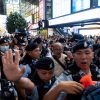
Hong Kong’s Lights of Freedom Extinguished
Nothing was more predictable than repression. Merely for holding candles and flowers, people were taken away by Hong Kong’s police. The occasion was the anniversary of the Tiananmen Square Massacre, 4 June 1989. Hong Kong was until recently home to mass annual vigils where thousands gathered to keep alive the memory of that day. But that’s all gone now in the crackdown that followed large-scale protests for democracy that erupted in 2019.
When the President of the General Assembly was Elected on the Toss of a Coin…
When the General Assembly elected its President for 2023-2024 last week, it continued a longstanding tradition of male dominance in the UN’s highest policy making body. The new President for the 78th session, Ambassador Dennis Francis of Trinidad and Tobago, a longstanding career diplomat and a former Permanent Representative, was elected June 1 “by acclamation”.
Number of Crisis-Impacted Children in Need of Education Support Rises Significantly: Education Cannot Wait Issues New Global Estimates Study
Armed conflicts, forced displacement, climate change and other crises increased the number of crisis-impacted children in need of urgent quality education to 224 million, according to a new Global Estimates Study issued today by Education Cannot Wait (ECW), the United Nations global fund for education in emergencies and protracted crises.« Previous Page — Next Page »





One world, one humanity, now one court to defend its rights. Another step towards universal human rights, but not remotely a step far enough. The United Nations adopted the Universal Declaration of Human Rights more than half a century ago, but that has done little to stop violations the world over, just as the Geneva Convention has not protected prisoners of war enough. Democracy itself and the freedom it presupposes has not been protective enough. This is the century to move from politicisation of human rights towards humanising political ways. IPS keeps an eye on that difficult path.

The Week with IPS

NEXT STOP - SDGs
Tracking global progress towards a sustainable world
Tracking global progress towards a sustainable world
