Languages
Monday, November 9, 2026



News and Views from the Global South
Human Rights

The Fight for Yemen’s Future Is a Global Responsibility
As Yemen enters its ninth year of war, its people are facing a humanitarian crisis of horrifying proportions. In my role as Oxfam's Yemen Country Director, I have witnessed firsthand the effects of the humanitarian catastrophe, worsened by economic collapse and sharp increases in the cost of food and other essential commodities.
Civil Society a Vital Force for Change Against the Odds
Brave protests against women’s second-class status in Iran; the mass defence of economic rights in the face of a unilateral presidential decision in France; huge mobilisations to resist government plans to weaken the courts in Israel: all these have shown the willingness of people to take public action to stand up for human rights.
Uganda: UN Experts Condemn Egregious anti-LGBT Legislation
A group of UN experts* on human rights has blasted the Government of Uganda for making homosexuality punishable by death. “It is an egregious violation of human rights, the experts said, urging Uganda’s president not to promulgate laws that take aim at and further criminalise people identifying as lesbian, gay, bisexual and transgender (LGBT), and those who support and defend their human rights.
A ‘Barbed-Wire Curtain’ Around Europe
In the wake of Finland's announcement last fall that it will build a barrier along its border with Russia, the discussions surrounding the European Council meeting of 9 February 2023 confirmed that the tide had turned.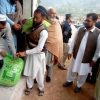
Stampedes as Destitute Throng Pakistan’s Free Flour Distribution Points
The free Atta (flour) distribution scheme launched by the government to assist the inflation-hit communities during the holy month of Ramzan has left at least ten dead and over 100 injured as would-be beneficiaries rush to claim their 10-kilogram bags.
Press Freedom on Trial in Zimbabwe Ahead of Elections
With only a few months to go before national elections in Zimbabwe, press freedom advocates are raising concerns about stringent reporting conditions set by the government.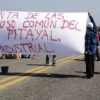
Opposition in Mexico to Mega-Industrial Model
In March 2021, the community assembly of the municipality of San Blas Atempa, in the southern Mexican state of Oaxaca, approved the sale of 360 hectares for the creation of an industrial park. But part of the community opposed the initiative due to irregularities, such as the falsification of signatures of supposed attendees, including those of people who had already died.
Africa’s Dark Road to Democracy
The dark road to democracy began with the manner in which the Kenyan Presidential election of August 2022 was handled. Today, the Church in Kenya is calling for dialogue between the ruling regime and the opposition. The issue here is not about dialogue, but the legitimacy of the President William Ruto. The situation in Kenya reminds me of a similar situation in Rwanda in early 90s.
Chile Steps Up Controls to Curb Immigration
The Chilean government tightened controls on the northern border to curtail the influx of migrants, especially Venezuelans, along a 1,030-km stretch of border with Bolivia and Peru.
Pressure from the Taliban has Contributed to Rise in Underage Marriages in Afghanistan
Afghan girls have been denied the right to attend school and university since the Taliban took power in August 2021. But as if this was not tragic enough, many girls have also been forced to marry too early in life.
Iraq in 2023: Challenges & Prospects for Peace & Human Security
Over the past two decades Iraq has been affected by several waves of intense conflict and violence. The 2003 invasion of Iraq by a multinational coalition led by the United States and United Kingdom toppled the Ba’athist regime of Saddam Hussein.
Beatriz v. El Salvador Case Could Set Precedent on Abortion in Latin America
An open hearing in the Inter-American Court of Human Rights in the Beatriz v. El Salvador case is raising hopes that this country and other Latin American nations might overturn or at least mitigate the severe laws that criminalize abortion.
Turkish Writer Pinar Selek Faces Her Fifth Life Sentence
The woman we're meeting in a house on the outskirts of Biarritz -800 kilometres southwest of Paris- is a university professor, the author of several books and hundreds of articles, and a well-known human rights activist.
Burkina Faso Home to Almost Half of Closed Schools in Central & West Africa
Over a million children in Burkina Faso are currently affected by school closures with 6,134 academic institutions shut as of February 2023, an increase of over 40 per cent since the end of the last school year.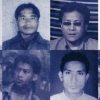
Bhutan’s Long-Serving Political Prisoners Should be Released
“The physical torture was merciless,” said one man, “so we had no option but to present ourselves to the court based on [the security forces’] demands and their statements.”
If We Value Human Rights and the Rule of Law, Then We Must Fight for Climate Justice
Human life is sacred and every individual deserves an equal chance in life. We have a common desire, we all want to lead a free, fulfilling existence, with dignity, where our basic needs are met, with opportunities to advance and equal treatment under the law. These are fundamental human rights, protected by international law, which we all have a shared responsibility to protect.
Black Sea Grain Initiative: Russia Reluctantly Agrees to a Two-Month Extension
Given the complex interplay between geopolitics and financial markets, Russia’s invasion of Ukraine in February 2022 sent shockwaves across the global economy. Admittedly, the implications both within and between countries have varied. However, there were some common denominators, including higher commodity prices.
One Year into the Ukraine War, Massive Influx of Russians into Georgia Has Consequences for Locals
Since the war in Ukraine started in February last year, at least 1.5 million Russian citizens have crossed the Russia-Georgia border, official data states. However, as of today, it needs to be clarified how many of them stayed in the country, but walking the streets of the Georgian capital Tbilisi, the presence of Russian nationals can be seen almost everywhere.
Keep Moving …
Only forty-five days into our new Strategic Plan 2023-2026, Education Cannot Wait secured 55 percent of its total requirement for the coming four years, reaching $826 million at #HLFC2023. This is a significant milestone for education in emergencies and protracted crises, and ECW will continue to pursue fund-raising year-round in the coming four years. The goal is to reach the target of 20 million children and adolescents affected by armed conflicts, climate-induced disasters and forced displacement.
Championing Sustainability Despite Adversities in Asia & the Pacific
As we reach the midpoint of the 2030 Agenda for Sustainable Development, it is an opportune moment to reflect on the Asia-Pacific region’s progress and accelerate efforts to achieve our goals.
War Criminals & Military Aggressors Who Occupy Seats in the Security Council
Come April 1, a post-Ukraine Russia, will preside over the UN Security Council in a month-long presidency on the basis of alphabetical rotation. But Russia will not be the first or the only country – accused of war crimes or charged with violating the UN charter—to be either a member or preside over the most powerful political body in the United Nations.« Previous Page — Next Page »





One world, one humanity, now one court to defend its rights. Another step towards universal human rights, but not remotely a step far enough. The United Nations adopted the Universal Declaration of Human Rights more than half a century ago, but that has done little to stop violations the world over, just as the Geneva Convention has not protected prisoners of war enough. Democracy itself and the freedom it presupposes has not been protective enough. This is the century to move from politicisation of human rights towards humanising political ways. IPS keeps an eye on that difficult path.

The Week with IPS

NEXT STOP - SDGs
Tracking global progress towards a sustainable world
Tracking global progress towards a sustainable world
