Languages
Thursday, November 12, 2026



News and Views from the Global South
Human Rights

Identities
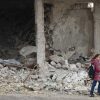
In Syria, a Decade of Death, Destruction, Displacement, Disease, Dread & Despair
The conflict in Syria is now ten years old. A decade of death, destruction, displacement, disease, dread and despair. I have spoken to Syrians in many parts of the country in recent weeks.
Why Rehabilitation is as Vital as Rescue for Child Trafficking Survivors
Twelve-year-old Babloo’s (Name changed) parents, who worked as daily wage agricultural labourers in the eastern Indian state of Bihar, were finding it difficult to feed their family of six. They had recently lost their eldest son to sudden illness, when a distant relative convinced them to send Babloo with him to work in a city. He promised to pay Rs 5000 ($70) a month, a significant amount for the impoverished family.
Arab Region Counts Cost of Devastating COVID-19 Pandemic
More than eight million people moved onto the poverty line in the Arab region, a conference of Arab and Asian parliamentarians heard. The hybrid conference, held simultaneously in Beirut, Lebanon, and via video conferencing to delegates in Asia and the Arab region, was a follow up on earlier discussions on the regions' ICPD25 Commitments.
Nobel Economist and 100 Experts Condemn Corporate Action against Argentina and Bolivia after Rollback of Failed Pension Privatization
Nobel Laureate Joseph Stiglitz, Juan Somavia, Jeffrey Sachs, Jose Antonio Ocampo and more than 100 high-level development experts have issued a statement protesting insurance corporations suing Argentina and Bolivia over the reversal of their failed pension privatizations at closed sessions of the International Centre for Settlement of Investment Disputes (ICSID) of the World Bank. If Argentina and Bolivia lose the disputes, it means that impoverished citizens and elderly pensioners will have to compensate wealthy financial corporations. Read their letter:
A Country with too Many Victims and Few Shelters
In March 2014, Noemi N. took her own life inside a refuge camp in Ciudad Juarez, Chihuahua, where up until now there are no specialized shelters for victims of human trafficking.
Debt Moratoria in the Next Pandemic: Be Prepared, and Be Fair
Imagine it is 2025 and that, unfortunately, another pandemic is sweeping the world. Much like in the 2020 crisis, borrowers have seen their livelihoods upended and are struggling to repay loans.
After the Fire: Rebuilding of Rohingya Camp a Race Against Time Ahead of Monsoon Season
 The building that was once the largest health centre in the Kutupalong refugee camp, serving some 55,000 Rohingya refugees 24/7, is now a burnt, distorted shell after a massive fire spread through the Cox’s Bazar camp in Bangladesh this week.
And as the tens of thousands of affected Rohingya return to the empty pieces of land that where once their homes, the need to rebuild — both the health facility and their homes — has added impetus because of the current COVID-19 pandemic and the coming monsoon season.

End Vaccine Apartheid Before Millions More Die
At least 85 poor countries will not have significant access to coronavirus vaccines before 2023. Unfortunately, a year’s delay will cause an estimated 2.5 million avoidable deaths in low and lower-middle income countries. As the World Health Organization (WHO) Director-General has put it, the world is at the brink of a catastrophic moral failure.
Human Rights Groups Demand an end to Myanmar Military’s Crackdown on Journalists
Two human rights groups have called on the military in Myanmar to release journalists arbitrarily jailed and allow them to work without harassment and prosecution. Amnesty International and the Committee to Protect Journalists (CPJ) told IPS that they will double down on those demands until all journalists are released and the operating licenses of newsgroups are restored.
The UN Food Systems Summit: How Not to Respond to the Urgency of Reform
Global food systems have been failing most people for a long time, and the COVID-19 pandemic has made a critical situation even worse. 265 million people are threatened by famine, up 50% on last year; 700 million suffer from chronic hunger; and 2 billion more from malnutrition, with obesity and associated diet-related diseases increasing in all world regions.
Brexit Shows Why Traders Need Reliable Information But Many Are Ahead of the Game
It’s now almost three months since the United Kingdom entered into a new trade agreement with the European Union. During that time, we’ve seen traders struggle to get to grips with the new arrangements. From lorry drivers having their sandwiches confiscated by Dutch customs officers to estimates of additional paperwork costs of $7 billion a year, and pig breeders watching their meat rot on the quayside for want of the correct forms.
Indigenous Communities in Mexico Fight Energy Projects
Indigenous farmers on communally owned lands have blocked since 2016 a private solar farm in the southeastern Mexican state of Yucatan by means of legal action, due to the company’s failure to hold consultations with local native communities and the risk of environmental damage.
How Technology Reproduces & Amplifies Harassment & Abuse of Women Journalists
“Email and social media access attempts, extremely aggressive comments, photo montages, massive defamation and intimidation campaigns on WhatsApp. This is what women journalists are facing for doing our job,” said Brazilian journalist Bianca Santana.
UN Sanitizes Killings of Children in Armed Conflicts
The horrendous killings of children in military conflicts and civil wars – both by national armed forces and militant groups – have triggered widespread condemnation by human rights organizations worldwide.
Why Children Are Prime Targets of Armed Groups in Northern Nigeria
Due to growing insecurity, Nigeria is gradually becoming one of the most dangerous places to live. The 2020 Global Terrorism Index identified the country as the third most affected by terrorism. There was a sharp increase in Boko Haram’s targeting of civilians by 25%, and killings by herdsmen increased by 26%, compared with the previous year. The two countries higher on the index are Iraq and Afghanistan.
‘Living Hell’ – Concerns Mount over Dramatic Deterioration in Yemen Conflict
The United Nations Special Envoy for Yemen has warned that the world’s worst humanitarian crisis, is rapidly deteriorating as Yemenis, including women and children, face hunger, injury and death.
Five Steps to Combat Gender-Based Violence Globally
The 410 Legal Aid Centers that I manage in Bangladesh for BRAC’s Human Rights and Legal Aid Services received approximately 35,900 requests for assistance in 2020. Almost all of them involve gender-based violence against women and girls.
Magellan, Inquisition and Globalisation
Globalisation’s beginnings are symbolised by Ferdinand Magellan’s near circumnavigation of the world half a millennium ago. But its history is not simply of connection and trade, but also of intolerance, exploitation, slavery, violence, aggression and genocide.
How to Achieve Peace in Afghanistan
There is much expectation about US President Joe Biden's Afghanistan strategy to end the United States' longest war effectively. So far, he continues to rely on Ambassador Zalmai Khalilzad, the Special Envoy for Afghanistan, appointed by Mr. Trump.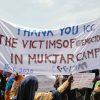
Sudan Took Important Step, But Now Should Send the ICC Suspects to The Hague
Sudanese authorities concluded a Memorandum of Understanding with the International Criminal Court (ICC) in February in its investigation of Ali Kushayb. This much needed step is expected to allow ICC investigators access to Sudan ahead of ICC judges’ deliberations in May to assess whether there is sufficient evidence to send his case to trial.« Previous Page — Next Page »





One world, one humanity, now one court to defend its rights. Another step towards universal human rights, but not remotely a step far enough. The United Nations adopted the Universal Declaration of Human Rights more than half a century ago, but that has done little to stop violations the world over, just as the Geneva Convention has not protected prisoners of war enough. Democracy itself and the freedom it presupposes has not been protective enough. This is the century to move from politicisation of human rights towards humanising political ways. IPS keeps an eye on that difficult path.

The Week with IPS

NEXT STOP - SDGs
Tracking global progress towards a sustainable world
Tracking global progress towards a sustainable world
