Languages
Monday, July 27, 2026



News and Views from the Global South
Human Rights
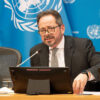
Haiti at a Crossroads: Political Uncertainty and Gang Control Push Nation Toward Collapse
As Haiti’s Transitional President Council (TPC) approaches its February 7 expiration date and the country remains without a newly elected president, humanitarian experts warn the nation risks further sliding into insecurity, raising fears of broader collapse.
Cuts Stall Clinical Trials, Scientists Warn US Risks Losing Its Research Edge
Scientists across the U.S., including me, are stressed after a year marked by several changes and challenges, including cuts to science funding that have stalled clinical trials and studies that could improve and save lives. Without funding, scientists worry about how they will support ongoing research and train America’s future workforce, including the next generation of innovators.
Binalakshmi Nepram: Engineering Peace, Creating History
It was Christmas eve: some two decades ago. Binalakshmi Nepram was a witness to the killing of a 27-year-old. In utter disbelief, she saw a group of three men dragging the victim from his workshop. Within minutes, he was shot dead.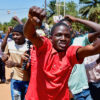
Uganda: Democracy in Name Only
When Ugandans went to the polls on 15 January, the outcome was never in doubt. As voting began, mobile internet services ground to a halt, ensuring minimal scrutiny as President Yoweri Museveni secured his seventh consecutive term. Far from offering democratic choice, the vote reinforced one of Africa’s longest-running presidencies, providing a veneer of democratic legitimacy while stifling competition.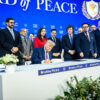
Another of Trump’s Quixotic Imperial Designs
At a press conference at the World Economic Forum in Davos last week, Trump unveiled his newly formed Board of Peace to end the Israel-Hamas war. During a press conference in the White House, he explained that he created the board because “The UN should have settled every one of the wars that I settled. I never went to them. I never even thought to go to them.”
Is the US Board of Peace Aimed at Undermining the UN?
Judging by the mixed signals coming out of the White House, is the Board of Peace, a creation of President Donald Trump, eventually aimed at replacing the UN Security Council or the United Nations itself? At a ceremony in Davos, Switzerland last week, Trump formally ratified the Charter of the Board — establishing it as “an official international organization”.
‘Freedom Always Returns – but Only If We Hold Fast to Our Values and Sustain the Struggle’
CIVICUS speaks with Belarusian activist, blogger and journalist Mikola Dziadok about his experiences as a two-time political prisoner and the repression of dissent in Belarus. Mikola was jailed following mass protests in 2020.
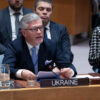
Systemic Infrastructure Attacks Push Ukraine Into Its Deepest Humanitarian Emergency Yet
Nearly four years into Russia’s full-scale invasion, Ukraine faces another winter marked by widespread humanitarian suffering and continued indiscriminate attacks. The final months of 2025 were particularly volatile, characterized by routine bombardment of densely populated areas and repeated strikes on residential neighborhoods, critical civilian infrastructure, and humanitarian facilities. As hostilities expanded into new territories over the past year, humanitarian needs grew sharply, with many war-torn communities residing in uninhabitable areas.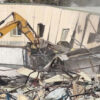
UN Peacekeepers and Associated Personnel Killed in Malicious Attacks in 2025
At least 21 United Nations personnel — 12 peacekeeping personnel and nine civilians — were killed in deliberate attacks in 2025, according to the United Nations Staff Union Standing Committee on the Security and Independence of the International Civil Service.
The World’s Ongoing Conflicts Underline Nuclear and Non-Nuclear States
The two current ongoing conflicts, which have claimed the lives of hundreds and thousands of people, are between nuclear and non-nuclear states: Russia vs Ukraine and Israel vs Palestine, while some of the potential nuclear vs non-nuclear conflicts include China vs Taiwan, North Korea vs South Korea and the United States vs Iran (Venezuela, Mexico, Colombia, Cuba and Denmark).
Guinea’s Path to Electoral Autocracy
In December, the dust settled on Guinea’s first presidential election since the military took control in a 2021 coup. General Mamady Doumbouya stayed in power after receiving 87 per cent of the vote. But the outcome was never in doubt: this was no a democratic milestone; it was the culmination of Guinea’s denied transition to civilian rule.
World Living Beyond Its Means: Warns UN’s Global Water Bankruptcy Report
The world has entered what United Nations researchers now describe as an era of Global Water Bankruptcy, a condition where humanity has irreversibly overspent the planet’s water resources, leaving ecosystems, economies, and communities unable to recover to previous levels.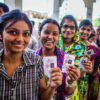
Global Survey Finds Citizens back a World Parliament as Trust in International System Erodes
As democracy faces pressure around the world and confidence in international law drops, a new global survey reveals that citizens in a vast majority of countries support the idea of creating a citizen-elected world parliament to deal with global issues.
The UN’s Withering Vine: A US Retreat from Global Governance
The Trump administration’s recent announcement of its withdrawal from 66 international organisations has been met with a mixture of alarm and applause. While the headline number suggests a dramatic retreat from the world stage, a closer look reveals a more nuanced, and perhaps more insidious, strategy. The move is less a wholesale abandonment of the United Nations system and more a targeted pruning of the multilateral vine, aimed at withering specific branches of global cooperation that the administration deems contrary to its interests. While the immediate financial impact may be less than feared, the long-term consequences for the UN and the rules-based international order are profound.

One Carries a Broom, the Other a Schoolbag
While other children her age prepared for school, eight-year-old Tania once began her workday. Each morning, she picked up a jharu—the household broom—and cleaned floors inside a private home. At the same time, another child of her age in that household lifted a schoolbag and left for class. One carried a broom. The other carried books.
Children and Armed Conflict Must be at the Forefront of the Global Agenda
Thirty years ago, the groundbreaking report by Graça Machel, renowned and widely respected global advocate for women's and children's rights, to the United Nations General Assembly laid bare the devastating impact of armed conflict on children and shook the conscience of the world. It led to the historic decision of the General Assembly to create the mandate of the Special Representative of the Secretary-General for Children and Armed Conflict (SRSG-CAAC).
Jailed by the Generals She Defended as ICJ Opens Genocide Case Against Myanmar
Held incommunicado in grim prison conditions for nearly five years, Aung San Suu Kyi quite possibly does not even know that this week the International Court of Justice (ICJ) opened a landmark case charging Myanmar with committing genocide against its Rohingya minority a decade ago.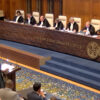
ICJ Begins Proceedings for Rohingya Genocide Allegations Case Against Myanmar
On January 12, the International Court of Justice (ICJ), opened landmark hearings in a case brought by the Republic of The Gambia, alleging that Myanmar’s military committed acts of brutal genocide against the Rohingya minority during its 2017 crackdown. Described by the United Nations (UN) as a case “years in the making,” the ICJ will spend the next three weeks reviewing evidence and testimony from both sides to determine whether the Myanmar military violated the Genocide Convention.
The Iranian Military Is the Only Institution Capable of Catalyzing the Downfall of the Regime
Unlike ever before, Iran’s Islamic regime is facing a revolt led by a generation that has lost its fear. Young and old, men and women, students and workers, are flooding the streets across the country.
What Next? United States Exits Key Entities, Vital Climate Treaties in Major Retreat from Global Cooperation
President Donald Trump has escalated efforts to further distance the United States from international organizations and entities focused on climate, the environment, and energy. This strategy is in step with his administration’s established approach to undermine and redirect funds and international cooperation away from climate and clean energy programs.
Gaza: Physicians Call For Unimpeded Aid To Restore Reproductive Healthcare
Israel must lift all restrictions on medicine, food and aid coming into Gaza, rights groups have demanded, as two reports released today (Jan 14) document how maternal and reproductive healthcare have been all but destroyed in the country.« Previous Page — Next Page »


One world, one humanity, now one court to defend its rights. Another step towards universal human rights, but not remotely a step far enough. The United Nations adopted the Universal Declaration of Human Rights more than half a century ago, but that has done little to stop violations the world over, just as the Geneva Convention has not protected prisoners of war enough. Democracy itself and the freedom it presupposes has not been protective enough. This is the century to move from politicisation of human rights towards humanising political ways. IPS keeps an eye on that difficult path.

The Week with IPS

NEXT STOP - SDGs
Tracking global progress towards a sustainable world
Tracking global progress towards a sustainable world
