Languages
Tuesday, August 11, 2026



News and Views from the Global South
Human Rights

Challenging Elites, Defending Democracy: Oxfam’s Amitabh Behar Speaks Out
Speaking to IPS on the sidelines of the International Civil Society Week in Bangkok (November 1–5), Amitabh Behar, Executive Director of Oxfam International and a passionate human rights advocate, highlighted his concerns about rising inequality, growing authoritarianism, and the misuse of AI and surveillance. Yet, he expressed optimism that, even as civic spaces shrink, young people across Asia are driving meaningful change. He also shared his vision of a just society—one where power is shared, and grassroots movements lead the way.
Strengthening Indigenous Lands Rights Key in Solving Deforestation in Amazon
Strengthening Indigenous land rights will protect more forest in Brazil’s Amazon and avoid large amounts of carbon emission, according to new research released ahead of COP30.
Defending Democracy in a “Topsy-Turvy” World
It is a bleak global moment—with civil society actors battling assassinations, imprisonment, fabricated charges, and funding cuts to pro-democracy movements in a world gripped by inequality, climate chaos, and rising authoritarianism. Yet, the mood at Bangkok’s Thammasat University was anything but defeated.
As Civil Society Is Silenced, Corruption and Inequality Rise
From the streets of Bangkok to power corridors in Washington, the civil society space for dissent is fast shrinking. Authoritarian regimes are silencing opposition but indirectly fueling corruption and widening inequality, according to a leading global civil society alliance.
The Biggest Single Contributor to the UN Budget is also the Biggest Single Defaulter
The United States, the largest single contributor to the UN budget, is using its financial clout to threaten the United Nations by cutting off funds and withdrawing from several UN agencies. In an interview with Breitbart News U.S. Representative to the United Nations, Ambassador Mike Waltz said last week “a quarter of everything the UN does, the United States pays for”.
From Slogans to Systems: Five Practical Steps for Turning Social Development Commitments into Action at Doha and Beyond
Thirty years ago, world leaders gathered in Copenhagen and made a promise: people would be at the center of development. This November, Heads of State and Government will meet again in Doha, Qatar, for the Second World Summit for Social Development or WSSD2.
Will COP30 Reenergize Nigeria’s Great Green Wall Project?
In 2017, 45-year-old Jabiru Muhammed could hardly contain his excitement when the village head of Batu in Jigawa State, northwestern Nigeria, announced that their community would work with officials from the National Agency for the Great Green Wall (NAGGW) to plant trees across a large stretch of land in the village.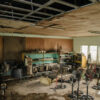
Children’s Education Must Be Put At The Forefront of Climate Discussions At COP30
In 2024, the climate crisis has disrupted schooling for millions of students worldwide, weakening workforces and hindering social development on a massive scale. With extreme weather patterns preventing students from accessing a safe, and effective learning environment, the United Nations (UN) and the Geneva Global Hub for Education in Emergencies (EiE Hub) continue to urge the international community to assist the most climate-sensitive areas in building resilient education systems that empower both students and educators.
A Power Imbalance Frozen in Time: The Case for Security Council Reform
In June 2025, the international community celebrated the 80th anniversary of the signing of the United Nations Charter. On October 24, we celebrated UN Day, commemorating its ratification. This is an opportune moment to reflect on how far we have come, and the ground we have yet to traverse.
Indigenous Communities Are the Frontlines of Climate Action—It’s Time COP Listened
I had hoped to attend this year’s Conference of the Parties (COP) in person, to stand alongside fellow Indigenous leaders and advocate for the rights of our communities.
UN Agencies Calls for Urgent Action as Sudan’s Humanitarian Crisis Reaches Breaking Point
In recent weeks, Sudan’s humanitarian crisis has deteriorated considerably, as escalating hostilities, mass displacement, disease outbreaks, and a widespread lack of access to basic, essential services continue to endanger civilians across the country. The situation has been further compounded by a sharp increase in attacks on healthcare facilities throughout October, which has severely weakened the country’s already fragile health system and deprived thousands of people of lifesaving care.
George Soros Receives Prize for Work Supporting Roma, Sinti Rights
Billionaire philanthropist George Soros has been awarded the European Civil Rights Prize of the Sinti and Roma for his decades of work supporting Roma rights.
The Only Remaining Colony in Africa Continues its Struggle for Independence
The African continent has long been monopolized by European colonial rulers, with France having the largest number of colonies, ruling over 35 territories, followed by Britain with 32. A bygone era of colonial rule on the continent, “once carved up and ruled by European powers hungry for imperial glory,” has virtually ended—almost.
‘Turkmen Authorities Are Carrying out a Systematic Campaign to Eliminate Independent Voices’
CIVICUS speaks about the disappearance of Turkmen activists Abdulla Orusov and Alisher Sahatov with human rights defender Diana Dadasheva from the civil movement DAYANÇ/Turkmenistan and with Gülala Hasanova, wife of Alisher Sahatov.
Tackling the Hidden Toll of Breast Cancer in the Pacific Islands
The burden of breast cancer, the most common cancer among women, is global, and the projected increase in cases in the coming decades will affect women in high- and low-income countries in every region.
Gaza Shows Subtle Signs of Recovery as UN Agencies Work to Meet Aid Needs
Since the declaration of a ceasefire between Israel and Hamas on October 10, families in the Gaza Strip have begun returning to previously inaccessible areas, as humanitarian organizations work to scale up aid operations to meet growing needs on the ground even amid security risks, including unexploded ordnance.
When Taliban Shut Down the Internet, Women Lost their Lifeline to Aid, Education & Each Other
When the Taliban recently cut off the Internet and phone networks across Afghanistan, millions of women and girls were silenced. For those with connectivity, the blackout severed their last link to the outside world – a fragile connection that had kept education, work, and hope alive.
Foreign Agent Laws: The Latest Authoritarian Weapon Against Civil Society
When thousands of Georgians filled the streets of Tbilisi in 2023 to protest against their government’s proposed ‘foreign agents’ law, they understood what their leaders were trying to do: this wasn’t about transparency or accountability; it was about silencing dissent. Though the government was forced to withdraw the legislation, it returned with renewed determination in 2024, passing a renamed version despite even bigger protests. The law has effectively frozen Georgia’s hopes of joining the European Union.
World Food Programme Warns of Emergency Levels of Hunger Amid Severe Funding Cuts
In 2025, unprecedented cuts to foreign aid and humanitarian funding have exacerbated global hunger crises, leaving millions without access to food or basic services. Funding shortfalls have forced aid agencies to scale back or suspend lifesaving programs in some of the world’s most food-insecure regions, particularly across the Global South—exacerbating already dire conditions caused by conflict, displacement, economic instability, and climate shocks.
Women’s Leadership at the Heart of Disaster Risk Reduction
Climate and environmental challenges are hitting harder and more often, reshaping people’s lives around the world. While disasters touch everyone, their impacts are not felt equally. The most marginalized, especially women and girls, are too often the first to suffer and the last to recover.
They Have Known Nothing but War—The Plight of Syria’s Out-of-School Children
The war has deprived thousands of Syrian children of their right to education, especially displaced children in makeshift camps. Amidst difficult economic conditions and the inability of many families to afford educational costs, the future of these children is under threat.« Previous Page — Next Page »


One world, one humanity, now one court to defend its rights. Another step towards universal human rights, but not remotely a step far enough. The United Nations adopted the Universal Declaration of Human Rights more than half a century ago, but that has done little to stop violations the world over, just as the Geneva Convention has not protected prisoners of war enough. Democracy itself and the freedom it presupposes has not been protective enough. This is the century to move from politicisation of human rights towards humanising political ways. IPS keeps an eye on that difficult path.

The Week with IPS

NEXT STOP - SDGs
Tracking global progress towards a sustainable world
Tracking global progress towards a sustainable world
