Languages
Friday, November 20, 2026



News and Views from the Global South
Human Rights
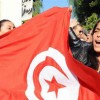
Islamists and Secularists Adjust to Work Together
It is encouraging to watch how Rachid Ghannouchi and Nahdha, the largest and most popular Islamic political party in Tunisia which is now widely expected to come to power again in the next election, have been transforming over time. Recently Ghannouchi astonished the world by declaring that “We will exit political Islam”, meaning that the country would be working to separate religious work from politics. Coming from one who once advocated Sharia law in governance, this change is amazing. Ghannouchi's leadership of remaining flexible, without compromising fundamental values and principles of Islam, has played a major role in helping Tunisia to become a vibrant democracy today, when other countries in the region have failed.
Disagreement Continues Over Global Drug Policy
A new report has found that global drug use largely remains the same, but perspectives on how to address the issue still vary drastically.
Ethiopia-Eritrea: The Cry of the Imburi
The 12 June 2016 exchange of artillery fire along the heavily militarized frontier between Ethiopia and Eritrea could be just one of the periodic skirmishes between the two States. However, it could be the first signs of a flare up of violence. There have been calls from the United Nations and African Union officials for “restraint” but as yet no steps for real conflict resolution.
Bringing Back Our Girls Is Not The End of The Story
"Wherever war reaches there is rape, and wherever rape is there is trauma, pain and terror” Zainab Bangura, Special Representative of the Secretary General on Sexual Violence in Conflict said here last week.
Political Crisis Looms in Nicaragua in Run-Up to Elections
The seventh consecutive nomination of Daniel Ortega as the governing party’s candidate to the presidency in Nicaragua, and the withdrawal from the race of a large part of the opposition, alleging lack of guarantees for genuine elections, has brought about the country’s worst political crisis since the end of the civil war in 1990.Brits Shouldn’t ‘Brexit’
Today the British will vote in their “Brexit” referendum whether to stay in or exit from the European Union. The United Kingdom applied for the first time to join what was then called the European Economic Community, in 1961. The Brit movers for membership were afraid their country would get politically isolated from Western Europe. At that time the USA’s and its allies’ Cold War with the Soviet Union was still ablaze.
Lords of the Campus
Thomas Pogge is a professor of philosophy at Yale University, one of the most eminent educational institutions in the world. From there he directs the Global Justice Centre, which advocates, among other issues, the premise that the wealthy countries of the world have a moral and ethical responsibility towards providing aid to poorer nations.
Collective Indifference or Silent Acceptance?
When blogger Rajib Haider was killed in 2013, the outcry was tremendous. But, over the next three years, at least 38 more were added to the list of those murdered, which includes writers, publisher, foreigners, religious minorities and LGBT rights activists. There have been reports about alleged IS involvement, and last week, the security forces launched a drive that resulted in the arrest of 194 'militants'. But the collective outrage over people being murdered seems to have mellowed.
UN Staff Unions Demand Stronger Action on Sexual Abuse
The United Nations claims it is doing its best to curb widespread sexual abuses in its peacekeeping operations overseas – from Haiti all the way to the Central African Republic.Rethinking Fiscal Policy for Global Recovery
Global economic recovery is being held hostage by the ideological dogma of the last three and a half decades. After long contributing to neo-liberal conventional wisdom, in its October 2015 World Economic Outlook, the IMF identified the vicious circle undermining global recovery and growth. Low aggregate demand is discouraging investment; slower expected potential growth itself dampens aggregate demand, further limiting investment.
Worldwide Displacement At Levels Never Seen Before
Displacement has increased to unprecedented levels due to war and persecution, the UN Refugee Agency (UNHCR) has found.
Xenophobic Rhetoric, Now Socially and Politically ‘Acceptable’ ?
“Xenophobic and racist rhetoric seems not only to be on the rise, but also to be becoming more socially and politically acceptable.” The warning has been heralded by the authoritative voice of Mogens Lykketoft, current president of the United Nations General Assembly, who on World Refugee Day on June 20, reacted to the just announced new record number of people displaced from their homes due to conflict and persecution.
Fearing Violence, LGBT Refugees Rarely Seek Help
Despite their extreme vulnerability, lesbian, gay, bisexual, transgender and intersex (LGBTI) refugees often do not seek the assistance they need, since revealing their sexual or gender identities can put them in grave danger.
The Environment: Latin America’s Battleground for Human Rights
2015 was the deadliest year on record for the killings of environmental activists around the world, according to a new Global Witness report.
An Elite Club of Suicide Bombers
It is always baffling, isn’t it, to see the yawning difference in our responses in South Asia to a gathering communal threat, for instance, as opposed to the catastrophic prospect of nuclear annihilation? Only recently, Pakistan toggled between public outcry and terrified whispers when teeming mourners showed up at the funeral of an executed religious zealot, the savage killer of a popular provincial governor.
Islamic State: Foreign Fighter Trends
Thanks to Edward Snowden dumping sensitive data on to the net, there now exists more accurate estimates on foreign fighters recruited by the Islamic State (IS). Indeed, going by The Combating Terrorism Centre at West Point (United States Military Academy) recently made available a report titled 'The Caliphate's Global Workforce: An Inside Look at the Islamic State's Foreign Fighter Paper Trail' which provides data of some 4,600 foreign fighters recruited between early 2013 and 2014. This study which is a compilation of 4018 Mujahid Data forms, 2 Excel files (with 155 individuals entered), Exit records (31 files, 431 individuals) and 15 miscellaneous files provide a pattern of recruitment, which interestingly points to something rather disturbing, i.e. Europeans are signing up in alarming numbers, mostly from smaller countries like Belgium and Denmark. We are talking continental Europe here and the IS has successfully recruited from East and West and the Balkans.
Asia’s Rising Prosperity, Climate Change Taking Toll on Food Security
Asia’s economic growth over the last decade has been relentless, bringing with it a rising population and an influx of people from the countryside to the cities in search of prosperity. These trends are not expected to abate.
Mixed Progress at UN on Rights of Persons with Disabilities
Nearly 10 years after UN members adopted a progressive Convention on the Rights of Persons with Disabilities (CRPD), progress implementing the convention has been mixed, even at the UN itself, say disability advocates.
Unmet Expectations
Donald Trump’s rise in America, a wave of pro-Brexit and xenophobic sentiment in the UK, mass demonstrations in France and Brazil, a political crisis in South Africa, communal polarisation in India, and religious zealotry coupled with anti-corruption agitation in Pakistan. On the face of it, there’s very little that connects these disparate events. Each appears unique to a country’s history and its contemporary interaction of domestic and global events.
Case for Overcoming the Ostrich Syndrome
The final week of May 2016 was a grisly one. More than 700 asylum seekers and migrants died as three boats attempting to carry them to Italy sunk in the Mediterranean, and the death toll for the year crossed 2000. A week ago, Unicef reported a doubling of the number of unaccompanied children arriving as asylum seekers this year. The report also highlighted that these children are subjected to sexual violence, forced prostitution and other forms of abuse.
The Paradox of Refuge: Rise of Gender-Based Violence in Times of Crisis
Since the outbreak of war in 2011, 9 million Syrians have fled from their homeland, creating one of the gravest migrant crisis’ the world has ever seen. However, what happens to these vulnerable migrants once they secure the refuge they so perilously seek? Can refuge really bring safety to all? Or is ‘the refugee camp' nothing more than the creation of another war, in this case, fought against one’s own troubled people. Particularly, for those who are traditionally stigmatized, such as women and girls.« Previous Page — Next Page »


One world, one humanity, now one court to defend its rights. Another step towards universal human rights, but not remotely a step far enough. The United Nations adopted the Universal Declaration of Human Rights more than half a century ago, but that has done little to stop violations the world over, just as the Geneva Convention has not protected prisoners of war enough. Democracy itself and the freedom it presupposes has not been protective enough. This is the century to move from politicisation of human rights towards humanising political ways. IPS keeps an eye on that difficult path.

The Week with IPS

NEXT STOP - SDGs
Tracking global progress towards a sustainable world
Tracking global progress towards a sustainable world
