Languages
Monday, August 24, 2026



News and Views from the Global South
Human Rights

Can the Cali Fund Deliver on Its Billion-Dollar Biodiversity Pledge?
When the Cali Fund was unveiled in February on the sidelines of COP16.2 in Rome, the announcement sent ripples through the global conservation community. For the first time ever, companies that profit from digital sequence information (DSI)—the digitized genetic material of plants, animals, and microorganisms—will be expected to pay into a multilateral fund to protect the very biodiversity they benefit from.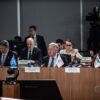
The Risks Artificial Intelligence Pose for the Global South
Artificial intelligence (AI) is rapidly developing and leaving its mark across the globe. Yet the implementation of AI risks widening the gap between the Global North and South.
NATO’s Trillion-dollar Gamble: The Dangers of Defence Without Accountability
Donald Trump’s bullying tactics ahead of NATO’s annual summit, held in The Hague in June, worked spectacularly. By threatening to redefine NATO’s article 5 – the collective defence provision that has anchored western security since 1949 – Trump won commitments from NATO allies to almost triple their defence spending to five per cent of GDP by 2035. European defence budgets will balloon from around US$500 billion to over US$1 trillion annually, essentially matching US spending levels.
#KeepHopeAlive Through Education
On the first International Day of Hope, we are all responsible to #KeepHopeAlive for the children impacted by the world’s most severe humanitarian crises. Perhaps the strongest responsibilities lie with those entrusted to lead the world and make the right moral and legal choices. This is especially so today, when we have led the world into an abyss of excruciating pain for nearly a quarter of a billion innocent children now suffering brutal conflicts and violence, forced displacement and punishing climate disasters – without quality education.
Conflict, Climate Change Push Migrants in Yemen to Return to Their Home Countries
Yemen's humanitarian crisis, driven by conflict, economic collapse and climate shocks, leaves migrants desperate to return to their home countries.
WFP Deputy Chief Describes Unprecedented Humanitarian Crisis in Gaza
Carl Skau, Deputy Executive Director of the World Food Programme (WFP), described the dire humanitarian situation in Gaza following his recent visit, speaking at a press briefing at the UN Headquarters on July 11.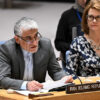
Afghan Refugees Expelled from Iran and Exposed to Horrific Abuse
Since early June, Afghan refugees in Iran have endured increasingly harsh humanitarian conditions, with many being forced to repatriate under conditions that violate the principles of international humanitarian law. In 2025 alone, over one million refugees have returned to Afghanistan, further stretching the limited supply of resources amid a severe and multifaceted humanitarian crisis.
UN Funding Crisis Threatens Work of Human Rights Council
The United Nations Human Rights Council (HRC) has expressed concern at the UN High Commissioner for Human Rights’ announcement that certain activities mandated by the council cannot be delivered due to a lack of funding. The council has sought clarity on why certain activities had been singled out.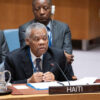
Escalating Gang Violence in Haiti Threatens to Override State Control
Over the month of June, the security situation in Haiti has taken a considerable turn for the worse, with armed gangs continuing to coordinate brutal attacks, seizing more territory, and obstructing critical humanitarian aid deliveries. In the past week, new waves of hostilities were reported in the nation’s Centre Department, which has elicited concern from humanitarian organizations that gang influence could soon completely overpower state control.
HIV/AIDS Funding Crisis Risks Reversing Decades of Global Progress
UNAIDS called the funding crisis a ticking time bomb, saying the impact of the US cuts to the President’s Emergency Plan for AIDS Relief (PEPFAR) could result in 4 million unnecessary AIDS-related deaths by 2029.
‘Only a Handful of Environmental Organisations Still Dare Challenge Corporate Projects in Court’
CIVICUS speaks to Cristinel Buzatu, regional legal advisor for Central and Eastern Europe at Greenpeace, about how Romania’s state gas company is weaponising the courts to silence environmental opposition.

How Mongolia Can Expedite It’s Just Transition Plans to Include Its Nomads
Youth activist Gereltuya Bayanmukh still reflects on the events in her formative years that inspired her to become a climate activist. When she was a child, she would visit her grandparents in a village 20 km to the south of the border between Russia and Mongolia.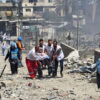
Genocide Made Invisible
Whatever the outcomes of Benjamin Netanyahu’s visit to the White House on Monday and the latest scenario for a ceasefire in Gaza, a bilateral policy of genocide has united the Israeli and U.S. governments in a pact of literally breath-taking cruelty.
Staff Union Dismisses UN Restructuring as “Chaotic, Incoherent, Rushed & Lacking Strategy”
A coalition of UN staff unions, led by the 60,000-strong Coordinating Committee of International Staff Unions and Associations (CCISUA), has written to UN member states criticizing the UN80 reform process as “incoherent and lacking strategy”. The union, one of the largest single coalitions in the world body, is asking the 193 member states to take over the UN reform process which is currently in the hands of a Task Force.
Kenya’s Shirika Plan: A New Dawn for Refugee Rights and Integration
When Jean Baremba arrived in Kenya in 2018, he looked forward to rebuilding a life shattered by war in the Eastern Democratic Republic of Congo.
Bangladesh’s Democratic Promise Hangs in the Balance
When Bangladesh’s streets erupted in protest in mid-2024, few could have predicted how swiftly Sheikh Hasina’s regime would crumble. The ousting of the prime minister last August, after years of mounting authoritarianism and growing discontent, was heralded as a historic opportunity for democratic renewal. Almost a year on, the question remains whether Bangladesh is genuinely evolving towards democracy, or if one form of repression is replacing another.
How Global Fund is Saving Lives from Malaria, TB, & HIV across Africa
In Gabú, Guinea-Bissau, a grandmother named N’beta hesitated. Her six-month-old grandson, Seco, was healthy, so why give him medicine? But community health workers Jamilia and Amadu gently explained that the medicine wasn’t for illness, but for protection. It was part of a seasonal malaria chemoprevention campaign designed to protect children during the worst malaria transmission months — the rainy season.
The Silencing of Hong Kong
Joshua Wong sits in a maximum-security prison cell, knowing the Hong Kong authorities are determined to silence him forever. On 6 June, police arrived at Stanley Prison bringing fresh charges that could see the high-profile democracy campaigner imprisoned for life. This is the reality of Hong Kong: even when behind bars, activists can be considered too dangerous ever to be freed.
The Rise of Islamophobia in New York’s Mayoral Elections– with the Statue of Liberty in a Burqa
The prospect of New Yorkers electing their first Muslim Mayor, come November, has ignited a rash of paranoid statements by right-wing US politicians, including Islamophobia-- the irrational fear and hatred against Islam and Muslims. Last week, a Republican politician caricatured America’s iconic Statue of Liberty wearing a burqa-- an outer garment worn by some Muslim women that covers the entire body and face. But that internet meme, spreading across social media, was deleted after protests.
Sudanese Refugees and IDPs Disproportionately Affected By Crisis
Since the wake of the Sudanese Civil War in 2023, Sudan has faced a dire humanitarian crisis that has been marked by extreme violence, widespread civilian displacement, and an overwhelming lack of basic services in relation to the massive scale of needs. The latest reports from a host of United Nations (UN) organizations shed light on the rapid deterioration of living conditions for Sudanese internally displaced persons (IDPs) and refugees.
Does the UN Overstep Its Responsibility to Protect Mandate?
The UN has been criticized by some member states for overstepping the mandate of its Responsibility to Protect (R2P) doctrine during a debate in the General Assembly.« Previous Page — Next Page »


One world, one humanity, now one court to defend its rights. Another step towards universal human rights, but not remotely a step far enough. The United Nations adopted the Universal Declaration of Human Rights more than half a century ago, but that has done little to stop violations the world over, just as the Geneva Convention has not protected prisoners of war enough. Democracy itself and the freedom it presupposes has not been protective enough. This is the century to move from politicisation of human rights towards humanising political ways. IPS keeps an eye on that difficult path.

The Week with IPS

NEXT STOP - SDGs
Tracking global progress towards a sustainable world
Tracking global progress towards a sustainable world
