Languages
Thursday, August 27, 2026



News and Views from the Global South
Human Rights

How Global Fund is Saving Lives from Malaria, TB, & HIV across Africa
In Gabú, Guinea-Bissau, a grandmother named N’beta hesitated. Her six-month-old grandson, Seco, was healthy, so why give him medicine? But community health workers Jamilia and Amadu gently explained that the medicine wasn’t for illness, but for protection. It was part of a seasonal malaria chemoprevention campaign designed to protect children during the worst malaria transmission months — the rainy season.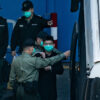
The Silencing of Hong Kong
Joshua Wong sits in a maximum-security prison cell, knowing the Hong Kong authorities are determined to silence him forever. On 6 June, police arrived at Stanley Prison bringing fresh charges that could see the high-profile democracy campaigner imprisoned for life. This is the reality of Hong Kong: even when behind bars, activists can be considered too dangerous ever to be freed.
The Rise of Islamophobia in New York’s Mayoral Elections– with the Statue of Liberty in a Burqa
The prospect of New Yorkers electing their first Muslim Mayor, come November, has ignited a rash of paranoid statements by right-wing US politicians, including Islamophobia-- the irrational fear and hatred against Islam and Muslims. Last week, a Republican politician caricatured America’s iconic Statue of Liberty wearing a burqa-- an outer garment worn by some Muslim women that covers the entire body and face. But that internet meme, spreading across social media, was deleted after protests.
Sudanese Refugees and IDPs Disproportionately Affected By Crisis
Since the wake of the Sudanese Civil War in 2023, Sudan has faced a dire humanitarian crisis that has been marked by extreme violence, widespread civilian displacement, and an overwhelming lack of basic services in relation to the massive scale of needs. The latest reports from a host of United Nations (UN) organizations shed light on the rapid deterioration of living conditions for Sudanese internally displaced persons (IDPs) and refugees.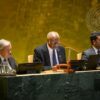
Does the UN Overstep Its Responsibility to Protect Mandate?
The UN has been criticized by some member states for overstepping the mandate of its Responsibility to Protect (R2P) doctrine during a debate in the General Assembly.
Post-Earthquake Myanmar Faces ‘Immense’ Suffering, Cannot Be Forgotten
“Myanmar cannot become a forgotten crisis,” Jorge Moreira da Silva, Executive Director of the United Nations Office for Project Services (UNOPS), has said. “This country has faced cyclones, war, conflict, violence, climate and now immense suffering.”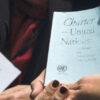
UN80: Alternative Reform Pathways — Fiscal Prudence, Relocation Realities, & Underutilized Charter Mechanisms
Recent proposals to relocate UN operations to lower-cost duty stations ignore demonstrable economic patterns. Empirical evidence suggests that establishing UN hubs often triggers localized inflation, negating projected savings.
Democracy under Attack: Why the World Needs a New UN Special Rapporteur
When tanks rolled through Myanmar’s streets in 2021, civil society groups worldwide sounded the alarm. When Viktor Orbán systematically dismantled Hungary’s free press, democracy activists demanded international action. And as authoritarianism returns to Tanzania ahead of elections, it’s once again civil society calling for democratic freedoms to be respected.
Multi-Year Drought Gives Birth to Extremist Violence, Girls Most Vulnerable
While droughts creep in stealthily, their impacts are often more devastating and far-reaching than any other disaster. Inter-community conflict, extremist violence, and violence and injustice against vulnerable girls and women happen at the intersection of climate-induced droughts and drought-impoverished communities.
The Juggling of Aid: How WFP is Delivering More with Less
Serious-to-severe food insecurity has been widely felt among those living through the worst, protracted humanitarian crises. For organizations like the World Food Programme (WFP), they must work under the “relentless demand” for humanitarian aid, including food.
Women and War: Victims of Violence and Voices of Peace
In 2023, approximately 612 million women and girls lived within 50 kilometers of a conflict zone, more than 50 percent higher than a decade ago. During war, they disproportionately suffer from gender-based and sexual violence.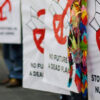
US Mayors Renew Call for US to Lead World–Back from Nuclear Brink
July 16, 2025, will mark the 80th anniversary of “Trinity,” the first nuclear test detonation, at Alamagordo, New Mexico, and August 6 and 9 will mark the 80th anniversaries of the United States atomic bombings of Hiroshima and Nagasaki. Rather than commemorating those somber anniversaries as a grim reminder of the past, this year they serve as a foreboding warning of what may be to come.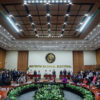
Mexico’s Judicial Elections: A Democratic Mirage
On 1 June, Mexico made history by becoming the only country in the world to elect all its judges by popular vote, from local magistrates to Supreme Court justices. This unprecedented process saw Mexican voters choose candidates for 881 federal judicial positions, including all nine Supreme Court justices, plus thousands at local levels across 19 states. Yet what the government heralded as a transformation that made Mexico the ‘the most democratic country in the world’ may turn out to be a dangerous deception.
The Young Nigerian Innovator Lighting Up Communities With Recycled Solar Innovation
When Stanley Anigbogu heard his name announced as the 2025 Commonwealth Young Person of the Year in London earlier in March, he could hardly believe it. He had not expected to win, especially among a pool of brilliant nominees from across the globe.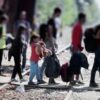
The Demographic Struggle Over International Migration
Approximately 1.3 billion people, or 16% of the world’s population, wish to leave their country permanently, while over a billion people believe that fewer or no immigrants should be allowed into their countries. This demographic struggle between the two sides over international migration is causing significant social, economic, and political repercussions for nations and their citizens.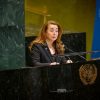
UN Drug Office Warns that Global Drug Crisis Will Intensify
Since 1989, the United Nations (UN) has recognized June 26 as the International Day Against Drug Abuse and Illicit Trafficking in an effort to raise awareness around the global drug problem and foster a more compassionate world, free of drug abuse. Through this year’s campaign, “Break the Cycle. #StopOrganizedCrime”, the UN underscores the importance of addressing the root causes of global drug abuse and illegal drug trading, and investing in reliable systems that prioritize prevention, education, and health.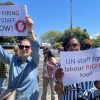
UN80: Beyond Disposable Staff Distracting Reforms Restoring UN Effectiveness
In an era defined by the gig economy and pervasive job insecurity, advocating for permanent contracts within the United Nations might seem anachronistic, even counterintuitive.
‘Enabling Machines to Make Life and Death Decisions Is Morally Unjustifiable’
CIVICUS discusses autonomous weapons systems and the campaign for regulation with Nicole van Rooijen, Executive Director of Stop Killer Robots, a global civil society coalition of over 270 organisations that campaigns for a new international treaty on autonomous weapons systems.

Fixing the House the World Built: A Realistic Plan for UN Reform
I’ve spent much of my life in the machinery of international development, navigating acronyms, crises, and committee rooms with stale coffee. Through it all—amid war zones, climate summits, and remote island consultations—one institution has remained constant: the United Nations.
A Crisis-Stricken UN’s Frantic Hunt for Low-Cost Locations—away from New York & Geneva
In the US, the success of a business enterprise or the value of real estate is reflected in a repetitive and alliterative phrase: “LOCATION, LOCATION, LOCATION”. As the UN continues its plans for system-wide restructuring-- amidst a growing liquidity crisis-- one of the key issues on the negotiating table is the re-location of UN agencies: a choice between high-cost and low-cost duty stations.
What the Ceasefire Between Israel and Iran Means for Israel-Palestine Conflict
The Trump administration announced on June 23 that a ceasefire agreement between Israel and Iran had been reached following 10 days of conflict between the two nations and the United States’ bombardment of three nuclear sites in Iran. The establishment of the ceasefire will return focus back to the conflict between Israel and Palestine and the ongoing humanitarian crisis.« Previous Page — Next Page »


One world, one humanity, now one court to defend its rights. Another step towards universal human rights, but not remotely a step far enough. The United Nations adopted the Universal Declaration of Human Rights more than half a century ago, but that has done little to stop violations the world over, just as the Geneva Convention has not protected prisoners of war enough. Democracy itself and the freedom it presupposes has not been protective enough. This is the century to move from politicisation of human rights towards humanising political ways. IPS keeps an eye on that difficult path.

The Week with IPS

NEXT STOP - SDGs
Tracking global progress towards a sustainable world
Tracking global progress towards a sustainable world
