Languages
Wednesday, October 14, 2026



News and Views from the Global South
Human Rights
Trapped on a Runaway Train: Looking Back on 2024
Do you sometimes feel like a hamster on its wheel, or perhaps stuck on a runaway train hurtling towards the abyss? Whatever metaphor one might choose for our world looking back on 2024, rainbows don’t easily spring to mind.
Water Deprivation Looms in Gaza
As talks of a ceasefire between Israel and Palestine intensify, bombardments in Gaza continue, raising the number of civilian casualties and internal displacements. A December 19 report from Human Rights Watch (HRW) condemned Israeli authorities for committing acts of genocide upon the people in the Gaza Strip, including the deprivation of water and the destruction of critical water sanitation infrastructures.
Food Crises Intensify in Winter Ravaged War Zones
The days are short with bitterly cold rain in Bucharest, the capital of Romania, the largest Balkan country located south of the Ukraine. Over the border, temperatures in Kyiv will plummet to a daily average of zero in December as the Ukraine war grinds on.
US & Western Allies Provide a Hefty 260 Billion Dollars in Military Aid to Ukraine
The United States and Western allies have jointly provided a staggering $260 billion in aid, mostly weapons and military assistance, to Ukraine as the long-drawn-out conflict continues following Russia’s invasion in February 2022. Speaking to reporters at NATO headquarters in Brussels early December, US Secretary of State Antony Blinken said: “All told, the United States has provided $102 billion in assistance to Ukraine, and our allies and partners, $158 billion”.
Japanese Bank Criticized for Financing Mozambique LNG Project Blamed for Displacement
Climate and environmental activists from Japan have criticized the Japan Bank for International Cooperation (JBIC) for financing the controversial Mozambique Liquefied Natural Gas (LNG) project to the tune of USD 3 billion in a loan signed in July.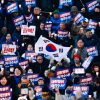
South Korea’s Democracy Defended
Democracy is alive and well in South Korea. When President Yoon Suk Yeol tried to impose martial law, the public and parliamentarians united to defend it. Now Yoon must face justice for his power grab.
We Can and Must Do Our Best
As 2024 comes to a close, I dare to say that this has been an especially gruesome year for millions upon millions of young children, their parents and their teachers. The world has witnessed one horrific crisis of cruelty, dispossession and human suffering after another.
These Billion Humans Simply Do Not Exist
Perhaps demographers would consider designing a new classification system to separate from their estimates of the world’s total population –eight billion plus– the billion humans who live without legal identity and, thus, are deprived from the most basic rights.
UN Commits to Supporting Syria in Political Transition, Adapting Humanitarian Support
In overthrowing Bashar al-Assad and his regime, Syria reaches the process of re-affirming its sovereignty, a process that the United Nations chief asserts must be led by the Syrian people.
Museum of Modern Art Set to Launch in Cotonou, Showcase Beninese Artists
Construction of the new Museum of Modern Art is underway in Cotonou, Benin’s largest city. The museum, along with three others being built throughout the country, are part of the Beninese government’s extensive plan to ramp up the nation’s tourism industry and preserve its culture. It is expected to open at the end of 2026.
The Land of Immigrants to Deport Thousands of Refugees & Asylum Seekers
The United States, long described as a country built largely by immigrants, is planning to clamp down on migrants, refugees and asylum seekers entering the country—which averaged about 2.4 million in 2022-2023, according to the US Congressional Budget Office. The incoming Trump administration is calling for “mass deportations” of mostly illegal aliens and undocumented workers.
Is the Time Ripe for an End to the Ukraine War?
Donald Trump, president-elect of the USA, wants to end the Ukraine war within a day, as he has emphasized several times, but without saying how. Despite the brutal clashes on the ground in Ukraine, do negotiations now have a chance? Are we near to a "ripe moment" for negotiations?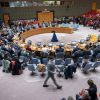
What Does the End of Assad’s Regime Mean for Syria and the Middle East?
The fall of Syrian President Bashar al-Assad came about following a series of coordinated offensive missions spearheaded by the Syrian opposition which resulted in the seizure of the capital city Damascus. In the days following the fall of Assad’s government, the Syrian Civil War has reached a phase of heightened insecurity, plunging Syria into a state of nationwide insecurity.
Transformative Change Will Save a Planet in Peril—IPBES
Nature is at a tipping point. With human activity having pushed up to 1 million plant and animal species close to extinction, securing sustainable development and halting global biodiversity collapse is no longer just an option but a requisite for human wellbeing.
Did Togo Reforms Entrench President Gnassingbé’s Power?
In May 2024, Togo's President Faure Gnassingbé signed a new constitution, transitioning the country from a presidential to a parliamentary system. Under this new framework, lawmakers are responsible for electing the president.
New Legislation Outlaws Dissenters in Venezuela
In Venezuela you can no longer say in public that the economic sanctions applied by the United States and other countries are appropriate, or even be suspected of considering any of the authorities illegitimate, because you can be sentenced to up to 30 years in prison and lose all your assets.
Israel Continues to Attack Gaza Amid Ceasefire Negotiations
After 14 months of conflict between Israel and Palestine, talks of a ceasefire agreement have headed in a promising direction. The proposed agreement entails the release of hostages in Gaza, the withdrawal of Israeli troops from Palestinian land, and a strategy for displaced Gazans to safely return to their homes in the northern region of the enclave. Despite both Israeli and Palestinian officials expressing optimism over this agreement, hostilities from the Israeli Defense Forces (IDF) continue to endanger the lives and infrastructures of thousands of Gazans.
‘My Father Was Arbitrarily Arrested and Convicted for Denouncing Government Corruption’
CIVICUS speaks with Ramón Zamora, son of Guatemalan journalist José Rubén Zamora, about restrictions on press freedom and the challenges of defending human rights in Guatemala.
In Times of War: Tough Ethical Questions and Inner Turmoil
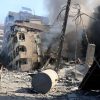
Sixty-four days of unrelenting war machine by Israel against Lebanon put my entire beliefs and ethos to a painful test: my sincerity in promoting social justice, human rights, integrity, patriotism, spirituality and, philosophically speaking, universal human values of love, peace and non-violence.
New Geopolitics Worse for Global South
The new geopolitics after the first Cold War undermines peace, sustainability, and human development. Hegemonic priorities continue to threaten humanity’s well-being and prospects for progress.
Bangladesh in Crisis: Which way out?
This piece is not about the crisis or the chaos that the country is now facing after successfully toppling the autocratic regime of Sheikh Hasina. Rather, it is about the crisis of confidence and social capital or trust — interlinked, nonetheless.« Previous Page — Next Page »





One world, one humanity, now one court to defend its rights. Another step towards universal human rights, but not remotely a step far enough. The United Nations adopted the Universal Declaration of Human Rights more than half a century ago, but that has done little to stop violations the world over, just as the Geneva Convention has not protected prisoners of war enough. Democracy itself and the freedom it presupposes has not been protective enough. This is the century to move from politicisation of human rights towards humanising political ways. IPS keeps an eye on that difficult path.

The Week with IPS

NEXT STOP - SDGs
Tracking global progress towards a sustainable world
Tracking global progress towards a sustainable world
