Languages
Sunday, November 8, 2026



News and Views from the Global South
Human Rights

Female Genital Mutilation Continues Amid Sudan’s Conflict and Forced Displacement
Female genital mutilation (FGM) stands as one of the most egregious violations of human rights, particularly affecting women and girls worldwide. However, when conflict and forced displacement enter the equation, the horrors of FGM are exacerbated, creating a dire situation that demands urgent attention and action. Where instability and insecurity prevail, the prevalence of FGM often intensifies, exacerbated by factors such as displacement, poverty, and the breakdown of social systems.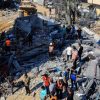
UN’s Credibility at Stake—as Russia and Israel Continue to Remain Defiant
The two devastating military conflicts—Russia vs Ukraine and Israel vs Hamas—have exposed once again the stark reality that the United Nations, created 79 years ago to maintain international peace and security, has failed in its political mission – while its credibility is at stake. Russia is accused of violating the UN charter by invading a sovereign nation state and causing hundreds and thousands of deaths over two years --- with no signs of a peaceful settlement.
‘Unbounded’ Impunity Emboldens Israel
Israel continues to reject calls for a ceasefire in Gaza and now readies itself for an assault on Rafah with a Ramadan deadline for the release of all hostages. It emphatically says, it will oppose any international attempt at creating a Palestinian State, regarded as an “unilateral recognition”. Its unrestrained bombings and ground assaults so far have resulted in close to 30,000 Palestinian deaths more than half of whom are women and children. they have brazenly ignored the International Court of Justice (ICJ) order to take all measures to prevent a plausible genocide. Many thousands are facing starvation and death even when the United Nations Security Council (UNSC) demanded unhindered aid flows to besieged Gaza. All these were possible due to Israel’s ‘unbounded’ impunity which emboldens it.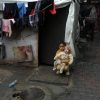
No Ceasefire Gaza Threatens Humanitarian Aid, Raises the Palestinian Question
As negotiations within the UN Security Council and internationally continue, the humanitarian response to Gaza continues to be under threat.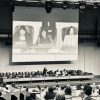
Western States Scramble to Explain Themselves, as UN experts call for Arms Transfers to Israel to “Cease Immediately”
There are moments when international treaties, long forgotten by the general public, suddenly spring back to life. Moments when glimpses of reality shine through the thick-laden bureaucracies of the United Nations and catch the attention of the world outside.
Parcels for Prisoners: Exiled Myanmar Activists Keep the Revolutionary Faith
Rangoon Nights is rocking. The bar is on its feet and the cocktail shaker is shaking in abandon as the band Born In Burma starts pumping out its beat. Except we’re not in Rangoon or Burma (officially called Myanmar), but in the northern Thai town of Chiangmai which has evolved into a hub for activists, fugitives, and those taking a break from the war tearing their country apart.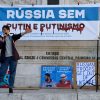
Russia: Moments of Dissent after Two Years of War
Russia’s full-scale invasion of Ukraine marked its second anniversary on 24 February. And while civil society is offering an immense voluntary effort in Ukraine, in Russia activists have faced intense constraints. The suspicious death of opposition leader Alexei Navalny is part of a great wave of repression. He’s the latest in a long list of people who’ve come to a sudden end after falling out with Vladmir Putin.
Call for Scaled Up Funding for Much-Needed, Successful Joint Program in Nigeria
Nigeria is home to 15 percent of the world’s out-of-school children. More than 7.6 million girls are not in school, and only nine percent of the poorest girls in the country are in secondary school. The Boko Haram insurgency and other armed groups fuel the out-of-school crisis in northeast Nigeria, disrupting the education of nearly two million school-age children.
No God but Greed: Slavery and Indifference
At Statens Museum for Kunst in Copenhagen there is a great painting made in 1797 by the Danish Golden Age painter Jens Juel. It depicts one of Denmark’s richest merchants at the time – Niels Ryberg, his newlywed son Johan Christian, and the son’s bride, Engelke. Johan Christian makes a gesture as though to show off the family estate. There is a strong feeling of harmony between the people and the countryside in which they are placed. The picture reflects the new interest in nature that emerged all over Europe towards the end of the 18th century. It also demonstrates how Denmark’s new, rich bourgeois wished to carry themselves in the style of the aristocracy, a social class which dominance they were infringing. Ryberg and his son appear just as distinguished as the aristocrats that used to be portrayed by Jens Juel.
Funding, Policy Changes Could Result in Countries Reaping Benefit of Migration
Amid an escalation of global conflict and climate change-induced displacements, the International Organization for Migration (IOM) is escalating its donor campaign. For the first time since the organization’s formation in 1951, the IOM says it is "proactively approaching all partners to fund this vital appeal," at a time when the number of migrants making perilous intercontinental journeys has increased.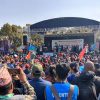
The World Social Forum: The counterweight to the World Economic Forum
This week the 2024 annual meeting of the World Social Forum (WSF) was held in Nepal. There were fifty thousand participants from over 90 countries, exchanging strategies to address the multiple global crises, from climate catastrophes to unfettered capitalism, inequality, social injustice, wars and conflict.
Children’s Futures at a Crossroads
At the start of 2024, we stand at a critical juncture: Geopolitical tensions are escalating, economic integration is unravelling, and multilateral cooperation is faltering. This global fragmentation threatens to undermine decades of progress made for children worldwide.
Pakistan’s Election Outcomes Leave Many Unhappy
Pakistan’s 8 February election has resulted in an uneasy compromise that few wanted or expected. There’s little indication the outcome is going to reverse recent regression in civic freedoms.
#UNmute: Over 350 Civil Society Organizations Ask for Real Inclusion in UN Summit of the Future Negotiations
A coalition of over 350 civil society organisations part of the #UNmute initiative, shared concerns over the current engagement mechanisms for civil society at the UN – particularly in light of the upcoming Summit of the Future.
It Is Imperative To Protect Children In War
All around the globe, the most vulnerable among us are suffering the gravest consequences of war. Children bear the brunt of the horrors inflicted by States and armed groups worldwide, with recent examples found in Gaza, Ukraine, Sudan, Myanmar, the Democratic Republic of the Congo, Syria, and Afghanistan.
New Anti-Rape Crisis Centre Brings Hope for Sexual Abuse Survivors in Pakistan
Medical experts and women's rights activists are pinning hopes on the establishment of an anti-rape crisis centre for the provision of medical and legal aid to victims of sexual assaults in a timely manner will ensure convictions. Currently, it takes years to bring the perpetrators of rape to justice due to a lack of evidence and more often than not, the accused get acquitted.
Forced Migration Grows, Justice Withers, Say Activists at World Social Forum
As involuntary migration rises around the world, partly in response to the impacts of climate change, justice for those leaving their homes and families to earn a living is largely missing, said activists meeting at the World Social Forum (WSF) in Kathmandu on Sunday.
Imperialism, Globalisation and Its Discontents*
Imperialism continues to dominate the world. Globalisation is losing to some of its anti-theses, but imperialism still rules, increasingly by law, albeit in changing even contradictory ways.
South Africa vs Israel: ICJ Declines SA’s New Application But Says Israel Duty Bound to Protect Civilians
The International Court of Justice has declined the South African government's urgent application for further measures to prevent an "unprecedented military offensive against Rafah,” but reiterated that Israel is bound to protect civilians in the country. South Africa argued in an urgent application that this military offensive “announced by the State of Israel, has already led to and will result in further large-scale killing, harm, and destruction in serious and irreparable breach both of the Genocide Convention" and of the Court's Order of January 26, 2024.
World Social Forum Activists Unravel Roots of Israel’s Occupation of Gaza
Romi Ghimire has a busy life running a non-profit organization dedicated to Nepal’s rural people, but she also feels driven to do something about Gaza. “There are a lot of issues happening in the world, but right now the genocide in Gaza is the most urgent one,” she said inside the Palestine tent at the World Social Forum (WSF) in Kathmandu on Saturday.
Tracking Global Development in Child Benefits Through New Monitoring and Information Platform
Inclusive social protections for children would be a positive signifier of social development in a time where 1.4 billion children globally are denied them. A step towards realizing this has been taken through a new monitoring tool on current social protection and child poverty statistics.« Previous Page — Next Page »





One world, one humanity, now one court to defend its rights. Another step towards universal human rights, but not remotely a step far enough. The United Nations adopted the Universal Declaration of Human Rights more than half a century ago, but that has done little to stop violations the world over, just as the Geneva Convention has not protected prisoners of war enough. Democracy itself and the freedom it presupposes has not been protective enough. This is the century to move from politicisation of human rights towards humanising political ways. IPS keeps an eye on that difficult path.

The Week with IPS

NEXT STOP - SDGs
Tracking global progress towards a sustainable world
Tracking global progress towards a sustainable world
