Languages
Wednesday, October 21, 2026



News and Views from the Global South
Poverty & SDGs

Are Climate Summits a Waste of Time?
Next month, the latest annual United Nations climate extravaganza, COP27, will take place in Sharm el-Sheikh, Egypt. Last year it was in Glasgow. Next year it will be held in (drum roll please) … Dubai!
Rural Women Work the Hardest, Produce the Most, Eat the Least
Make no mistake. Violence against women has been perpetuated, specially when it comes to those who have already been deprived of their basic human rights, as it is the case of rural women in over two-thirds of the world.
Poverty Haunts Resettled Farmers in Zimbabwe
Edious Murewa has for years boasted of owning a 10-hectare piece of land, but now the 52-year-old is full of regrets. He faces poverty years after he invaded part of a farm once owned by a white commercial farmer.
Local Solutions Boost Sustainable Micro-Mobility in Cuba
The incorporation of small electric vehicles for public transport, together with initiatives that encourage the use of bicycles, represent opportunities and challenges for Cuba to sustainably and inclusively combat the chronic problems in urban mobility.
Farmers in Bhutan Turn To Asparagus and Strawberries To Boost Incomes
Zam, 57, sits at her kitchen table looking out the window at her orchard of four dozen apple trees. In the past eight years she has sold only two crates (100 kilogrammes) of the fruit because of poor harvests. She turned her attention to vegetables instead but the production was low because of a water shortage.
World Food Day 2022 Call to Action as 828M People Go Hungry
In this year alone, the global impact of compounding crises demonstrates, more than ever, why food scarcity must be addressed internationally and how there must be a shift in the food and agricultural systems.
His Zest For Mandarins Soured, Pakistani Producer Turns To Mushrooms
The zesty citrus whiff from the rows of trees boasting unripe kinnow (mandarins) freshens the autumn air in late September. Two deeply tanned men clear the ground under and between the trees to plant vegetables.
Development Banks Should Reform Their Lending Practices
In the last week of September, emerging market (EM) bond fund outflows hit $4.2 billion, according to JP Morgan, bringing this year’s total to a record $70 billion. The exodus, set off by a rising U.S. dollar, is heaping pressure on low-income countries.
Bangladesh Reaching Out To Global Partners To Transform Agriculture
Bangladeshi businessman Kazi Inam Ahmed is building his dream in a village near Rupsha River in Khulna, southern Bangladesh—to develop fish farming in the region, where climate change is reducing the ocean’s catch. He envisions creating small ponds, which would employ local climate affected fisherfolk, then exporting the international quality harvest to the Netherlands.
Africa, The Looted Continent
Africa. The birthplace of “Homo Sapiens.” The land of plenty. The origin of farming. The richest region in terms of natural resources. And human capital. Home to over 1.3 billion humans, continues to be looted.
How to Get on Track to Eradicate Extreme Poverty
As we approach 2030, the Sustainable Development Goals look harder than ever to achieve. Shocks to the global economy caused by climate change, COVID-19, and conflict threaten humanity's survival. For the most vulnerable, trends are moving in the wrong direction with an additional 75 to 95 million people now living in extreme poverty compared to pre-pandemic World Bank projections. By the end of this year more than 657 million people will still be living in extreme poverty substantially more than in 2018.
Biomethane from Garbage: Turning a Climate Enemy into Clean Energy – VIDEO
 Garbage that has accumulated since 1991 in the two landfills in the municipality of Caucaia has become a biomethane deposit that supplies industrial and commercial companies, thermoelectric plants and homes in Ceará, a state in northeastern Brazil.
Successful Climate Solutions Require Investment in the Lives of Adolescent Girls
This year commemorates the 10th anniversary of the International Day of the Girl Child. While the last decade has seen greater attention on the positive development needs of girls, we must move beyond documenting the barriers that girls face to investing in and prioritizing girl-centered solutions to the critical development challenges of our world.
Population Growth Diversity Continuing in the 21st Century
While the world’s population of 8 billion is continuing to increase and projected to reach 9 billion by 2037 and 10 billion by 2058, considerable diversity in the population growth of countries is continuing in the 21st century.
Why The Global South Should Support UN Action on Sri Lanka
The economic, political, and human rights calamity gripping Sri Lanka has made news around the world, but its roots go back years – or even decades. In September, the former United Nations High Commissioner for Human Rights, Michelle Bachelet, underscored in her report on Sri Lanka that “impunity for serious human rights violations [has] created an environment for corruption and the abuse of power.”
Poverty Impacts on Efforts to End Child Marriage, say Parliamentarians
Child marriage continues to be a scourge in many African countries – despite legislation and efforts of many, including parliamentarians, to keep girls in school and create brighter futures for them. This was the view of participants in a recent webinar held under the auspices of the African Parliamentary Forum on Population and Development (FPA) and UNFPA East and Southern Africa Regional Office (ESARO).
Nepal Government, UN Agency Seek Investors for Latest Cash Crop to Boom in Country’s East
Two and a half hours’ drive north from Kakarbhitta, Nepal’s eastern-most border crossing with giant neighbour India, lies the hilly hamlet of Salakpur where lives Kaushila Moktan, a famed farmer of large cardamom.
Go and Tell the Hungry that Their Food Is Being Thrown in the Garbage
These are facts, not guesses: about 1.3 billion tons of food is wasted and lost… every single year, the equivalent of one ton per each of the one billion hungry people, many of them are those who produced the food.
Aged Persons Haunted by Abuse in Zimbabwe
At his house in Mabvuku, a high-density suburb in Harare, the Zimbabwean capital, 86-year-old Tinago Murape claims his grandchildren starve him. Not only that, but Murape, who now walks with the support of a walking stick, said his three grandchildren – grown-up men with their wives and children living in his house, accuse him of bewitching them.
We Must Ensure That Climate Funding Reaches the Guardians of the Forests
US $270 million may sound like a lot of money, especially for just one year. But it is only a small fraction—less than one percent—of all global funding for climate change adaptation and mitigation. This small fraction, however, is the annual amount that was invested in the tenure and forest management of Indigenous Peoples and local communities (IPs and LCs) over the past decade.
We Need Urgent Commitment, Resources & Action to Tackle Hunger Crisis
Last week, as world leaders gathered in New York for the 77th United Nations General Assembly, one topic came up more than most: looming famine. That’s because despite a global commitment to make famine a relic of the past, it is once again knocking at our door.« Previous Page — Next Page »





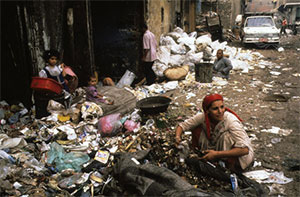 Romani people in Cairo, Egypt, forage through trash. Credit: UN Photo/Armineh Johannes
In 2015, the United Nations adopted the Sustainable Development Goals (SDGs) in an effort to promote “peace and prosperity for people and the planet.” To achieve that goal, it is essential to provide equal opportunities and access to basic services to all people. The 2025 UN SDG Report found that 35% of the 169 SDG targets are on track or making moderate progress, while 18% have reversed compared to the 2025 baseline. One in ten people still live in extreme poverty, one in eleven experience food insecurity, and over 1.1 billion people live in slums without access to clean water and sanitation. It is imperative to acknowledge the societal, technological, economic, and political issues that sustain poverty in countries around the world. Eradicating poverty will require significant frameworks in policy and governance on a national and international scale to ensure that all people will have equal access to basic services and economic opportunities by 2030. Furthermore, a dramatic reduction of United States foreign aid in 2025, including the termination of 83% of USAID programmes, threatens to erode years of fragile development gains.
Throughout the world, violent conflict and natural disasters also contribute to extreme poverty. The complete destruction of infrastructure and blockage of aid has significantly impoverished Palestine since October 7th. The destructive impact of Hurricane Maria in Puerto Rico left $91 billion in damage. An inadequate US government response also revealed significant and enduring questions within the issue of mitigating poverty: how do we rebuild infrastructure after its destruction? How do we restimulate economic development and bring in financial aid after disasters? Similar questions have been raised in the realm of regional cooperation, as devastating floods have wrecked hundreds of thousands of homes across multiple Southeast Asian nations in the past few years. Furthermore, the COVID-19 pandemic has greatly exacerbated the global poverty crisis, particularly in developing countries, setting back the United Nations goal of eradicating poverty by 2030.
IPS is committed to providing comprehensive features that focus on the persisting environmental, sociopolitical, and systemic issues that sustain poverty, and the steps taken worldwide towards poverty eradication.

The Week with IPS

NEXT STOP - SDGs
Tracking global progress towards a sustainable world
Tracking global progress towards a sustainable world

