Languages
Thursday, October 15, 2026



News and Views from the Global South
Poverty & SDGs

Progress on Tuberculosis Can Be Achieved in Africa
The news in many parts of the world is that tuberculosis (TB) is reclaiming the title of the world’s most deadly infection, even as the COVID-19 pandemic continues to kill an estimated 1,450 people daily around the world. But this is not news to African countries, which are home to one third of the people globally who die from TB, even though they have less than one fifth of the world’s population.
World Population after 8,000,000,000
Contrary to the often-cited hype and nonsense of some celebrities reported in the news media, the world’s population of 8,000,000,000 human beings is not going to collapse any time soon.
COP27: Why Global Action is Needed to Decarbonise Industries Everywhere
Ahead of this year’s COP27 in Egypt, industry and government representatives from 15 developing countries across Asia, Latin America and Africa met in a series of consultations about the challenges and opportunities they face in decarbonizing some of their most energy intensive industries like steel, cement and concrete.
COP27: The Thorny Road to Sharm El Sheikh
The 27th Conference Of Parties (COP27) on Climate Change comes at a time when we are facing unprecedented challenges due to the magnitude and the interconnected nature of our multiple structural crises. The world's average temperature is now at 1,1℃.
Revealed: Rich Countries ‘Miserably’ Fall Below Their Climate Promises, Further Indebt the Poor
Just a few days ahead of the UN Climate Conference (COP27) in Egypt (6-18 November), new revelations show how far rich, industrialised countries –those who contribute most to the growing catastrophes- have been lying over their real contributions to climate finance.
COP 15: It’s Time to Decide on a Future
It is no secret that humankind’s past actions have accelerated the deterioration of ecosystems, negatively impacting our economies, societies, health, and cultures. It is estimated that humans have altered over 97% of ecosystems worldwide, to date. One million species are currently threatened with extinction (IPBES). The writing on the wall is clear. Our planet is in crisis. The sobering reality is that if we continue on our current trajectory, biodiversity and the services it provides will continue to decline, jeopardizing the achievement of the Sustainable Development Goals and our lives as we know them. The decline in biodiversity is expected to further accelerate unless effective action is taken to address the underlying causes of biodiversity loss. These causes are often justified by societal values, norms and behaviors. Some examples include unsustainable production and consumption patterns, human population dynamics and trends, and technological innovation patterns.
COP27: A Climate Summit Following Empty Promises & Funding Failures
The COP 27 climate summit is taking place amid a rash of political, economic and environmental upheavals, including missed funding and emission targets, increased pollution and climate devastation, rising global inflation, cuts in Western development assistance and the negative after-effects of the Covid-19 pandemic and the Russian invasion of Ukraine.
Solar Power Brings Water to Families in Former War Zones in El Salvador
The need for potable water led several rural settlements in El Salvador, at the end of the 12-year civil war in 1992, to rebuild what was destroyed and to innovate with technologies that at the time seemed unattainable, but which now benefit hundreds of families.
Tackling Recurring Hunger Crises at the Horn of Africa – Beginning with Somalia
The statistics are stark. The crisis is unprecedented. Yet again, according to the United Nations, famine looms in Somalia, with hundreds of thousands already facing starvation. In addition, droughts, and catastrophic hunger levels have left over 500,000 children malnourished and at risk of dying. This is already nearly 200,000 more than the 2011 famine. Urgent immediate actions must be taken now, both to address the crisis in the short-term and long-term.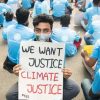
COP27 Climate Summit is an Opportunity to Promote Peace
Peace is precious. The past few months have offered daily reminders of this simple fact. War in Ukraine. Russian and North Korean nuclear threats. Growing tensions over Taiwan. Huge population displacements. Energy crisis. Economic turmoil. Rising global hunger and inequality.
Education Cannot Wait Director Calls on Donors to Expand Support for Successful Programme Bringing Girls and Boys Back to Learning in Post-Conflict Areas of the Democratic Republic of the Congo
The Director of Education Cannot Wait (ECW), Yasmine Sherif, launched a strong call for public and private donors to step up funding, asking them to “show the same courage” she saw in the children she met during her week-long visit to the Democratic Republic of the Congo (DRC).
Farm-Kids-Turned-Scientists Give Back on the Climate-Crisis Front Line
Dr Alice Karanja knows from personal experience the tough choices the climate crisis is putting people before in the Global South. Choices such as whether to have a healthy diet or give your children an education. Choices such as whether to go hungry or allow your children to have any schooling at all.
A Tale of Cities
For decades, urban practitioners have failed to consider the needs of women in city decision-making and planning. Imagine being a young girl in a bustling metropolis.
Russian Dispute Over Drones Threaten to Escalate World Food Crisis
A war of words between Russia on the one hand, and the US, Britain, France and Germany on the other—specifically on the deployment of drones in Ukraine -- has triggered an unintended consequence: a new world food crisis. The Western powers last week asked the UN to verify whether Iranian drones were being used “illegally” in violation of the 2015 Security Council resolution 2231 which endorsed the Joint Comprehensive Plan of Action (JCPOA) on Iran’s disputed nuclear programme.
Migration for Many Venezuelans Turns from Hope to Nightmare
Thousands of Venezuelans who have crossed the treacherous Darien jungle between Colombia and Panama, or who have made the perilous journey through Central America and Mexico to reach the United States, have found themselves stranded in countries that do not want them, unable to continue their journey or to afford to return to their country.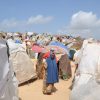
Droughts Don’t Need To Result in Famine: Ethiopia and Somalia Show What Makes the Difference
The Horn of Africa is facing its worst drought in 40 years. Scientists suspect that a multi-year La Niña cycle has been amplified by climate change to prolong dry and hot conditions.
While Developing Nations Hang on to a Cliff’s Edge, G20 & IMF Officials Repeat Empty Words at Their Annual Meetings
Held in-person for the first time in three years, the annual meetings of the International Monetary Fund and World Bank last week in Washington, D.C. failed to offer solutions to the dozens of developing countries in debt distress or on the forewarned global recession instigated by monetary tightening.
Accelerating Post-Pandemic SDG 6 Achievements on Water & Sanitation
Global progress has been staggeringly inadequate against Sustainable Development Goal 6, “clean water and sanitation for all.” According to the latest SDGs progress assessment, 2 billion people still lack safely managed drinking water, 3.6 billion lack sanitation services, and 3 billion lack basic hygiene services.
Time is Running Out for Decisions on Debt Relief as Countries Face Escalating Development Crisis
Developing low- and middle-income economies are taking hard hits from global economic developments outside their control. Monetary tightening in advanced economies coupled with increasing fears of a global recession have weakened currencies, sent interest rates soaring, and investors fleeing.
Farmers in Laos Imagine Improved Livelihoods Thanks to New Cross-border Links
Mountainous terrain in northern Laos has until now restricted chances for farmers and producers in much of the nation to export their goods, limiting them primarily to subsistence farming and also curbing development, education and poverty reduction in their communities.
Are Climate Summits a Waste of Time?
Next month, the latest annual United Nations climate extravaganza, COP27, will take place in Sharm el-Sheikh, Egypt. Last year it was in Glasgow. Next year it will be held in (drum roll please) … Dubai!« Previous Page — Next Page »





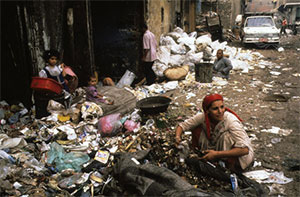 Romani people in Cairo, Egypt, forage through trash. Credit: UN Photo/Armineh Johannes
In 2015, the United Nations adopted the Sustainable Development Goals (SDGs) in an effort to promote “peace and prosperity for people and the planet.” To achieve that goal, it is essential to provide equal opportunities and access to basic services to all people. The 2025 UN SDG Report found that 35% of the 169 SDG targets are on track or making moderate progress, while 18% have reversed compared to the 2025 baseline. One in ten people still live in extreme poverty, one in eleven experience food insecurity, and over 1.1 billion people live in slums without access to clean water and sanitation. It is imperative to acknowledge the societal, technological, economic, and political issues that sustain poverty in countries around the world. Eradicating poverty will require significant frameworks in policy and governance on a national and international scale to ensure that all people will have equal access to basic services and economic opportunities by 2030. Furthermore, a dramatic reduction of United States foreign aid in 2025, including the termination of 83% of USAID programmes, threatens to erode years of fragile development gains.
Throughout the world, violent conflict and natural disasters also contribute to extreme poverty. The complete destruction of infrastructure and blockage of aid has significantly impoverished Palestine since October 7th. The destructive impact of Hurricane Maria in Puerto Rico left $91 billion in damage. An inadequate US government response also revealed significant and enduring questions within the issue of mitigating poverty: how do we rebuild infrastructure after its destruction? How do we restimulate economic development and bring in financial aid after disasters? Similar questions have been raised in the realm of regional cooperation, as devastating floods have wrecked hundreds of thousands of homes across multiple Southeast Asian nations in the past few years. Furthermore, the COVID-19 pandemic has greatly exacerbated the global poverty crisis, particularly in developing countries, setting back the United Nations goal of eradicating poverty by 2030.
IPS is committed to providing comprehensive features that focus on the persisting environmental, sociopolitical, and systemic issues that sustain poverty, and the steps taken worldwide towards poverty eradication.

The Week with IPS

NEXT STOP - SDGs
Tracking global progress towards a sustainable world
Tracking global progress towards a sustainable world

