Languages
Monday, October 26, 2026



News and Views from the Global South
Sustainability

Extreme Floods, the Key to Climate Change Adaptation in Africa’s Drylands
Extreme rainfall and heavy flooding, often amplified by climate change, causes devastation among communities. But new research published on Aug. 7 in the scientific journal Nature reveals that these dangerous events are extremely significant in recharging groundwater aquifers in drylands across sub-Saharan Africa, making them important for climate change adaptation.
Extreme Weather Events are Just the Tip of Rapidly Melting Icebergs
First August. It is the middle of summer in the northern hemisphere. We are witnessing not only record global warming but global political tensions are also heating up.
Europeans Mobilising for New IMF Head
In the grand European political reshuffle of 2019, it turned out that Christine Lagarde was the answer to the conundrum of who should replace Mario Draghi at the European Central Bank. But her move opens another question. Who succeeds Lagarde at the International Monetary Fund?
Money Grows on Trees–Don’t Uproot Them
Jennifer Handondo, a small scale farmer of Choma district in southern Zambia, plants food crops such as maize mostly for her family’s needs. Because of uncharacteristically high temperatures and low rainfall during the rainy season in March, the divorced mother who single-handedly supports her three children, has not been able to harvest as much as she usually does. So she has diversified into selling seedlings of neem, Moringa and other medicinal trees.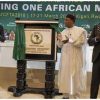
Nigeria Finally Throws its Weight Behind African Continental Free Trade Area
On 7 July 2019, Nigeria finally threw its weight behind the African Continental Free Trade Area (AfCFTA) when President Muhammadu Buhari signed the treaty at a summit of African heads of state in Niamey. In normal circumstances, that shouldn’t have been big news.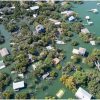
How Best to Tackle Inequality in the 21st Century? Start with Climate Change
Do you prefer to hear good news or bad news first? I will begin by giving you the (unsurprisingly) bad news. Today’s world is an unequal place. Standards of living vary massively both between and within countries.
How China’s Africa Alliance is Shifting World Order
When the United Nations General Assembly met in 2007 to vote on North Korea’s human rights record, only 10 of the 56 African countries voted with the U.S.-led western coalition.
Parts of Kenya are Already Above 1.5˚C
Kenya’s getting hotter. Much hotter than the 1.5˚C increase that has been deemed acceptable by global leaders, and it is too hot for livestock, wildlife and plants to survive. Thousands of households, dependent on farming and livestock, are at risk too.
Growing African Agriculture One Byte at a Time
Ella Mazani is a mobile phone farmer. “My mobile phone is part of my farming. It supports my farming and my family’s welfare through the services I get via the phone,” the smallholder maize farmer from Shurugwi in central Zimbabwe quips.
Spirit of Olympics & UN’s Development Agenda
As I reflect on the varied views and perspectives that emerged during the Human Rights Council’s Social Forum 2018--- where the theme of Olympic ideal and inclusive sports and their contribution to the promotion of the human rights, peace and development through sports were extensively deliberated on-- I observed an immediate connect with the preparations that are currently underway for the hosting of the Olympics 2024 in France.
Rwanda Prepares the Foundations for Climate-Resilient Cities
How do you plan a resilient city? A city that can withstand climate change impacts, and the natural disasters that it produces at increased frequencies. And how do you protect the city, its individuals and communities, its business and institutions from either the increased flooding or prolonged droughts that result? It’s a complex question with an even more complex solution, but one that the central African nation of Rwanda is looking to answer.
Rwanda: Open for Business
Claire Akamanzi spends her days working on innovative ways to bring more business to her country. As CEO of the Rwanda Development Board (RDB), a multiagency governmental department billed as a “one-stop shop” for investors, Akamanzi has seen the country earn accolades for its business-friendly environment, recently winning the #2 spot regionally in the World Bank’s ease of doing business rankings.
Drought, Disease and War Hit Global Agriculture, Says U.N.
The United Nations has warned of drought, disease and war preventing farmers from producing enough food for millions of people across Africa and other regions, leading to the need for major aid operations.
Climate Change Victims: What Will You Do Next?
Contemporary politics generates a lot of noise and smoke, with little attention devoted to understanding, analysing and fixing the causes of the noise and smoke. The global public discourse is dominated by statements made by politicians and aspirants to power, designed to shock, awe and draw support.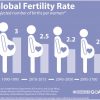
Zero Population Growth vs Population Control
Knowledge is power, but with the caveat that said knowledge is based in fact. Otherwise, it’s misinformation.
Why Environmental and Humanitarian Action Must Be Linked
Environmental and humanitarian action is often understood as two different sectors. However, the lack of awareness regarding its intersections could lead to further long-term devastation.
Indigenous Rights Approach a Solution to Climate Change Crisis
The Global Landscapes Forum (GLF) was held in Bonn, Germany to rally behind a new approach to achieving a future that is more inclusive and sustainable than the present – through the establishment of secure and proper rights for all.
World’s Poorest Nations Weighed Down by Fastest Growing Populations
With a new report projecting a rise in population, specifically in Asia and Africa, the United Nations has warned that continued rapid population growth presents enormous challenges for sustainable development in the world’s 134 developing nations.
More Megacities, More Pressure on Forests
With two-thirds of the world’s population projected to be living in cities by 2050, increasing pressure continues to be placed on forests which are being cleared to make way for agricultural production.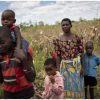
SDGs, Currently Off-Track, Need Bold Decisive Action
It has been four years since governments agreed on the most ambitious set of international commitments to fight poverty and inequality to date. The Sustainable Development Goals (SDGs), otherwise known as the Global Goals, are ‘a universal call to action to end poverty, protect the planet and ensure that all people enjoy peace and prosperity.’ The goals ambitiously aim to “Leave No One Behind.”
Rising Population Trends Threaten UN’s Development Goals in Asia & Africa
The world’s developing nations, currently fighting an uphill battle in their attempts to implement the UN’s Sustainable Development Goals (SDGs), are facing another stark demographic reality: a rise in world population by 2.0 billion people in the next 30 years: from 7.7 billion to 9.7 billion in 2050.« Previous Page — Next Page »





The Week with IPS

NEXT STOP - SDGs
Tracking global progress towards a sustainable world
Tracking global progress towards a sustainable world
