Languages
Tuesday, October 27, 2026



News and Views from the Global South
Sustainability

Desertification ‘More Dangerous and More Insidious than Wars’
Businesses are being encouraged to follow the lead of the youth to halt desertification, reduce degradation, improve agricultural sustainability and restore damaged lands.
UN’s Development Goals Remain Largely Elusive
The United Nations, in a new report to be released next month, has warned “there is no escaping the fact that the global landscape for the implementation of the 17 Sustainable Development Goals (SDGs) has generally deteriorated since 2015, hindering the efforts of governments and other partners”
‘What it Takes to Feed 7.5 Billion People’
Events marking the 25th anniversary of the Convention to Combat Desertification (UNCCD) and the World Day to Combat Desertification opened here Monday, Jun. 17 with a call for urgent action to protect and restore degrading land.
There’s No Continent, No Country Not Impacted by Land Degradation
The coming decades will be crucial in shaping and implementing a transformative land agenda, according to a scientist at the United Nations Convention to Combat Desertification (UNCCD) framework for Land Degradation Neutrality (LDN).
Uganda’s Rare Tree Climbing Lions and Endangered Primates Threatened By Climate Change
As climate change leads to increased temperatures in East Africa, a thicket of invasive thorny trees with the ability to withstand harsh climatic conditions have begun threatening Uganda’s second-largest park, home to a rare breed of tree climbing lions and one of the highest concentrations of primates in the world.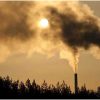
We Must do More to Speed up Ending Fossil Fuel Subsidies
Fossil fuels—oil, gas, coal and their derivatives—pollute the atmosphere and emit the greenhouse gases that are ramping up global heating to dangerous levels. But did you know that governments around the world are subsidizing this pollution?
Asia-Pacific Region Viewed as Engine of the World Economy
Since this Commission first met in 1947, our countries have travelled a long journey. Our economies are expected to become larger than the rest of the world combined, measured by purchasing power parity. It is often said the Asia-Pacific region is the engine of the world economy.
Preventing Antibiotic Resistance: Look to the Livestock Industry
Antimicrobial resistance is quickly becoming a global crisis and risks reversing a century of progress in health. Some organisations have already geared up and are tackling the issue from its roots.
Citizenship & Growth: Inclusive Citizenship Laws Tend to Foster Economic Development
The notion of citizenship has evolved over time. Historically, allegiance was typically to an ethnic group or a feudal lord. With the birth of the nation-state in the 19th century came the need to distinguish between those who belonged to the state and those who didn’t, and therefore to create a legal distinction between nationals and foreigners.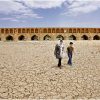
Urgent Action Vital to Stop Twin Crises of Nature’s Destruction & Climate Change
The Intergovernmental Platform on Biodiversity and Ecosystem Services’ report on the global state of biodiversity is shocking but not entirely surprising. The question is, how much more evidence and repeated warnings will it take for governments, companies and financial institutions to wake up to the urgency and act?
Building a More Energy-Efficient Neighbourhood in Dubai
Dubai is an Emirate in the United Arab Emirates (UAE) with a population of about 3 million. The discovery of oil in the 1960’s transformed Dubai from a sleepy port town to a global metropolis. The recent shift to address environmental sustainability in Dubai draws attention to energy issues in the city.
Sustainable Development Goals: One of the Greatest Fun Things in the World!?
This year’s annual “SDG Global Festival of Action” was held in Bonn, Germany, from May 2–4, 2019. The festival’s overall aim is to gather campaigners and multiple stakeholders from around the world at one place for interaction with each other; furthermore, it seeks to inspire them to scale up action in support of the 17 Sustainable Development Goals (SDGs) set forth in the 2030 Agenda adopted by the United Nations General Assembly.
Future of Our Planet Requires Deeper Cooperation, Long-term Thinking
For most of the 7 billion people on the planet, global institutions are remote, far removed from their day to day existence. Yet, our global institutions matter.
Benin’s Agriculture Has a Good Season, But it Wasn’t Easy
Théophile Houssou, a maize farmer from Cotonou, has spent sleepless nights lying awake worrying about the various disasters that could befall any farmer, often wondering, “What if it rains heavily and all my crops are washed away?” or “What if the armyworms invade my farm and eat up all the crops and I’m left with nothing?”
Renewables to Become the Norm for the Caribbean
Jamaica and other Small Island Developing States (SIDS) are embracing renewable energy as part of their plans to become decarbonised in the coming decades.
Improving the Lives of Millions of Mothers and Children
It is slightly after 3pm on a hot Wednesday afternoon in Chipata district, eastern Zambia, and a group of women are gathering for a meeting. It is Elizabeth Tembo’s turn to stand amongst the other mothers like herself and share key lessons on nutrition.
Egypt’s Food Challenge: a Good Effort but Not Enough
“Unfortunately the overall nutritional panorama of Egypt does not look well,” says Dr. Sara Diana Garduno Diaz, an expert concentrating on nutrition and biology at the American University of the Middle East. Diaz’s research focuses on dietary patterns and ethnic-associated risk factors for metabolic syndrome.
U.S. Needs to Shift to More Sustainable Agriculture—As Do All Countries
Water supply has long been a key issue in California. Today it is no less critical, especially given the years of drought that California is experiencing, lending additional impetus to assessing the impact of agriculture on water.
Finding a Way to Food Sustainability
There’s much to think about regarding food this month. April is Reducing Food Waste Month in the United States, as efforts mount here to reduce food loss and waste, while globally Sunday Apr. 7 was World Heath Day.
Ambitions Are Affordable for Asia and the Pacific
Three years of implementation of the transformative 2030 Agenda for Sustainable Development in Asia and the Pacific shows the region has some catching up to do. Despite much progress, the region is not on track to reach the 17 Sustainable Development Goals set out in the United Nations 2030 Agenda for Sustainable Development. We are living in a time of booming prosperity, yet many are getting left behind. Basic needs, such as the freedom for all from hunger and poverty, ill-health and gender-based discrimination, and equal opportunity for all are elusive. Economic, social and planetary well-being has a price tag. Calculations by the United Nations Economic and Social Commission for Asia and the Pacific (ESCAP) show that it is mostly affordable for the region.
Smart Cities hold Key to Sustainable Development
Asia and the Pacific’s phenomenal development has been a story of rapid urbanization. As centres of innovation, entrepreneurship and opportunity, cities have drawn talent from across our region and driven economic growth which has transformed our societies.« Previous Page — Next Page »





The Week with IPS

NEXT STOP - SDGs
Tracking global progress towards a sustainable world
Tracking global progress towards a sustainable world
