Languages
Sunday, November 15, 2026



News and Views from the Global South
Sustainable Development Goals

Building a More Resilient Work Force to Meet Challenges of Tomorrow
Quadrupling in size since 1950, the working age population in Asia and the Pacific now accounts for 67.2 per cent of the total population in the region and is set to peak at 3.3 billion by the mid-2030s.
Snow Tales: ‘Too Little, Too Late,’ Say Climate Experts
Alpine skier, 28-year-old Muhammad Karim, has spent the winter with his eyes skyward, wishing and hoping for deep and abundant snow. “My bread and butter depend on the snow,” said the Olympian, who is also a ski trainer, at Naltar Ski Resort, in the valley by the same name nestled in the Gilgit-Baltistan’s Karakoram mountain range.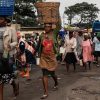
How to Ease Rising External Debt-Service Pressures in Low-Income Countries
As 2024 starts, the good news is that there haven’t been any notable requests by a low-income country for comprehensive debt relief since Ghana’s, more than a year ago. Despite this, vulnerabilities remain, with high debt servicing costs a growing challenge for low-income countries.
Under the Scorching Sun Kenyan Farmers Find New Ways to Beat Climate Change
In the tranquil village of Kotiang, perched on the shores of Lake Victoria in Kenya's lakeside region, Yvonne Atieno, a dedicated mother in her early thirties, tends to her fish pond under the relentless equatorial sun. Her young daughter eagerly joins her mother in this nurturing endeavor. Yvonne, a certified accountant by profession, reflects on how her decision to embrace regenerative farming has not only enriched her life but also imparted invaluable life lessons.
Beyond the Farm: How Empowering Women Farmers Drives Change in Jordan and Beyond
Dr. Zeinab Al-Momany, a prominent social entrepreneur, sheds light on the journey of empowering women farmers in Jordan and the Arab world, where women often work long hours for low pay and lack labour recognition.
Zimbabweans Gambling for a Living Amid Escalating Hardships
Twenty years after completing high school in Zimbabwe, 38-year-old Tinago Mukono still has not found employment, and in order to survive, he has switched to betting, turning it into a form of employment. Every day throughout the week, Mukono leaves his home to join many others like him in betting clubs strewn across Harare, the Zimbabwean capital, with the hope of making it.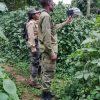
Rwanda’s Biodiversity Conservation Gains Momentum With Bird Sounds Recording
Claver Ntoyinkima wakes up early in the morning, at least three times a week, and goes into the Nyungwe rainforest to record bird vocalizations. Ntoyinkima is one of several community members in a remote village in rural southwestern Rwanda who volunteer with a group of scientists to help boost wildlife conservation.
Matchmaking for Green Cities? Accelerating Climate Finance in Urban Areas
Asia and the Pacific is home to 54 per cent of the world's urban population, who are disproportionately vulnerable to the impacts of climate change (ESCAP, 2023; IPCC, 2022). Why then, do climate action projects in cities commonly face delays in implementation?
2024: A Year of Cautious Hope for African Economies Facing Worldwide Challenges
As African economies look to the new year, countries across the continent are poised to make moderate economic gains but must navigate the maze of domestic and international challenges.
The Impact of Climate Migration on Developing Nations
As the world is still gearing up to welcome 2024, let us find a moment to reflect on some of the key trends of the past year and pursue now to embrace the path towards hope and promise for everyone, everywhere.
New Era: Unlocking Africa’s Agriculture Potential Through CGIAR TAAT Model
As hunger and food insecurity deepen, Africa is confronting an unprecedented food crisis. Estimates show that nearly 282 million people on the continent, or 20 percent of the population, are undernourished. Numerous challenges across the African continent threaten the race to achieve food security; research and innovative strategies are urgently needed to transform current systems as they are inadequate to address the food crisis.
AI Will Transform the Global Economy: Let’s Make Sure It Benefits Humanity
We are on the brink of a technological revolution that could jumpstart productivity, boost global growth and raise incomes around the world. Yet it could also replace jobs and deepen inequality.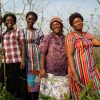
The World’s Richest Men Leave Women Far Behind—Amid Rising Economic Inequalities
The world’s rich are getting progressively richer while the world’s poor continue to be increasingly poorer. In a new report released January 15, Oxfam says the wealth of the world’s five richest men has doubled since 2020 –even as five billion people were made poorer in a “decade of division.”
Assessing Public Debt Sustainability with a Long-Term View
When students from poor families in developing countries are offered places at prestigious universities, they are often faced with a tough choice. One option is to accept the offer and create more debt, likely through borrowing from a loan shark, to pay for tuition fees. Another option is to forgo this opportunity, which could be the first in family generations, and start working as low-wage workers.
Cooperative Farming Makes Bangladesh’s Coastal Women Farmers Climate-Resilient
In the past, Salma Begum, 40, lost her crops every year due to natural disasters. She lives with her five-member family in Ashabaria village under Rangabali upazila, a remote coastal island in Patuakhali district. “We did not have enough livelihood options in the coastal area where we live. Cyclones, coastal floods, and tidal surges have been having adverse impacts on agriculture, making it difficult for my wage-laborer husband to find work regularly,” she said.
From Chemical Engineer to Climate Justice Avenger: A Journey with Yamide Dagnet
As a child on the French-Caribbean island of Guadeloupe, Yamide Dagnet dreamed of launching rockets into space. She stuck to science, discovering her path in chemical engineering. She became a scientist focused on critical reactions to solving real-world problems like improving water quality in the United Kingdom.
Technology Transfer Critical to Revolutionizing Africa’s Pharma Industry
An agreement signed between the Rwandan government and the Africa Pharmaceutical Technology Foundation (APTF) gives impetus to Africa’s domestic industry with the hope of helping the continent tackle vaccine inequity and fill the critical gap in vaccine manufacturing.
Homeless Families Now a Growing Issue in Zimbabwe
It is do or die on the streets of Zimbabwe as homeless families battle for survival solely depending on begging. Such is the life of 69-year-old Gladys Mugabe, who lives with her disabled son in Harare Gardens, a well-known recreational park in the Zimbabwean capital, Harare. Over the decades, Zimbabwe’s economy has underperformed. It started in 2000 with the departure of white commercial farmers, and the country has experienced subsequent periods of hyperinflation, which the International Monetary Fund estimated reached 172% in July last year.
There Is No Democracy Without Gender Equality
Violence against women and girls is one of the most widespread and persistent abuses of fundamental rights at a global level that, to a certain extent, derives from what we consider "normal" in our societies. In addition to firmly condemning that every three women in the world suffer from physical or sexual violence, we must question what we are normalizing as a society for this to happen.
South Asian Women, Girls Need Responsive Legal System to Gender Violence
Criminal justice systems in South Asia are failing women, despite stark statistics on the prevalence of violence. WHO estimates translate to one in every two women and girls in the region experiencing violence daily.
What’s in Store for Indian Farmers After Cop 28’s Conclusion in Dubai?
Durga Das*, a 59-year-old farmer from the Indian state of Maharashtra, committed suicide last year by ingesting a poisonous substance. He was unable to repay the loan he had taken from the bank for the renovation of his single-story house. This year, his 32-year-old son, Pradeep Das, a father of two children, is equally desperate. The family owns half an acre of cultivated land where they grow cotton. The harvest has been devastated due to intense heat waves, leaving farmers like Dass and his son Pradeep in dire straits. The loan the family had taken is yet to be paid, and the land they had mortgaged in the bank is about to be confiscated. This means no crops, no cultivation, no business, and no food.« Previous Page — Next Page »


The Week with IPS

NEXT STOP - SDGs
Tracking global progress towards a sustainable world
Tracking global progress towards a sustainable world
