Languages
Saturday, November 14, 2026



News and Views from the Global South
Sustainable Development Goals

Inequality Also Afflicts Clean Energy in Latin America
The specter of blackouts hovers over the Mexican city of La Paz, the capital of the state of Baja California Sur in Mexico's far northwestern corner, as summer approaches, due to increased electricity demand from air conditioning and insufficient capacity in the local grid.
Educate an Africa Fit for the 21st Century
As we lead into the Africa Year of Education, and under the leadership of Africa, world leaders have an opportunity to solidify commitments to ‘Educate an Africa Fit for the 21st Century’. That means to empower Africa to deliver on the goals outlined in the 2030 Agenda for Sustainable Development, Paris Agreement and Convention on the Rights of the Child, and to invest in an end to inequity through the power of quality education and lifelong learning.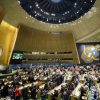
UN Tax Convention is Historic Opportunity at Risk of Failing
In late November, the UN General Assembly passed a landmark resolution signaling a start on working on a UN framework convention on taxation.
Tracking Global Development in Child Benefits Through New Monitoring and Information Platform
Inclusive social protections for children would be a positive signifier of social development in a time where 1.4 billion children globally are denied them. A step towards realizing this has been taken through a new monitoring tool on current social protection and child poverty statistics.
Women, Girls Equal Partners in HIV Responses, Says Activist
UNAIDS Executive Director, Winnie Byanyima, recently made an impassioned call for governments to support women and girls from marginalized communities at the frontlines of the defence of human rights, to help ensure, among others, that global health is protected.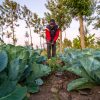
Start-ups Powering up Africa’s Solar Energy Ecosystem
Often referred to as the “Sun continent,” Africa receives more hours of bright sunlight than any other continent. But even with 60 per cent of the world’s solar resources, Africa has only one per cent of solar generation capacity, according to the International Energy Agency (IEA).
North Ignores ‘Perfect Storm’ in Global South
A gathering ‘perfect storm’ – due to various developments, several quite deliberate – now threatens much devastation in the global South, likely to most hurt the poorest and most vulnerable.
Nepal Farmers Face Another Year of ‘Agricultural Drought’, Threatening Food Security
Najboon Khatun looks up at the sky every day, searching for the possibility of rain. Clouds come and go without a drop of water. “Winter crops like wheat and vegetables need water, but like last year, there has been no rainfall yet,” says 65-year-old Khatun, expressing her anguish. In her village in Dhanusha, one of the agricultural hubs in the southern plains of Nepal, farmers mostly depend on rain as a source of irrigation. However, they are facing yet another year of drought, affecting winter crops, including wheat, mustard, lentils, and vegetables.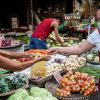
History’s Inflation Lessons
In the early 1970s, conflict in the Middle East set off a spike in oil prices that left central banks around the world scrambling to control inflation. After a year or so, oil prices stabilized and inflation started to retreat. Many countries believed they had restored price stability and loosened policy to revive their recession-hit economies only to see inflation return. Could history repeat?
State of the World’s Migratory Species Report ‘Alarming’ Threats, Global Action Urged
A groundbreaking State of the World’s Migratory Species report is calling for accelerated global conservation measures to counter the threat of extinction faced by 1 in 5 of all migratory species.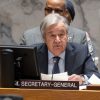
UN Secretary-General Wants Peace through Institutional Reforms
The United Nations and its Member States are up against what the Secretary-General António Guterres calls existential challenges for the world, and they must be organized in taking a united approach to addressing these issues through ambitious plans and widespread reform. In his statement to the General Assembly on February 7, 2024, Guterres laid out his priorities for the coming year, consisting of various ongoing issues that call for urgent action. He has called for member states to fulfill their obligations to the UN Charter, under which every person’s right to life and dignity should be guaranteed. But at present, governments are undermining the tenets of multilateralism with no accountability, he said.
Proven Vector Control Interventions Needed to Stem Malaria Infections in Africa
Experts recommend that the current prevention of malaria in highly endemic countries in Africa should integrate "locally appropriate" control measures to cope with the highest burden of mosquito-borne disease on the continent.
Embodying the Spirit of the Dragon
The Year of the Dragon is upon us. UN Secretary-General António Guterres said in his message for this Lunar New Year, “The dragon symbolizes energy, wisdom, protection and good luck. We need these qualities to rise to today’s global challenges.”
Hit by Climate Change, Authorities Seek to Improve Saffron Yields in Kashmir
Saffron, the expensive spice from the Kashmir Himalayas, has been facing challenges for years, mostly related to yields and inadequate irrigation compounded by the climate crisis.
Landlocked Developing Countries Conference to Address Development
Landlocked developing countries need greater support from the international community so that they are no longer left behind when it comes to progressing with the SDGs, says the UN High Representative of the Least Developed Countries.
Female Genital Mutilation and Cutting in Asia Remain a Neglected Problem
Significant advances have been made in Africa towards ending female genital mutilation/cutting (FGM/C). Unfortunately, the same cannot be said for Asia, where FGM/C occurs in at least ten countries, but governments across the region are failing to take effective action. Women’s rights organizations are calling for states to introduce much-needed laws to criminalize FGM, provide national data on the extent and nature of the practice, and adequately fund efforts to tackle this regionally neglected problem.
Moimuna Nursing Institute Ushers Hope for Vulnerable Rural Girls in Bangladesh
After passing her secondary school certificate (SCC) in 2019, Sweety Akter went door-to-door to collect money to enroll in a college, but she wasn't successful. Born to an extremely poor family in Fultala village under Baliadangi upazila in Thakurgaon district, Akter saw her dream of studying fading as she was unable to enroll in a college because of a lack of funding, despite her good results at school.
Road to COP29: Highest Climate Ambitions Needed to Decarbonize World
The road to COP29 has begun in earnest in the backdrop of a global climate report indicating that not only was 2023 the warmest year in a 174-year climate record, it was the warmest by far. Record-breaking temperatures, combined with El Niño, pushed vulnerable and poor nations in the Global South to the frontlines of extreme and severe weather events.
In Africa, Witch Branding Destroys Elderly Women’s Lives
One day in October 2020, Serah Akpan, 70, was seated in her house at Boki Local Government in Cross River, southern Nigeria, when she heard the murmurings of irate youth outside. Before she could grasp what was really happening, they had broken into her house, bundled her outside, and threatened to kill her for allegedly being a witch.
Poverty and Inequality Mark Rural Life in Latin America
Rural life in Latin America and the Caribbean continues to be marked by poverty and inequality compared to the towns and cities where the vast majority of the population lives. A new focus on rural life in the region could help reveal and address the challenges and neglect faced by people in the countryside.
How Asia Can Unlock $800 Billion of Climate Financing
Countries in the Asia-Pacific region face a shortfall of at least $800 billion in climate financing. With public finances depleted by the pandemic, policymakers must unlock the vast potential of private capital to join the fight more effectively against global warming.« Previous Page — Next Page »


The Week with IPS

NEXT STOP - SDGs
Tracking global progress towards a sustainable world
Tracking global progress towards a sustainable world
