Languages
Saturday, August 8, 2026



News and Views from the Global South

Less Investment, Less Aid: How FDI Shortfalls are Hurting Global Relief Efforts
The world is losing interest in investing in others, especially when it comes to humanitarian aid. Foreign Direct Investment (FDI) has slowed to critical levels, weakening emerging markets and further slowing growth across developing nations.
“Slash and Burn” Approach to UN Reforms Under Fire
“We are writing to you regarding the cuts being undertaken under the UN80 Initiative and, more broadly, across the UN system. While we are mindful of the current funding challenges, we believe that the rushed and chaotic manner in which these changes are being implemented is causing deeper harm to both the effectiveness and reputation of the United Nations.
‘In the Face of Funding Cuts, Civil Society Has Taken a Leading Role in the Humanitarian Response’
CIVICUS discusses the closure of offices of the United Nations Refugee Agency (UNHCR) in Mexico with members of Integral Human Rights In Action (DHIA), a Mexican civil society organisation (CSO) that promotes and defends human rights in contexts of mobility.

Time to Redesign Global Development Finance
Can the Fourth International Conference on Financing for Development (FFD4) be a turning point? The stakes are high. The international financial system—so important to each and every one of us—feels out of reach and resistant to change, because it is deeply entrenched in unjust power imbalances that keep it in place. We deserve better.
Women in Afghanistan Face a Total Lack of Autonomy
Nearly four years ago, the Taliban took control of Afghanistan and issued a series of edicts that significantly restricted women’s rights nationwide. This has resulted in a multifaceted humanitarian crisis, one marked by a notable decline in civic freedoms, stunted national development, and a widespread lack of basic services.
Afghanistan’s Children in Dire Need of an ‘Acceleration in Nutrition Action’
Afghanistan is burdened with one of the highest rates of child wasting globally, with 3.5 million children under five years suffering from a severe form of malnutrition, leaving them dangerously underweight and unable to grow or thrive.
Bombing Iran Is Part of the USA’s Repetition Compulsion for War War War
Twenty years ago, one day in June 2005, I talked with an Iranian man who was selling underwear at the Tehran Grand Bazaar. People all over the world want peace, he said, but governments won’t let them have it.
Extreme Weather Will Place Toll on Asia’s Economies and Ecosystems, Says World Meteorological Organization
Asia is heading towards more extreme weather events with a possibility of heavy toll on the region’s economies, ecosystems, and societies, says the World Meteorological Organization (WMO).
The Path to Peace Between Israel and Iran
A deal between the US and Iran is possible if Iran’s bottom line -- its right to nuclear enrichment -- and Israel’s bottom line, guarantees that Iran will never have a nuclear bomb are met. This “win-win” outcome would require Donald Trump’s personal engagement. With weapons turned to plowshares, Trump would be considered for the Nobel Peace Prize.
UN 80 Restructuring: No Office or Agency will be Exempted from Staff Layoffs
When billionaire Elon Musk, a former short-lived advisor to President Donald Trump, was mandated with the task of decimating the federal bureaucracy and laying off thousands of staffers, he was famously pictured carrying a hacksaw to symbolize his cost-cutting agenda.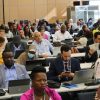
Climate and Health: Urgent Need for Adaptation Strategies in Africa
In recent years, there has been growing evidence of how climate change is impacting human health in several ways.
Women Protestors Targeted, Insulted on Georgian Anti-Government Rallies
Having attended hundreds of anti-government protests in the Georgian capital, Tbilisi, Gvantsa Kalandadze is no stranger to police intimidation and violence.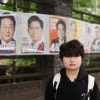
South Korea‘s Democracy Renewed
On a resounding 79.4 per cent turnout, South Korean voters have delivered a clear mandate for change. Lee Jae-myung of the centrist Democratic Party of Korea (DPK) decisively won the 3 June election, becoming the country’s new president after a turbulent time for South Korean democracy.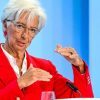
Euro-visions: A Larger Global Role for the Euro?
In a recent speech, Christine Lagarde, president of the European Central Bank (ECB), articulated a clear desire for the euro to play a more significant role as an international currency.
From Deterrence to Disarmament: Global Advocates Call for Justice and Peace
Marking 80 years since the dawn of the nuclear age, peace advocates, diplomats, educators, and atomic bomb survivors from around the world gathered for the “Choose Hope” symposium on March 12–13, 2025, in Santa Barbara, California. Co-organized by the Nuclear Age Peace Foundation (NAPF) and Soka Gakkai International (SGI), the event was held at the Music Academy of the West.
The Cost of Conservation—How Tanzania Is Erasing the Maasai Identity
On the vast plains of Tanzania’s Ngorongoro Conservation Area (NCA), the sight of young Maasai men in bright shawls, wielding sticks as they herd cattle, has long symbolized peaceful coexistence with nature. These herders, moving in harmony with zebras and wildebeests, are inseparable from the landscape. But today, that very identity—nurtured for generations—is under siege.
Tanzania and Uganda: Bad Places To Be an Opposition Politician
In East Africa's Tanzania and Uganda, political tensions are rising as they prepare for the next elections. Tanzania goes to the polls in October 2025, while Uganda’s presidential and general elections will take place early in 2026.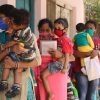
Time to Rethink Health Financing: It’s Not Just a Public Sector Concern
As G7 leaders of the world’s wealthiest nations wrapped up their summit in Kananaskis June 16, a critical issue was absent from the agenda: the future of global health financing.
The Fallout from Losing a UN Job
Ten years ago, I lost more than a job. When my post was abolished, there was no warning, no closure, no golden parachute—just a quiet erasure. Overnight, I went from a UN professional with decades of service to an invisible statistic in a system that eats its own.
‘Live Facial Recognition Treats Everyone as a Potential Suspect, Undermining Privacy and Eroding Presumed Innocence’
CIVICUS discusses the dangers of live facial recognition technology with Madeleine Stone, Senior Advocacy Officer at Big Brother Watch, a civil society organisation that campaigns against mass surveillance and for digital rights in the UK.

Where the Thunder Dragon Breathes: Bhutan’s Bold Bet on Climate, Culture and Contentment
“I can’t get this anywhere else,” says Tshering Lhamo, a 29-year-old shopkeeper in Thimphu, as she gestures toward the clean Himalayan air outside her thangka shop. She once studied in Kuala Lumpur but came back to Bhutan for the peace—and the purity. Her friend, Kezan Jatsho, who has never left the country, adds, “I cherish the peace here,” even as many of their peers migrate abroad.« Previous Page — Next Page »


Want to keep up with the latest news and views from the Global South? Sign up for IPS Daily News Report for daily emails with our top stories about international development, climate change, gender and more. (Formerly IPS TerraViva since 1993).

The Week with IPS

NEXT STOP - SDGs
Tracking global progress towards a sustainable world
Tracking global progress towards a sustainable world
