
Wednesday, October 7, 2026



News and Views from the Global South
Trade and poverty: Facts beyond theory

Q&A: ‘‘Arms Deal Scandal Threatens Democracy in South Africa’’
South Africa’s ruling African National Congress (ANC) vilified politician and former anti-apartheid trade unionist Patricia de Lille when she made allegations about graft in the country’s notorious multi-billion dollar deal with British, French, Italian, German and Swedish arms manufacturers back in 1999.TRADE: EU Forges Ahead With EPAs Despite Global Crisis
Experts agree the current financial crisis is largely due to economic deregulation. But despite the downturn’s dramatic effects on developing countries, the European Union (EU) is still pushing for the trade liberalisation deals called economic partnership agreements (EPAs) to be signed by African governments.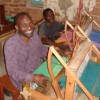
TRADE-TANZANIA: Crafts Charity Disproves Myths About Disability
After Joel Haule developed a crippling childhood disease that left him wheelchair-bound, his parents began calling him ‘‘Matatizo’’, the Kiswahili word for ‘‘problems’’.TRADE: ‘‘Russia Should Extend More Preferences to Nigeria’’
As cooperation between Nigeria and Russia is strengthened, Russia should consider extending preferences to some goods from Nigeria to further boost trade between the two oil producers, according to the deputy director of the Russian Academy of Sciences’s Institute for African Studies, Professor Dmitri Bondarenko.
Q&A: ‘‘The Market Is Not God And We Are Not At Its Mercy’’
Churches from South Africa and Germany are critically interrogating neoliberal globalisation in a process that they want to take up to United Nations level and also to their congregations ‘‘to build responsibility among people for what is happening in their world’’.AFRICA: A Lot More Needed to Make South-South Trade Work
Trade experts are sceptical about the United Nations Conference on Trade and Development’s renewed emphasis on South-South trade to counter the global economic crisis.TRADE: Southern Africa Buckling Before EU Pressure to Sign EPA?
While South Africa plays for time, the signing of a finalised economic partnership agreement (EPA) between the European Union (EU) and the southern African countries seems imminent - despite regional trade fragmentation remaining a danger.BOTSWANA: Retrenchments Turn Villages Into “Little Hells”
The closure of two major mines and the scaling down of operations at most mines in Botswana have had a knock-on effect beyond miners in this southern African producer of diamonds.ZIMBABWE: The Railways — From Public Utility to Public Liability
Zimbabwe’s poorly funded public transport utilities - which over the years have all but stopped functioning - are making it difficult for small and informal traders to import essential goods from neighbouring countries.
EAST AFRICA: Milk Trade War Spills Over Uganda and Kenya
Ugandan exporters of dairy products to Kenya are bitter. They are accusing their bigger neighbour of imposing non-tariff trade barriers to block their produce from entering markets in Kenya and elsewhere.
Q&A: Aid Effectiveness Undermined by EU and U.S. Trade Policy
Criticism against international development aid has been growing for several months, moving from down-right disapproval, shared by leftist and rightist commentators, experts and politicians in industrialised and poor countries, to partial reproaches for the fragmentation and lack of coherence in aid.DEVELOPMENT: Aid Fragmentation Worse Despite Paris Declaration
Civil society representatives agree with the recent finding of the Organisation for Economic Cooperation and Development (OECD) that fragmentation of international cooperation has increased instead of diminished, in direct contradiction to the so-called Paris Declaration where over 100 countries called for effective dispensing of aid.
TRADE: Middle-aged Women Keeping Zimbabwean Economy Afloat
Her small tattered book is full of lists of orders for goods such as beer, maize-meal and chemicals. On another page are addresses and phone numbers of store managers while, on another, a list of names has been jotted down along with corresponding amounts.
ENVIRONMENT: ‘‘Climate Change Does Not Wait For Recessions’’
Lack of money and technical know-how makes it difficult for poor farmers to participate in the Kyoto Protocol’s carbon trading mechanism aimed at reversing global warming. Meanwhile, the global economic crisis may further undermine investment in carbon trade in African countries.WORLD-ECONOMY: Not The End of Neoliberalism Yet
The economist and author Prof Patrick Bond warns that the optimism about the dawn of a post-neoliberal era is premature and that ‘‘a more dangerous and painful’’ period may be ahead before any real change to the current global economic regime will be possible.
DEVELOPMENT: Mauritians Also Competing For Land in Africa
Soaring food prices and lack of land have forced Mauritius, a net food importing country, to launch an ambitious initiative. The island state is starting to grow its food in other African states where land is lying fallow and labour is cheap.ECONOMY: Africa Is of ‘‘Strategic Importance’’ to Gulf States
According to a recent article in the Harvard Business Review, the average annual return on investment in Africa is between 65 and 70 percent higher than in any other country, including China.TRADE: 'Gulf States’ Technology Can Be Swapped for Africa’s Food'
Countries in the Gulf and in Africa can form mutually beneficial partnerships, with Africa supplying fertile arable land and the Gulf investing in technology, fertiliser and other agricultural inputs.ETHIOPIA: Russian Business to Showcase Goods at Addis Ababa Fair
When the 13th Addis Ababa International Trade Fair officially opens tomorrow, the Russian trade delegation hopes to make its presence felt with participating industrial companies and business enterprises.DEVELOPMENT: New Africa Commission Report Reiterates Basic Goals
Africa's arduous path to development could be eased if governments took elementary measures to improve infrastructure, coordinate regional trade policies, capacitate customs personnel to speed up the regional exchange of goods and services and facilitate access of small and medium enterprises to financial resources.
ECONOMY: Using the Rand Makes Zimbabwe ‘South Africa’s Province’
Zimbabwe may soon become part of the South African rand monetary union when the troubled southern African country officially assumes the use of the rand as part of a raft of economic initiatives aimed at kick-starting its comatose economy.« Previous Page — Next Page »





Trade has historically been a geopolitical tool, creating significant economic imbalances in developing countries. However, many countries in East Asia and Latin America have been able to alleviate poverty due to increasing trade. Tackling poverty has proven to be much harder in low income countries in sub-Saharan Africa, Asia and Latin America, and their dismal trade performance is one important reason for that. They remain at the margins of world trade and indeed of the world economy. These articles are aimed at informing readers about the complexities of trade and its varying effects on development, with a special focus on the consequences of the global economic crisis, the potential of fair trade and the gender implications of trade policies.

The Week with IPS

Tracking global progress towards a sustainable world
