
Sunday, September 27, 2026



News and Views from the Global South
IPS UN: Inside the Glasshouse
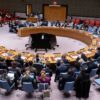
The Next UN Secretary-General Must Break Not Only the Glass Ceiling, but Also the Culture of Patronage
As the United Nations (UN) Security Council prepares for its first round of closed-door straw polls this month to select the tenth Secretary-General, the organization stands at a critical crossroads. Multilateralism is fracturing under geopolitical gridlock, and the UN is battling a severe budgetary deficit driven by funding cuts.
Remember Your Humanity
Eighty years since the dawn of the nuclear age, which began with the first nuclear test in New Mexico, USA, and with the tragic atomic bombings of Hiroshima and Nagasaki, humanity faces a deep existential crisis. This crisis is much more unstable and unpredictable than the gravest Cold War confrontations. In 1955, when there were only three states with nuclear weapons and the first thermonuclear weapon was being developed, the Russell-Einstein Manifesto posed a profound question: “Shall we put an end to the human race; or shall mankind renounce war?” Today, with 9 states possessing nuclear weapons and several thousand thermonuclear devices, this question becomes an ultimate choice.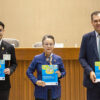
AI Helping Modernize Trade Across Asia and the Pacific, Though Adoption Gaps Remain
Artificial intelligence is reshaping trade processes across Asia and the Pacific. However, despite growing interest, most economies have yet to deploy the technology at scale, according to a new study by the United Nations Economic and Social Commission for Asia and the Pacific (ESCAP) and the Asian Development Bank (ADB).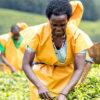
Feeding Africa: Women Farmers Key to Ending Hunger
As FAO coordinates the implementation of the International Year of the Woman Farmer 2026, gender team leader Tacko Ndiaye discusses why investing in Africa’s women farmers is essential for food security, economic growth and creating more resilient agrifood systems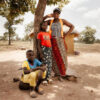
We Owe Future Generations a Path Out of the Global Debt Crisis
Almost half of the world’s population now lives in countries that spend more money paying interest on their debts than on education or health. New data shows the cost of borrowing for African countries in particular rose 91% since 2020. Rising debt payments have reduced governments’ capacity to invest in children and build their human capital.
Towards a Human rights-Centred, Transformative Agenda Beyond 2030
The 2030 agenda cum SDGs are due to be completed in 2030, with negotiations towards a follow-up agenda to begin formally at the UN General Assembly in autumn 2027. Many direct or indirect discussions have, however, already begun, e.g. pluri-laterally at BRICS and G20 meetings and the EU; as well as at the UN in connection with the Summit of the Future, the Doha World Summit for Social Development, the Beyond GDP report; or in fora such as the Hamburg Sustainability Conference. Think tanks and academics, too, are brainstorming on how best to re-ignite a genuine commitment to the SDGs and at the same time reflect on the future.
Africa’s Fourth Industrial Decade: From Political Mandate to Industrial Transformation
Amid shifting geopolitical, economic, and technological landscapes, it reflects growing international recognition that Africa’s sustainable industrial transformation is vital - not only for the continent’s future, but also for global prosperity.
UN Senior Members Urge Universal Abolition of Death Penalty
While the movement for the universal abolition of the death penalty advances, this progress “cannot be taken for granted,” said UN Secretary-General António Guterres as he greeted the 9th World Congress Against the Death Penalty.
Beyond the United Nations — Reclaiming Integrity and Purpose in Global Governance
At the Annual General Meeting of the United Nations Asia Network for Diversity and Inclusion (www.UN-ANDI.org) on 21 May 2026, I was invited to share my reflections on both the pre and post separation phases of my UN journey. This provided me with a valuable opportunity to critically examine my decision to leave the UN service after many years at the ICSC.
When an Ally Becomes a Liability
For a generation, no foreign leader bet more heavily on a single American president than Benjamin Netanyahu bet on Donald Trump. Trump moved the US embassy to Jerusalem, tore up the 2015 nuclear accord with Iran, recognized Israeli sovereignty over the Golan Heights, and in February 2026 joined Israel in the opening strikes of a war against Iran that Netanyahu had spent three decades urging Washington to wage.
UN Artificial Intelligence Panel Launches Report Ahead of Global Conference
The acceleration of artificial intelligence (AI) and its capabilities is far outpacing governments’ capacities to effectively regulate it. Without scientific evidence to inform their policies, countries will be left at a greater disadvantage, according to the UN’s independent panel on AI.
Will Changes to the UN Resident Coordinator System Damage the Development Pillar & Downgrade its Assistance to Middle-Income Nations?
A letter to staff unions from economists working in the resident coordinator system, blows the whistle on a restructuring that could damage the development pillar and downgrade support to middle income countries.
Understanding an Interconnected World
When Roberto Savio begins talking about The Global Citizen Handbook, he does not begin with the book itself. He begins with today’s young people.
US Slams Israel for Undermining Peace Negotiations with Iran –but Rift is Dismissed as a Passing Show
The on-again, off-again US-Iran peace negotiations, which have been disparaged by Israeli leaders, have resulted in a rare rift between the US and Israel, a Middle East ally which has had America’s unwavering “iron clad” support since its creation in 1948.
Cuba’s Last Hand
Ever since the Berlin Wall fell 37 years ago and the communist Eastern Bloc collapsed, Cuba has been debating economic reforms to its socialist system. Essentially, the discussion always revolves around the same issues: less state planning, more personal responsibility. In other words, a strong dose of capitalism as an antidote to inefficient and corrupt state bureaucracy.
The Silent Metamorphosis
There is a question that is never asked plainly enough in reports on Haiti: why, despite decades of analysis, billions in international aid, and an abundance of national strategies, does the potential of Haitian youth remain so consistently underutilized? This report, The Silent Transformation, is an attempt at an honest answer.
Aid Is Falling Fast. What Can African Countries Do?
For decades, official development assistance has been a central pillar of financing in sub-Saharan Africa. That pillar is now weakening—quickly and broadly.
Beyond Commemoration: Why Conflict-Related Sexual Violence Demands Urgent Global Attention
Three years ago, during a mission to the Central African Republic from United Nations Headquarters, I met a woman whose story has remained with me ever since. She had survived rape during the conflict. Yet what stayed with her most was not only the violence she had suffered, but the stigma that followed it. When she returned home, her family refused to take her back. In a society where survivors of sexual violence are too often burdened with shame that rightfully belongs to perpetrators, she found herself isolated and struggling to rebuild her life. In that moment, it became painfully clear that for survivors, the violence does not end when the assault ends, it continues through stigma, exclusion, and the resulting silence for most.
Of 40 Million People Living with HIV today, 32.1 Million are now on Treatment, Living Long & Healthy
I am honoured to address this High-Level Meeting. I thank very much the President of the General Assembly for her leadership, our Co-Facilitators, and all the Member States for the extraordinary effort that brought us here now.
AI is Already Rewriting Reality for Billions of People– But It is Getting Women Wrong
A study of 133 AI systems found that 44 per cent demonstrated gender bias and 26 per cent demonstrated both gender and racial bias. Yet only 51 per cent of marketers currently use human oversight to test AI-generated creative before release. Ahead of the United Nations Global Dialogue on Artificial Intelligence Governance from 6 – 7 July and AI for Good Global Summit in Geneva, Switzerland from 7-10 July, UN Women sets out what is at stake – and what must change – to build a gender-equal digital future.
Global South Leaders Redesigning International Cooperation
The fallout from the sudden collapse of the old system of financing international cooperation has been disastrous, unleashing a wave of harm and leaving the world more vulnerable to shocks and less able to respond to them. The wreckage is plain to see. The issue is what to do next.« Previous Page — Next Page »


It was dubbed "The Glass House" by U.S. ambassador James Wadsworth in 1966. Half a century later, the United Nations has gradually expanded its role as agent of peace and protector of the world's vulnerable populations, while simultaneously facing internal pressures to become more inclusive, increase transparency and maintain legitimacy in the post-Cold War political and economic order. Highlighting the local impacts of global policies on economic development, environment, health and human rights, IPS's coverage goes beyond the edicts of the Security Council to illuminate the power struggles, successes and shortcomings of the 193-member institution as it grapples with crises like climate change, armed conflict, poverty and HIV/AIDS.

The Week with IPS
