
Sunday, November 15, 2026



News and Views from the Global South
IPS UN: Inside the Glasshouse

How the US is Obstructing Security Council Resolutions on Palestine
Over the past 75 years, there have been many UN Security Council (UNSC) resolutions acknowledging Israel’s violations of international law, including a Resolution under Chapter VI of the UN Charter, that could have addressed, if implemented, the plight of the Palestinians.
Wards Without Water
Malawian healthcare workers are facing challenges from all sides. More than half of healthcare facilities in Malawi are without handwashing facilities, almost two thirds have no decent toilets and almost one fifth do not have clean water on site.
– A Growing Shift in the Narrative about Climate Action –
On the occasion of World Environment Day, 5 June 2021, drawing from IPS’s bank of features and opinion editorials published this year, we are re-publishing one article a day, for the next two weeks. The original article was published on February 25 2021
Q&A: Reflecting on Five Years of Educating Children in the Throes of Crises, Emergencies and Displacement
Education Cannot Wait (ECW), the global fund that brings teaching and learning to children in emergencies and protracted crises, is observing five years of reaching boys and girls in some of the world’s hardest-hit conflict and disaster zones.
Tired with Tokenism, Youth Launch ‘Stronger Campaign’ for UN Biodiversity Day
The Global Youth Biodiversity Network (GYBN) has put leaders and policymakers on notice that they are not willing to listen to the same conversations, suggestions and unmet promises, as the world faces a biodiversity crisis.
– The Global Insecurity of Climate Change –
On the occasion of World Environment Day, 5 June 2021, drawing from IPS’s bank of features and opinion editorials published this year, we are re-publishing one article a day, for the next two weeks. The original article was published on February 24 2021
– UN Blueprint that Could Urgently Solve Earth’s Triple Climate Emergencies –
On the occasion of World Environment Day, 5 June 2021, drawing from IPS’s bank of features and opinion editorials published this year, we are re-publishing one article a day, for the next two weeks. The original article was published on February 19 2021

Jerusalem: A Flashpoint For Conflict Or Microcosm Of Peace?
Regardless of how the current and future violent conflicts between Israel and the Palestinians in Jerusalem will end, there will be no Israeli-Palestinian peace unless East Jerusalem becomes the capital of a Palestinian state while the city remains united.
Climate Crisis: Elephants in the Room are Getting Nastier
The year 2020 will forever be notorious for the COVID-19 pandemic but it might also be known by historians for a precipitous rise in second order climate change consequences -- a new elephant in the room.
The Devastating Gun Battle in Gaza is Being Fought in an Uneven Killing Field
In most civil wars and military conflicts across the politically-volatile Middle East, including in Syria, Yemen and Palestine, the ongoing battles are being fought not on a level playing field but on an uneven killing field.
US Casts 45 Vetoes – and Counting—While Protecting a Client State
The UN Security Council (UNSC), the most powerful political body at the United Nations, has largely remained silent or ineffective in resolving one of the longstanding military conflicts in the Middle East involving Israelis and Palestinians.
Latin America & the Caribbean Assess Climate Ambition and Action Ahead of COP26
The Dominican Republic opened the 2021 virtual Latin America and the Caribbean Climate Week with a pledge to increase the country’s climate ambition by reducing its greenhouse gas emissions by 27 percent and maintaining progress towards climate neutrality according to the goals of the Paris Agreement.
Russia’s Sputnik Diplomacy
While Western countries were busy with their own vaccination campaigns, Russia has filled the leadership vacuum in developing countries. Amid the West’s scramble for vaccines, a trickle of news flies under the radar. Argentina becomes the first country in South America to produce Russia’s Sputnik V vaccine. The first shipment of Sputnik V is promised to Peru by May.
The UN’s Guterres, an Incumbent With Strong Backing by Europe, Is Bound to Win Another Term
It was all over in one crucial week. Barring an unforeseen hitch, António Guterres is the clear winner of a second, five-year term as secretary-general of the United Nations, beginning on Jan.1, 2022. This was not a surprise: he had no major competition and the process moved faster than expected.
How to Assess the Willingness of US to Suspend Patent Protection on Vaccines?
The news of the Biden Administration's willingness to lift intellectual property rights protections in the case of the Covid-19 pandemic has sent the world into turmoil, even though in recent days this willingness had become increasingly airy.
Is the Campaign for a Female UN Chief a Good Try in a Lost Cause?
As negotiations for the upcoming election—or re-election-- of a UN Secretary-General gather momentum, one undeniable fact looms heavily over the final decision: the choice of a UN chief is the intellectual birthright of the five big permanent members (P5) of the Security Council, namely, the US, UK, France, China and Russia.
20 Million More People Face Food Crises, As Acute Hunger Rates Rise to a 5-Year High
The COVID-19 pandemic, protracted conflicts and climate change have created an untenable situation for the most vulnerable, with 155 million people across 55 territories suffering from severe food insecurity, sending acute hunger figures to a 5-year high.
Youth Voice and Action Critical to Reforming the World’s Food Systems
Global youth advocates have been told that they play a crucial role in ensuring that the world produces and consumes food with greater attention to nutrition, food security, equality and sustainability. As the United Nations prepares to host the inaugural Global Food Systems Summit in September, the organisation is hosting a series of dialogues to correct flaws in the way food is grown, processed, packaged and marketed, hoping to tackle growing world hunger, water scarcity and climate change.
Human Rights Watch: A Threshold Crossed
Human Rights Watch’s 27 April report, A Threshold Crossed: Israeli Authorities and the Crimes of Apartheid and Persecution, could also have been entitled Better Late Than Never.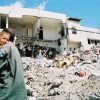
The Day the UN Buried its Report on Apartheid in Israel
When the UN’s Beirut-based Economic and Social Commission for Western Asia (ESCWA), released a landmark 2017 report on “apartheid” in Israel, the United Nations disassociated itself with the study and left it to die--- unceremoniously and unsung.
UN Banks on Water as the ‘Game Changer’ in Food Production and Consumption
As the United Nations prepares for its solutions-based Global Food Systems Summit in September, officials say resolving issues around water scarcity, pollution and wastage is crucial transforming food production and consumption.« Previous Page — Next Page »


It was dubbed "The Glass House" by U.S. ambassador James Wadsworth in 1966. Half a century later, the United Nations has gradually expanded its role as agent of peace and protector of the world's vulnerable populations, while simultaneously facing internal pressures to become more inclusive, increase transparency and maintain legitimacy in the post-Cold War political and economic order. Highlighting the local impacts of global policies on economic development, environment, health and human rights, IPS's coverage goes beyond the edicts of the Security Council to illuminate the power struggles, successes and shortcomings of the 193-member institution as it grapples with crises like climate change, armed conflict, poverty and HIV/AIDS.

The Week with IPS
