Languages
Wednesday, September 23, 2026



News and Views from the Global South
Arabs Rise for Rights
MIDEAST: Mubarak Name Easier to Erase Than his Legacy
It was easy enough to rename Mubarak Children’s Hospital the Al Tahrir Hospital in Gaza. Not so easy is the task of managing patients who need to cross over to the Egyptian side for treatment, or come back in.LIBYA: Gaddafi Hits Out With Deadly Force
Libyan leader Muammar Al-Gaddafi has unleashed the bloodiest crackdown so far against pro-democracy protestors seeking his ouster, killing dozens of people in only four days of protests.Egypt Takes a Step Back From IMF Ways
Egypt could soon be looking for a new economic model – one that will be different from the traditional system that has been promoted for years by international financial institutions such as the World Bank, the IMF, and the U.S. Agency for International Development (USAID), under the reign of ousted president Hosni Mubarak.When Asia Put Some Dictators Behind
As Egypt takes tentative steps to replace ousted president Hosni Mubarak’s three-decade authoritarian rule with a democratic culture, its political planners may want to look halfway across the world to the most populous Muslim country for lessons on how to prevent a return to strongman rule.EGYPT: Pharaoh Fixes his Fortune
As Egypt’s popular uprising gained momentum and Hosni Mubarak’s downfall looked increasingly inevitable, he used his final days in office to secure his vast wealth, say analysts.Mideast Crackdown Puts U.S. Democracy Line to the Test
As popular protests escalated in some restive Arab countries Friday, U.S. President Barack Obama criticised the regime- sanctioned blood- letting of innocent demonstrators mobilising against government corruption and repression.LIBYA: People Fury Challenges Gaddafi
The movement for change sweeping across the Middle East has now rocked Libya. Thousands of people have taken to the streets across many cities to demand an end to the 41-year autocratic rule of maverick leader Muammar Al- Gaddafi.EGYPT: Military Under Mubarak’s Shadow
Egypt's armed forces, the de facto rulers of the country since last week’s ouster of President Hosni Mubarak, have already met several longstanding demands of the opposition, including the suspension of the constitution and dissolution of parliament. Some critics, however, say more must be done if the Mubarak regime’s authoritarian structure is to be satisfactorily replaced with a democratic one.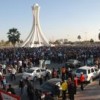
Protest Wave Rocks Bahrain
Bahrain, unlike Egypt with its 83 million people, has a population of only just over a million. And so when protesters settled down to sleep at a central roundabout in capital Manama, the police swooped down and manage to clear them away.BAHRAIN: U.S. Faces New Test Over State Violence
U.S. Secretary of State Hillary Clinton Thursday expressed "deep concerns" about the deadly attack on hundreds of sleeping anti-government protestors carried out by Bahrain's security forces at a central square in the capital, Manama, Wednesday night.U.N. Chief Rebukes Repressive Middle Eastern Leaders
As the military and the police try to violently suppress demonstrations spreading across Bahrain, Yemen, Libya, Iraq and Iran, a usually reticent U.N. Secretary-General Ban Ki- moon is taking a hard line against the oppressive authoritarian regimes in the politically volatile Middle East - and specifically against unrelenting leaders cracking down on protesters.IRAQ: Protests Spread to Kurdistan
At least one person died and dozens were injured Thursday in Iraqi Kurdistan's second largest city as angry protestors attacked the local headquarters of one of the two ruling Kurdish parties, while an opposition building was set ablaze in the other major Kurdish city.
EGYPT: Wave of Strikes Challenges Military
The iron fist that has kept a tight grip on Egypt’s labour movements for nearly six decades relaxed this week, unleashing a wave of wildcat strikes that is testing the resolve of the country’s new military rulers.Dead Peace Process Could be “National Suicide” for Israel
The U.N. Security Council is poised to vote this week on a new resolution condemning Israeli expansion into the Occupied Palestinian Territories and calling for an immediate freeze on settlements in the West Bank and East Jerusalem, but the United States has already declared its intention to again deploy its veto power.As Talks Stall with Iran, U.S. Steps Up Propaganda War
Egypt's revolution appears to have stiffened the spine of the Barack Obama administration when it comes to Iran.Palestinian Revolution by Default
The Egyptian revolution, and the threat to autocratic Arab regimes all over the region, have forced rapid changes on the Palestinian political scene - with major players Hamas and Fatah scrambling to catch up.EGYPT-U.S.: Revolution or Coup?
Four days after the stunning departure of Hosni Mubarak from the presidential palace in Cairo, analysts here are still trying to determine whether his ouster represents a revolution heralding the advent of democratic governance or a coup d'etat staged by the already-dominant military.EGYPT: Labour Anger Does Not End With Mubarak
Before his ouster on Friday, toppled Egyptian President Hosni Mubarak had made one of the biggest mistakes of his reign; not learning from the lessons of hundreds of small labour and professional strikes that littered the country since 2005. These were the actual precursors to the Jan. 25 Revolution that end his 30-year autocratic rule.
YEMEN: Protest Goes Out With the Candles
Many are baffled that Yemen’s anti-government protests have so far failed to deliver revolutionary regime change. But a complex context here demands a different kind of political dialogue with power.
Q&A: Tunis and Cairo Reveal a New Popular Militancy
More than 200 years ago, one of the United States' founding presidents, Thomas Jefferson, famously remarked: "Every generation needs a new revolution." Today, his words are more relevant than ever, as young people across the world mark 2011 as a year of change.CORRUPTION: Egyptians Can Claim Mubarak’s Stolen Billions
For decades, European bank accounts and trusts and the real estate market were havens for dictators seeking safe places to deposit billions of dollars they were stealing from their countries of origin.« Previous Page — Next Page »


The Arab Spring has changed the Arab seasons that have followed; it had to. The struggle continues in Syria; in Tunisia, Egypt, Libya and in countries that did not change that dramatically, such as Bahrain and Yemen, the political world, and the tone of society itself has changed. IPS has not left these countries with the headlines that accompanied cataclysmic changes. We continue to track changes closely, always keeping in our sights first the rights of peoples, and then reporting changes from fresh, newsy and human perspective.

Middle East & North Africa


