Languages
Friday, October 23, 2026



News and Views from the Global South
Projects
Building Resilience in Least Developed Countries – A Pathway to Sustainable Transformation
As the world grapples with overlapping crises—climate change, economic instability, and food insecurity—the 44 Least Developed Countries (LDCs) face existential threats that demand urgent, collective action.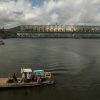
Royalties, a New Indigenous Right for Hydroelectric Damages in Brazil
Indigenous peoples in Brazil have won a new right: a share in the profits of hydroelectric plants that cause them harm when built on or near their lands.
Strengthening Indigenous Peoples and Local Communities’ Knowledge and Access Opens up Opportunities for Climate, Biodiversity and Desertification Action
The central role Indigenous Peoples and local communities in addressing climate change, biodiversity loss and desertification has gained widespread recognition over the past decade. Indigenous Peoples’ close dependence on resources and ecosystems, exceptional tradition, and ancestral knowledge are invaluable assets for the sustainable management of our planet’s natural resources.
Seeds of Survival, Amid Conflict Sudan Is Saving Its Agricultural Future
Sudan’s diverse crops and agricultural heritage are at risk of being lost. The ongoing conflict in Sudan is claiming lives and threatening livelihoods and food security. In the chaos of conflict, scientists like Ali Babiker are fighting to protect Sudan’s future food security—not with weapons, but with seeds.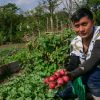
Food Security and Water, a Priority for Border Towns in Central America
The hope of Salvadoran Cristian Castillo to harvest tomatoes in a municipality of the Central American Dry Corridor hung by a thread when his well, which he used to irrigate his crops, dried up. However, his enthusiasm returned when a regional project taught him how to harvest rainwater for when the rains begin in May.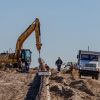
Argentina is Experiencing an Oil Boom, with Bright Spots and Shadows
For about three years now, Argentines have been hearing almost every month that oil production is breaking new records. Looking ahead, the country is projected to become a major global supplier of what remains the most sought-after energy source.
Papua New Guinea: Years of Environmental Clean Up Ahead Following New Report on Abandoned Bougainville Mine
Local communities are finally witnessing progress in their mission for justice, 36 years after the Panguna copper mine in Papua New Guinea’s Autonomous Region of Bougainville became the centre of landowner grievances about environmental damage.
Our Investment in School Meals is Our Investment in Education
Millions of children worldwide are going hungry, and we all know that hungry children cannot learn. On International School Meals Day, we are calling on donors to significantly scale-up funding for school feeding to ensure every child can go to school, every child can access at least one nutritious meal a day, and every child can concentrate, develop and achieve.
Agriculture for Economic Resilience During Political and Financial Crisis – The Case of Bangladesh
The recent student movement in Bangladesh demanding reform of the quota system for public jobs led a ‘march of the people’ towards the official Residence of the Prime Minister Sheikh Hasina on 5th of August 2024. The security forces of the country, including the army, refused to open fire on the marching crowd. Fearing an imminent attack on her residence without the protection of the army, Sheikh Hasina fled to neighbouring India after being in power continuously since 2008. With Sheikh Hasina fleeing to India on 5th of August 2024 her authoritarian and corrupt rule of 15 years just melted away.
‘Rule Breakers’ Movie Launches in Advance of International Women’s Day Highlighting the Courage and Hope of the Afghan Girls Robotics Team
Angel Studios’ new feature film 'Rule Breakers' – launching in theaters across the United States, Canada, South Africa and Sri Lanka today – highlights the hope, courage and resilience of the Afghan Girls Robotics Team.
International Women’s Day, 2025
Rule Breakers: The Compelling True Story of Afghan Girls Who Risked All to Learn
Like the Afghan robotics team, Education Cannot Wait (ECW), the global fund for education in emergencies and protracted crises in the United Nations, is breaking the 'rules' and continuing to educate young women in that country despite an edict from the Taliban denying girls a secondary school education.

Education Cannot Wait Interviews Ramiz Alakbarov, UN Resident Coordinator and Humanitarian Coordinator in Ethiopia
Dr. Ramiz Alakbarov was appointed as the UN Resident Coordinator and Humanitarian Coordinator in Ethiopia by the UN Secretary-General António Guterres in August 2023.
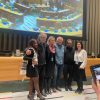
How the Arts Play a Role in the Fight for Nuclear Disarmament
This week countries and communities converge in New York for the 3rd Meeting of State Parties on the Treaty for the Prohibition of Nuclear Weapons (TPNW), with multiple side events to address the social, political and cultural impact of nuclear abolition across different sectors.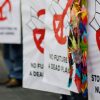
Nuclear Weapons, Far from Diminishing, Keep Rising
The United Nations, whose primary mandate is to maintain international peace and security, has been one of the longstanding leaders in the global campaign for a world without nuclear weapons. But the progress has been relatively slow – despite the growing number of anti-nuclear treaties. Perhaps the only consolation is the absence of a nuclear attack or a nuclear war in over 80 years.
Solar Energy Sustains the Development of Amazonian Communities in Brazil – VIDEO
 Electricity is essential for the well-being and prosperity of traditional riverside communities in the Amazon, as demonstrated by the experience of the Santa Helena do Inglês community, located on the right bank of the Negro River in northern Brazil.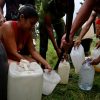
Water Supply Issues Keep Flowing in Cuba
Problems such as hydraulic network breakdowns, water lost through leaks, power outages, and even fuel shortages are making access to water supply services difficult for the population in Cuba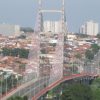
Hortolandia Emerges as an Energy and Environmental City in Brazil
Almost everything seems new or under construction in the southern Brazilian city of Hortolandia, from its wide avenues and cable-stayed bridge to its large buildings and riverside parks.
Mexican Electric Vehicles Struggle to Accelerate
Mexico has seen several attempts at assembling electric vehicles (EVs), powered by rechargeable batteries, which have faced challenges related to industrial scale, supply chains, and competitiveness
Outlook for 2025: Strengthening the Foundations of Children’s Futures
In 2025, the world is facing a new and intensifying era of crisis for children. Climate change, economic instability, and conflict are hitting harder and more often, intersecting in ways that make the challenges of addressing them even more severe.
America First Deepens World Stagnation
Donald Trump’s Make America Great Again (MAGA) appeal captured US mass discontent against globalisation. In recent decades, variations of America First have reflected growing ethnonationalism in the world’s presumptive hegemon.
CARICOM Leaders Take Steps to Tackle Crime, Climate, Trade and Food Crises
CARICOM leaders wrapped up a crucial meeting on February 21, reaffirming their commitment to tackling pressing regional challenges with unity and resolve. From crime and security to education, trade and climate change, the leaders highlighted the need for decisive action amid global uncertainties.« Previous Page — Next Page »





The Week with IPS

NEXT STOP - SDGs
Tracking global progress towards a sustainable world
Tracking global progress towards a sustainable world
